Moosivand Asiye, Rajabzadeh Ghatari Ali, Rasekh Hamid Reza
Department of Pharmacoeconomics and Pharmaceutical Management, School of Pharmacy, Shahid Beheshti University of Medical Sciences, Tehran, Iran.
Department of Industrial Management, School of Management and Economics, Tarbiat Modares University, Tehran, Iran.
Iran J Pharm Res. 2019 Spring;18(2):1103-1116. doi: 10.22037/ijpr.2019.2389.
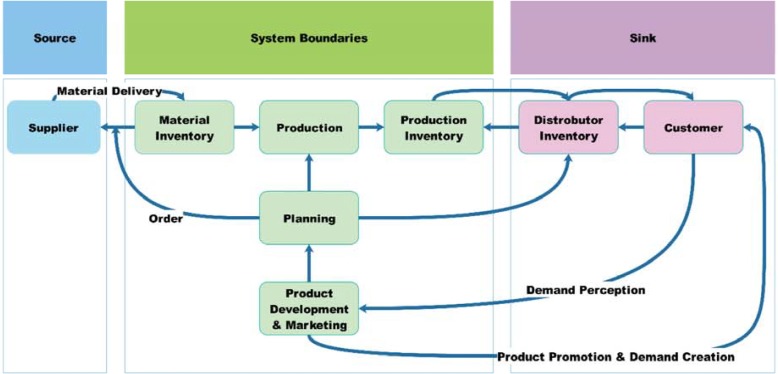
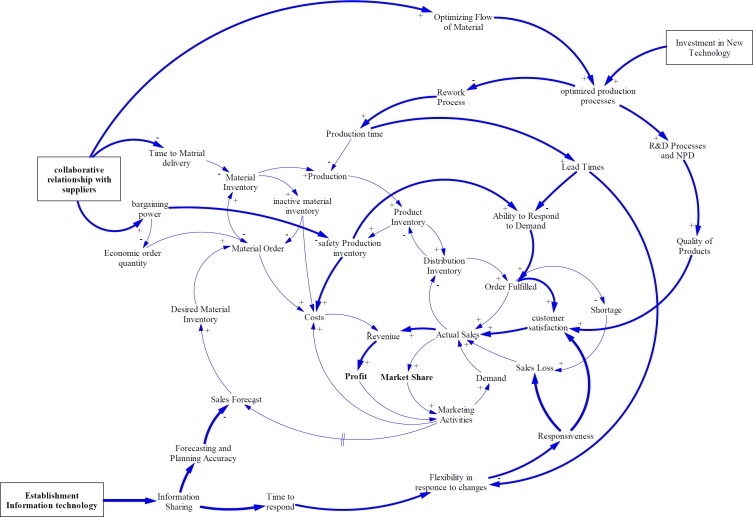
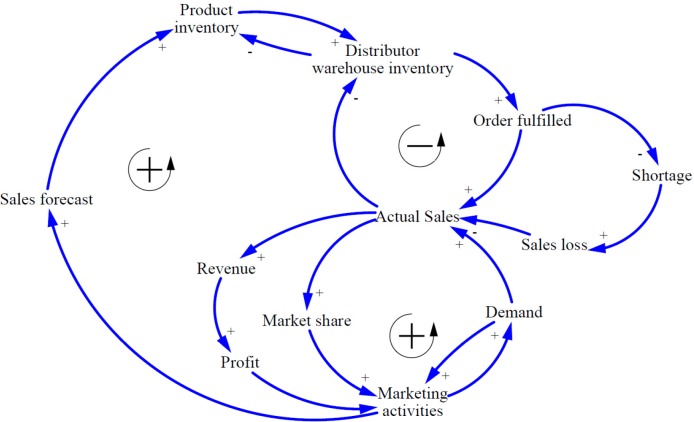
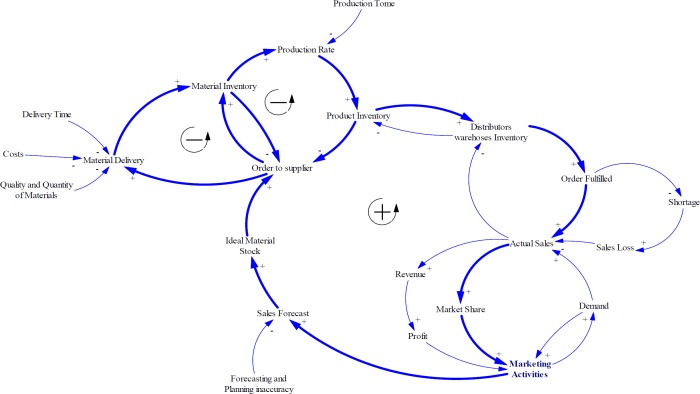
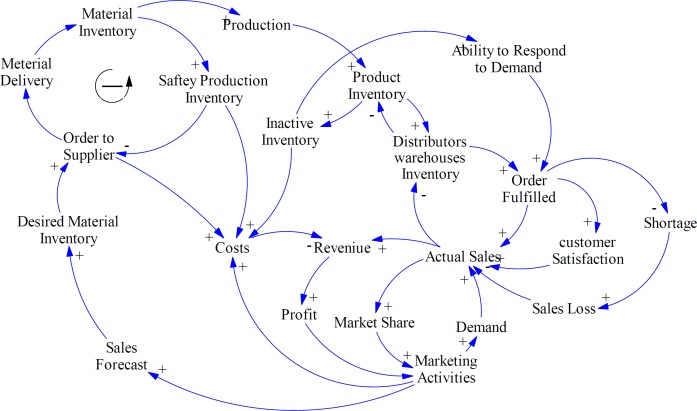
In today's competitive market environment, pharmaceutical companies have learned that improving supply chain performance is critical to maintain competitive advantages. Forecasting, planning, procurement, financing, stock levels, and marketing strategies are some of the areas in which managers have to decide about them and balance their enter-related effects simultaneously, to achieve organizational goals. This study is based on the results of literature review, experts' opinion acquisition, and qualitative system dynamics modeling. So, according to method, triangular researches have been considered. The purpose of this research is to explore pharmaceutical supply chain (PSC) challenges and the dynamics behavior of variables playing a special role in PSC. Also, it provides different policies to overcome the challenges. For the first step to reach this goal, several semi-structured interviews with expert supply chain managers are conducted to explore the main challenges. Inaccuracy in forecasting, long lead times, lack of optimum target inventory, and high SC costs are the most important PSC problems. Then, qualitative system dynamics methodology is used to demonstrate the inter-relationship between variables that have impact on challenges. Finally, three strategic policies are recommended including: Collaborative relationship with suppliers, Investment in new technologies, and Information technology (IT) establishment. Consequently, the results can give PSC managers a comprehensive view for decision making and bringing their attention to the importance of feedback behavior of variables in long term and their effects on organizational decisions and goals.
在当今竞争激烈的市场环境中,制药公司已经认识到,提高供应链绩效对于保持竞争优势至关重要。预测、规划、采购、融资、库存水平和营销策略是管理人员必须对其做出决策并同时平衡其与企业相关影响的一些领域,以实现组织目标。本研究基于文献综述、专家意见收集和定性系统动力学建模的结果。因此,根据方法,采用了三角研究法。本研究的目的是探讨制药供应链(PSC)面临的挑战以及在PSC中发挥特殊作用的变量的动态行为。此外,它还提供了克服这些挑战的不同政策。为了实现这一目标的第一步,对供应链专家经理进行了几次半结构化访谈,以探讨主要挑战。预测不准确、交货期长、缺乏最优目标库存以及供应链成本高是PSC最重要的问题。然后,使用定性系统动力学方法来证明对挑战有影响的变量之间的相互关系。最后,推荐了三项战略政策,包括:与供应商建立合作关系、投资新技术和建立信息技术(IT)。因此,研究结果可以为PSC经理提供一个全面的决策视角,并使他们关注变量长期反馈行为的重要性及其对组织决策和目标的影响。