Cabanillas-Terán Nancy, Hernández-Arana Héctor A, Ruiz-Zárate Miguel-Ángel, Vega-Zepeda Alejandro, Sanchez-Gonzalez Alberto
Consejo Nacional de Ciencia y Tecnología México- El Colegio de la Frontera Sur, Chetumal, Quintana Roo, México.
Departamento de Sistemática y Ecología Acuática, El Colegio de la Frontera Sur, Chetumal, Quintana Roo, México.
PeerJ. 2019 Aug 30;7:e7589. doi: 10.7717/peerj.7589. eCollection 2019.
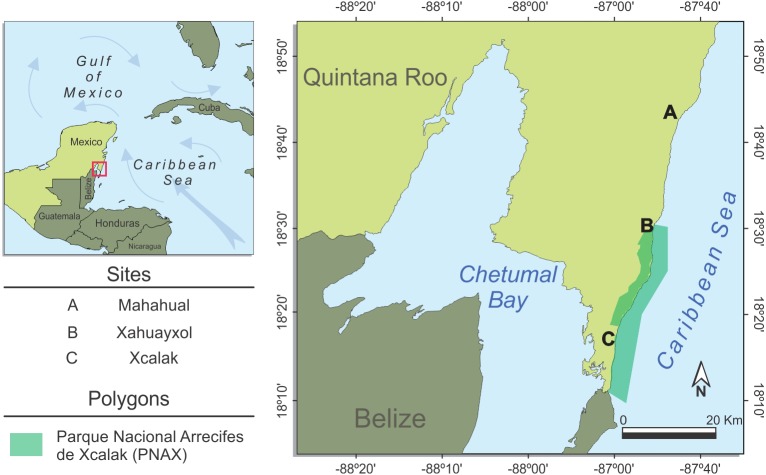
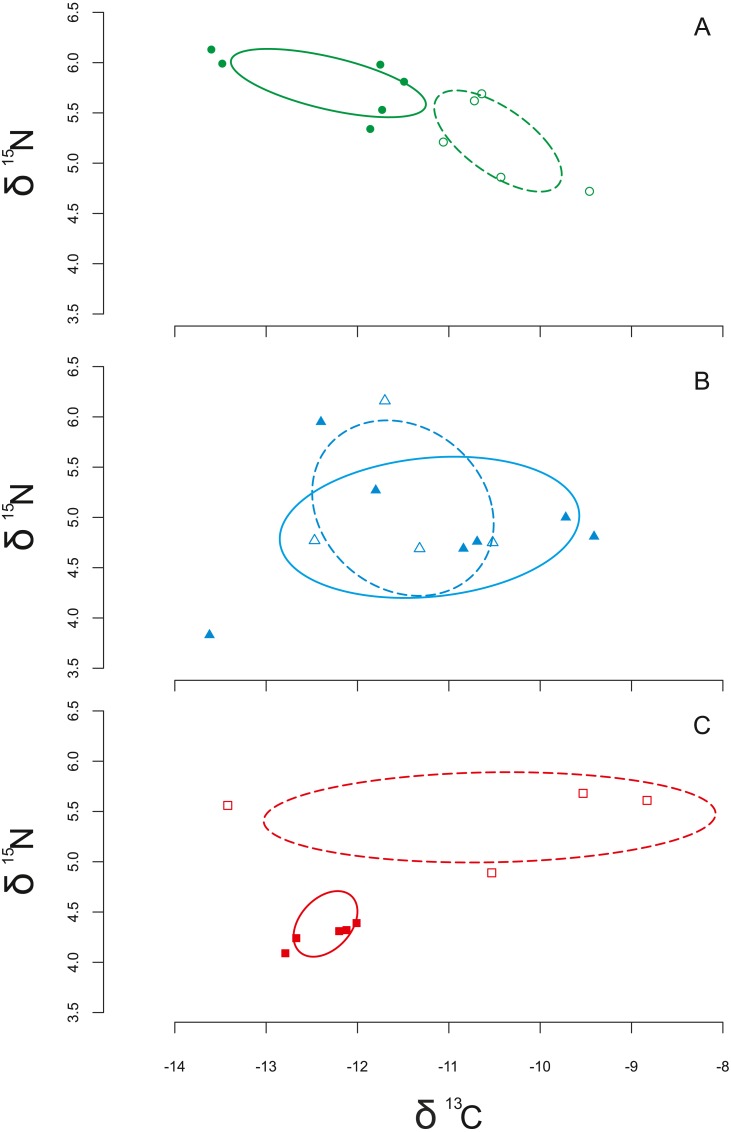
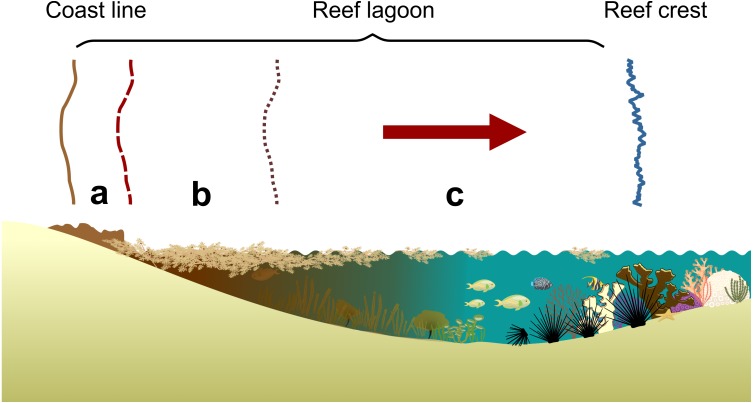
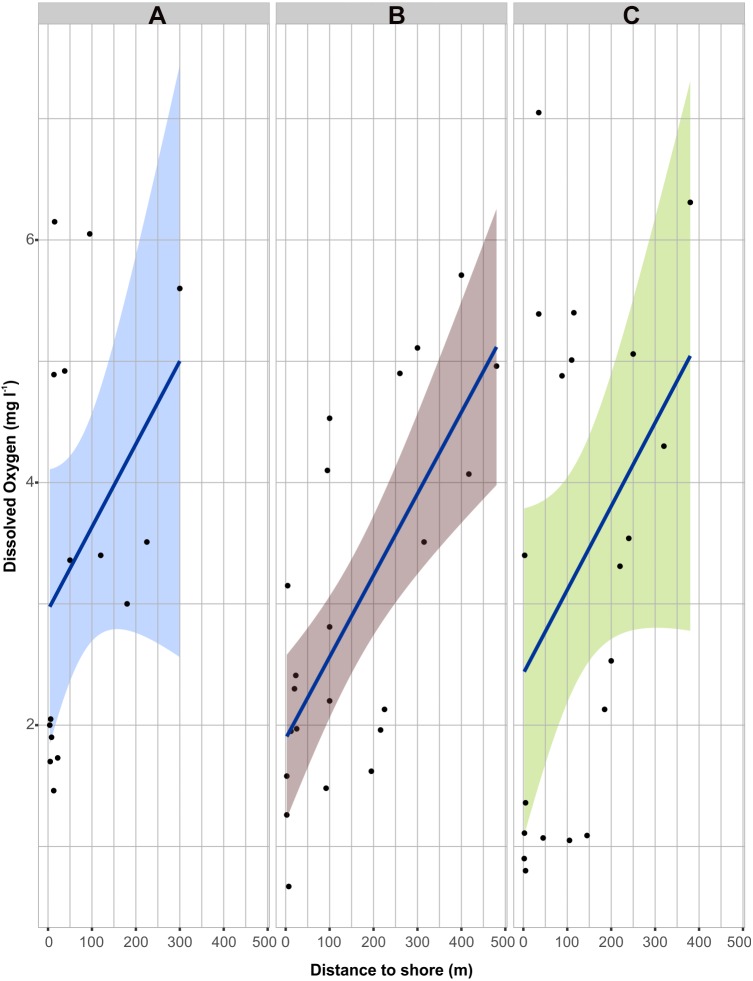
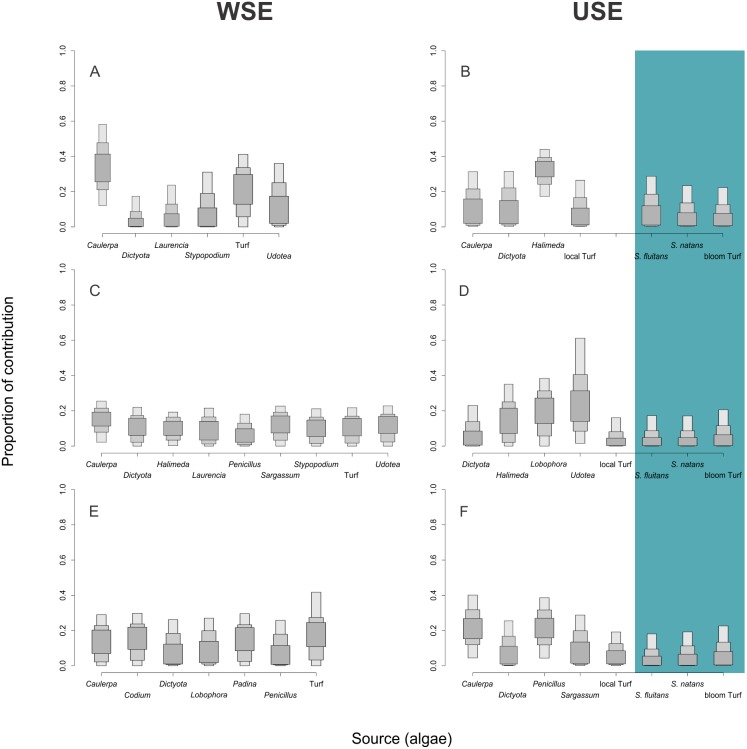
The arrival of large masses of drifting since 2011 has caused changes in the natural dynamics of Caribbean coastal ecosystems. In the summer of 2015, unprecedented and massive mats of and have been observed throughout the Mexican Caribbean including exceptional accumulations ashore. This study uses stable isotopes to assess the impact of blooms on the trophic dynamics of the sea urchin, a keystone herbivore on many Caribbean reefs. Bayesian models were used to estimate the variations in the relative proportions of carbon and nitrogen of assimilated algal resources. At three lagoon reef sites, the niche breadth of was analysed and compared under massive influx of drifting spp. vs. no influx of blooms. The effects of the leachates generated by the decomposition of led to hypoxic conditions on these reefs and reduced the taxonomic diversity of macroalgal food sources available to . Our trophic data support the hypothesis that processes of assimilation of carbon and nitrogen were modified under effect. Isotopic signatures of macroalgae associated with the reef sites exhibited significantly lower values of δN altering the natural herbivory of . . The Stable Isotopes Analysis in R (SIAR) indicated that, under the influence of blooms, certain algal resources (, and ) were more assimilated due to a reduction in available algal resources. Despite being an abundant available resource, pelagic was a negligible contributor to sea urchin diet. The Stable Isotope Bayesian Ellipses in R (SIBER) analysis displayed differences between sites, and suggests a reduction in trophic niche breadth, particularly in a protected reef lagoon. Our findings reveal that blooms caused changes in trophic characteristics of with a negative impact by hypoxic conditions. These dynamics, coupled with the increase in organic matter in an oligotrophic system could lead to reduce coral reef ecosystem function.
自2011年以来,大量漂浮物的到来改变了加勒比沿海生态系统的自然动态。2015年夏天,在整个墨西哥加勒比地区观测到了前所未有的大量[具体藻类名称1]和[具体藻类名称2]藻垫,包括在岸上的异常堆积。本研究使用稳定同位素来评估[具体藻类名称1]水华对[海胆名称]的营养动态的影响,[海胆名称]是许多加勒比珊瑚礁上的关键食草动物。贝叶斯模型用于估计同化藻类资源中碳和氮相对比例的变化。在三个泻湖礁站点,分析并比较了在大量漂浮[具体藻类名称3]物种涌入与无[具体藻类名称1]水华涌入情况下[海胆名称]的生态位宽度。[具体藻类名称1]分解产生的渗滤液导致这些珊瑚礁出现缺氧状况,并减少了[海胆名称]可利用的大型藻类食物源的分类多样性。我们的营养数据支持这样的假设,即在[具体藻类名称1]的影响下,碳和氮的同化过程发生了改变。与礁站点相关的大型藻类的同位素特征显示,δN值显著降低,改变了[海胆名称]的自然食草习性。R语言中的稳定同位素分析(SIAR)表明,在[具体藻类名称1]水华的影响下,由于可用藻类资源减少,某些藻类资源([具体藻类名称4]、[具体藻类名称5]和[具体藻类名称6])被更多地同化。尽管浮游[具体藻类名称7]是一种丰富的可用资源,但它对海胆饮食的贡献可忽略不计。R语言中的稳定同位素贝叶斯椭圆分析(SIBER)显示了站点之间的差异,并表明营养生态位宽度有所减小,特别是在一个受保护的礁湖泻湖中。我们的研究结果表明,[具体藻类名称1]水华导致了[海胆名称]营养特征的变化,并因缺氧状况产生了负面影响。这些动态变化,再加上贫营养系统中有机物的增加,可能导致珊瑚礁生态系统功能下降。