Department of Emergency Medicine, Nanfang Hospital, Southern Medical University, Guangzhou, Guangdong, China.
Department of Intensive Care Unit, The Sixth Affiliated Hospital of Guangzhou Medical University, Qingyuan People's Hospital, Qingyuan, Guangdong, China.
Biomed Res Int. 2019 Aug 19;2019:1806234. doi: 10.1155/2019/1806234. eCollection 2019.
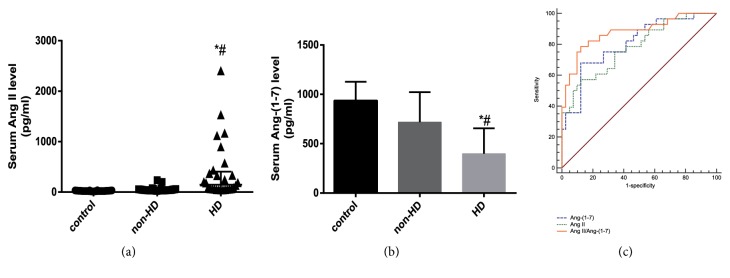
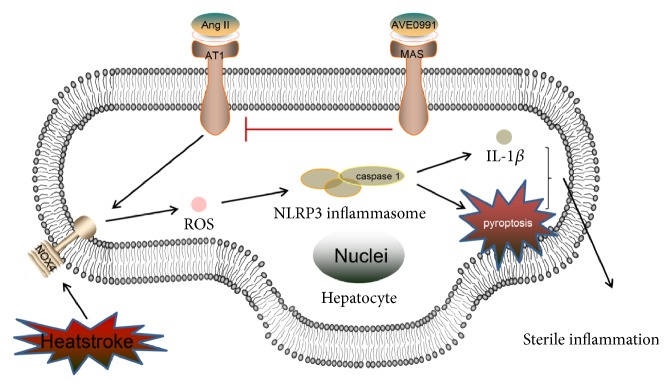
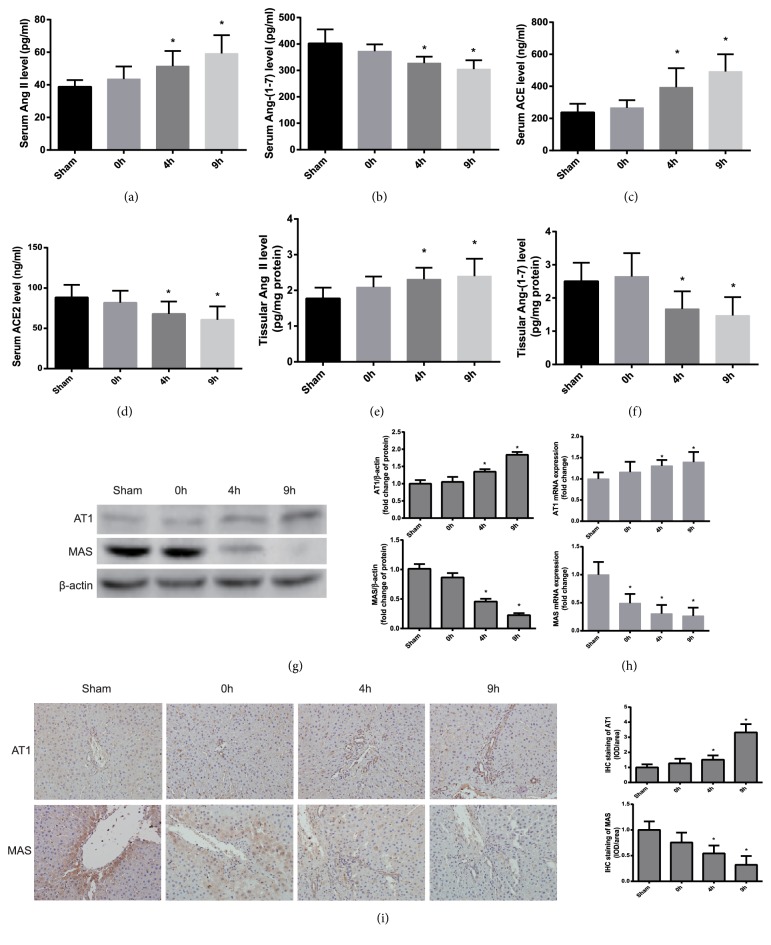
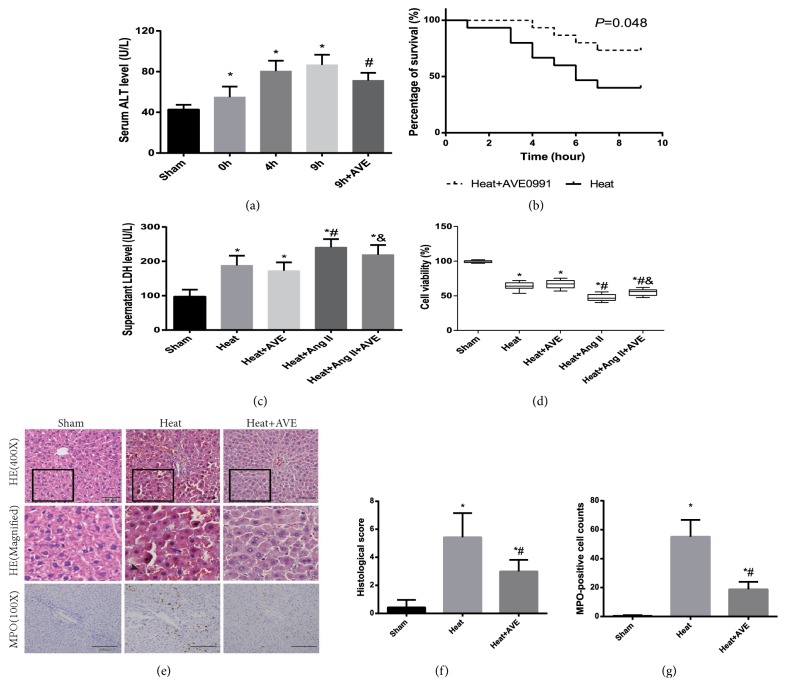
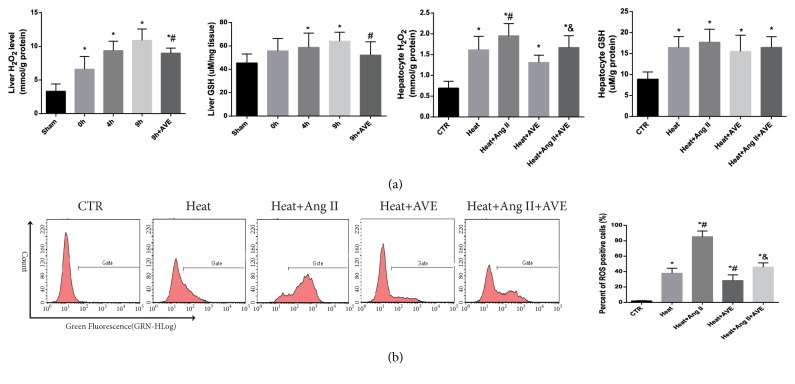
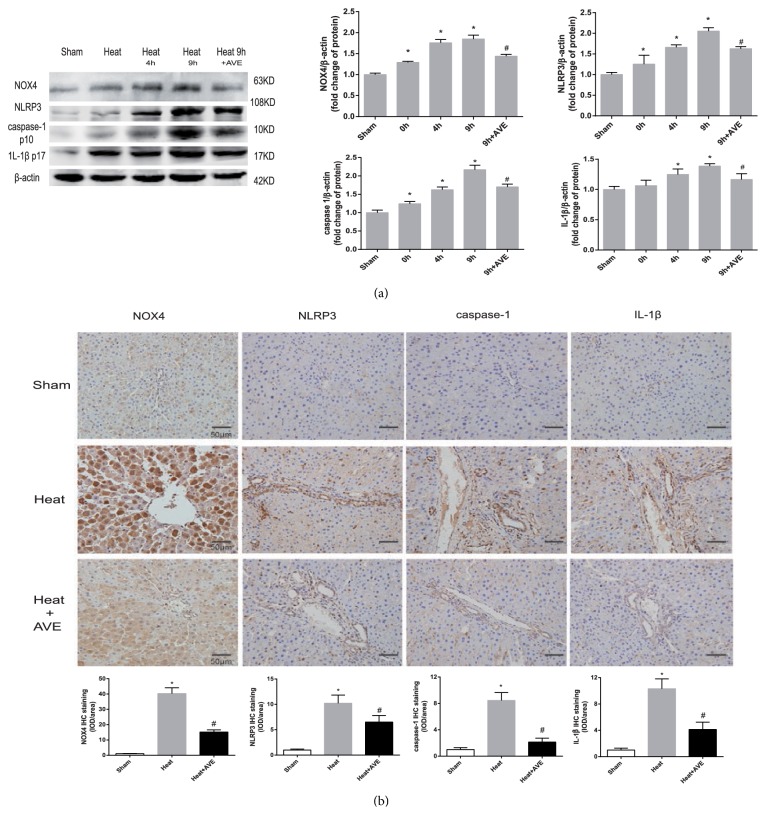
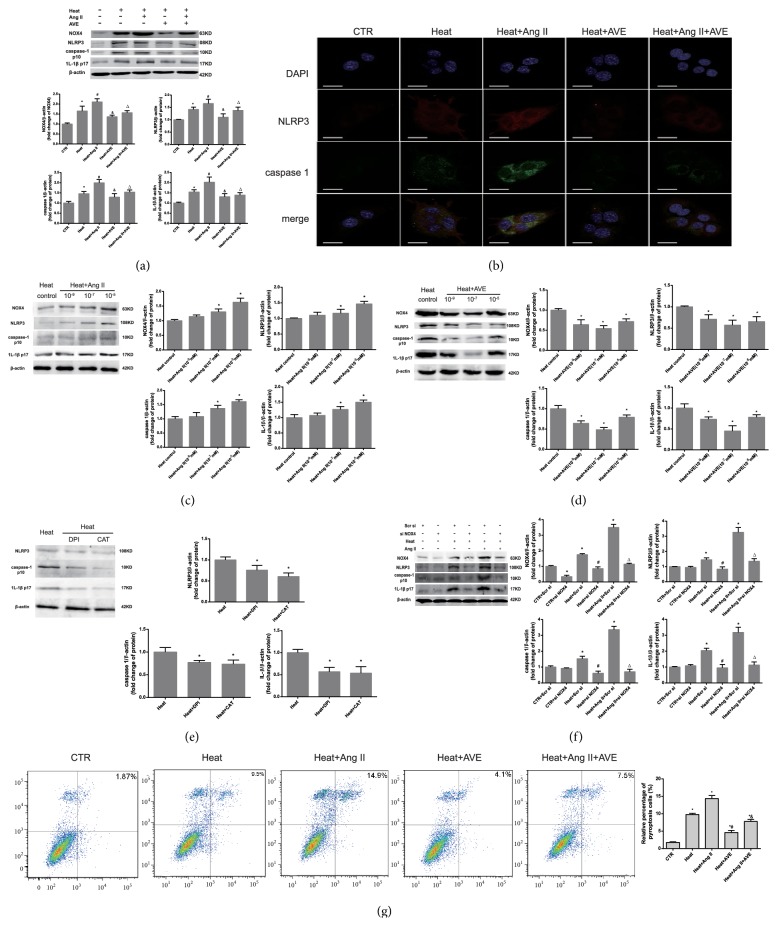
We previously demonstrated that angiotensin-(1-7) (Ang-(1-7)), an essential endocrine factor, inhibits the NLRP3 inflammasome by regulating reactive oxygen species (ROS) in fibrotic livers. We also demonstrated that the NLRP3 inflammasome contributes to the liver damage induced by pyroptosis after heatstroke. However, the role of Ang-(1-7) in the hepatocytes under heat stress remains uncertain. We aimed to examine the change in angiotensin peptides in the livers affected by heatstroke and the effect on the ROS-NLRP3 inflammatory signalling pathway. , increased angiotensin II (Ang II) and decreased Ang-(1-7) in the serum of heatstroke patients suffering from hepatic dysfunction were observed. The change in angiotensin peptides was considered a potential biomarker that could be used to predict hepatic dysfunction. Enhanced Ang II and attenuated Ang-(1-7) levels were also observed in the liver tissue of heatstroke rats, which were consistent with their receptors and converting enzymes. Hepatic damage associated with increased ROS and protein expression levels of NOX4, NLRP3, caspase-1, and IL-1 was attenuated by AVE 0991, an analogue of Ang-(1-7). , pyroptosis, characterized by activated caspase-1 and IL-1, was observed in hepatocytes under heat stress, which was enhanced by Ang II and attenuated by antioxidants, NOX4 siRNA, and AVE 0991. In summary, AVE 0991 attenuates pyroptosis and liver damage induced by heat stress by inhibiting the ROS-NLRP3 inflammatory signalling pathway.
我们之前的研究表明,血管紧张素-(1-7)(Ang-(1-7))作为一种重要的内分泌因子,通过调节纤维化肝脏中的活性氧(ROS)来抑制 NLRP3 炎性小体。我们还表明,NLRP3 炎性小体有助于中暑后细胞焦亡引起的肝损伤。然而,Ang-(1-7)在热应激下的肝细胞中的作用尚不确定。我们旨在研究热应激对肝脏的影响中血管紧张素肽的变化,以及对 ROS-NLRP3 炎症信号通路的影响。研究发现,患有肝功能障碍的中暑患者的血清中血管紧张素 II(Ang II)增加,Ang-(1-7)减少。血管紧张素肽的变化被认为是一种潜在的生物标志物,可用于预测肝功能障碍。中暑大鼠的肝组织中也观察到 Ang II 增强和 Ang-(1-7)水平降低,这与它们的受体和转化酶一致。Ang-(1-7)类似物 AVE 0991 可减轻与 ROS 增加和 NOX4、NLRP3、caspase-1 和 IL-1 蛋白表达水平升高相关的肝损伤。总之,AVE 0991 通过抑制 ROS-NLRP3 炎症信号通路来减轻热应激诱导的细胞焦亡和肝损伤。