Department of Psychology, Princeton Neuroscience Institute, Princeton University, Princeton, United States.
Rowland Institute at Harvard, Harvard University, Cambridge, United States.
Elife. 2019 Sep 18;8:e48429. doi: 10.7554/eLife.48429.
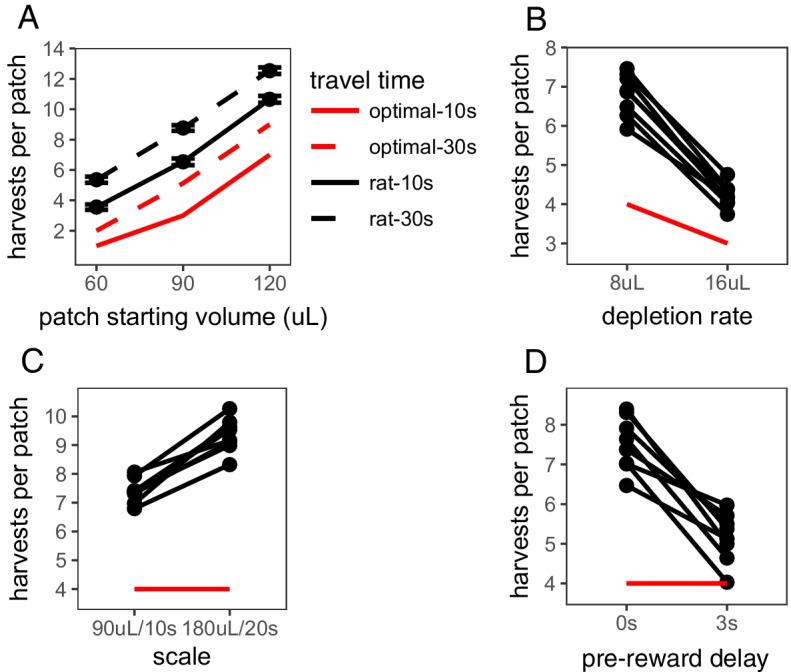
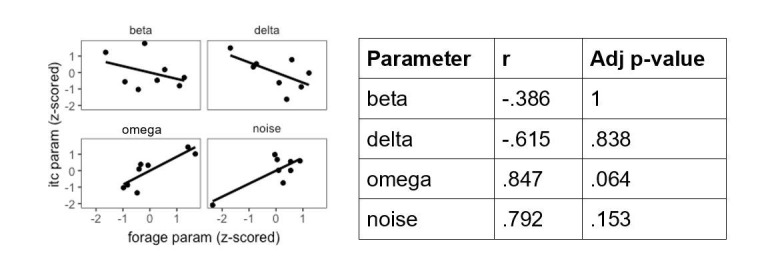
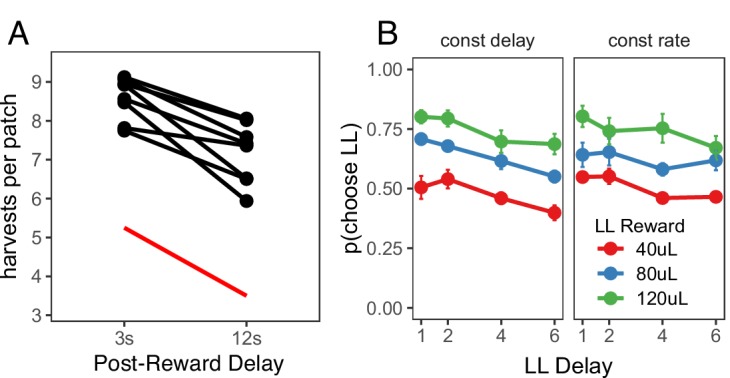
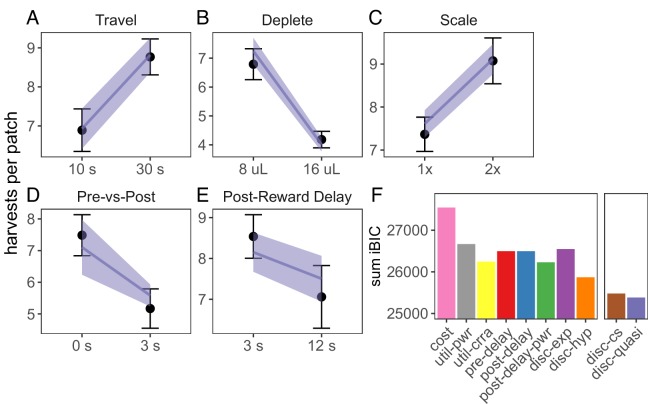
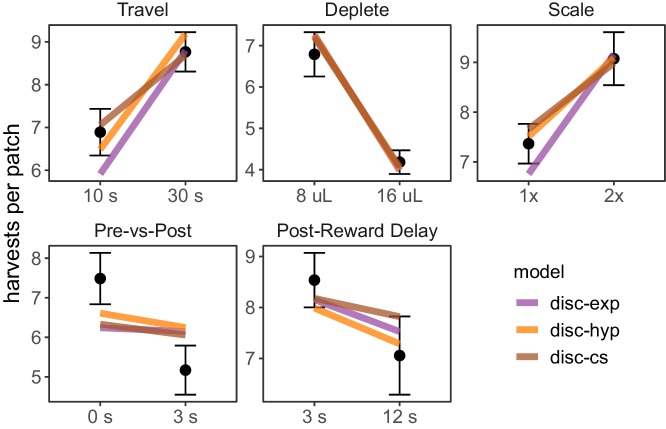
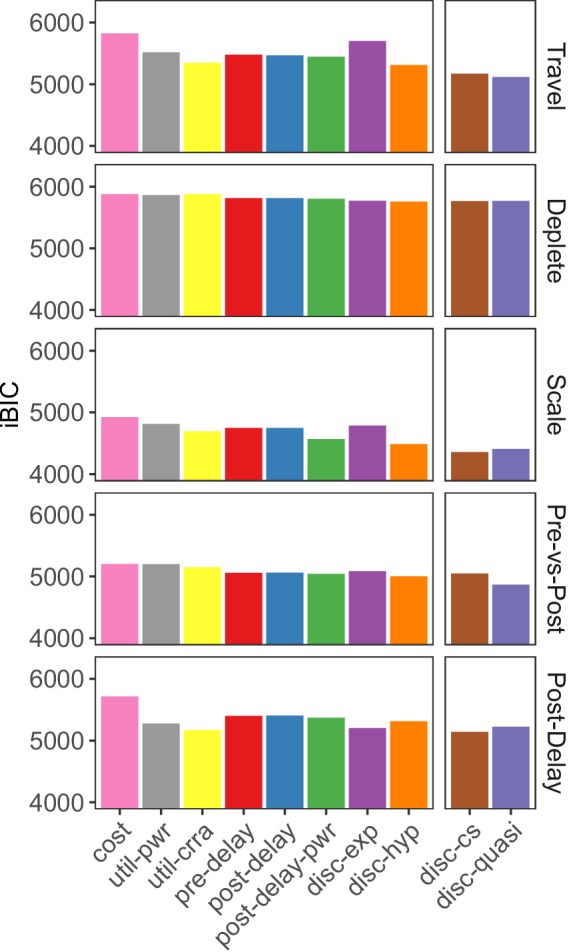
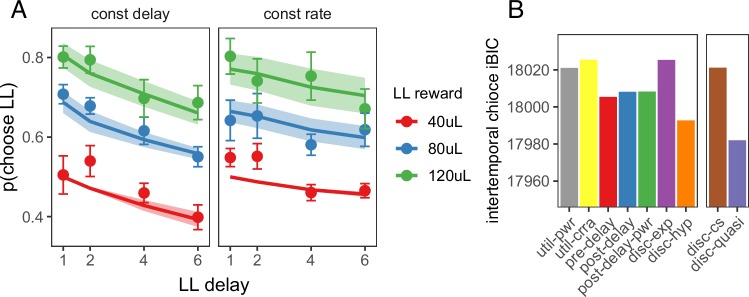
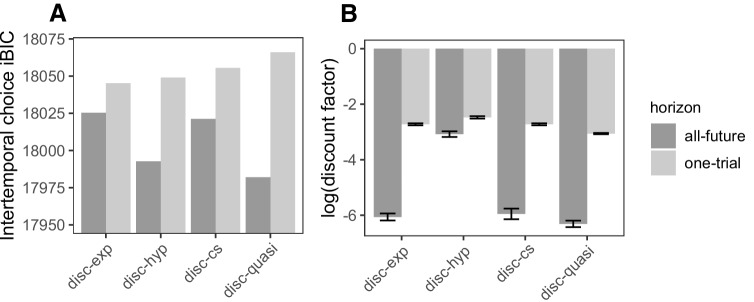
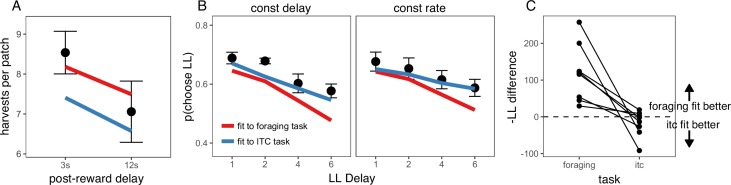
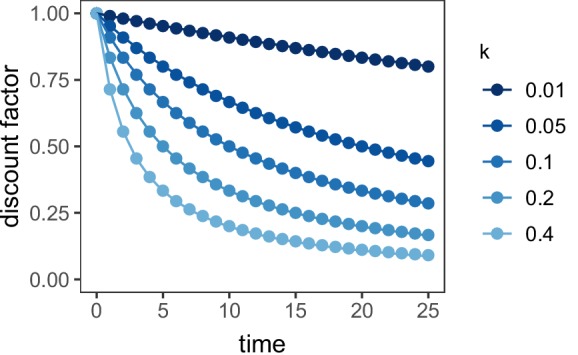
Animals, including humans, consistently exhibit myopia in two different contexts: foraging, in which they harvest locally beyond what is predicted by optimal foraging theory, and intertemporal choice, in which they exhibit a preference for immediate vs. delayed rewards beyond what is predicted by rational (exponential) discounting. Despite the similarity in behavior between these two contexts, previous efforts to reconcile these observations in terms of a consistent pattern of time preferences have failed. Here, via extensive behavioral testing and quantitative modeling, we show that rats exhibit similar time preferences in both contexts: they prefer immediate vs. delayed rewards and they are sensitive to opportunity costs of delays to future decisions. Further, a quasi-hyperbolic discounting model, a form of hyperbolic discounting with separate components for short- and long-term rewards, explains individual rats' time preferences across both contexts, providing evidence for a common mechanism for myopic behavior in foraging and intertemporal choice.
动物,包括人类,在两种不同的情况下持续表现出近视:觅食,在这种情况下,它们会收获超出最优觅食理论预测的局部范围内的食物;以及跨期选择,在这种情况下,它们会表现出对即时奖励的偏好,超过了理性(指数)贴现所预测的偏好。尽管这两种情况下的行为相似,但以前试图根据一致的时间偏好模式来协调这些观察结果的努力都失败了。在这里,通过广泛的行为测试和定量建模,我们表明大鼠在这两种情况下表现出相似的时间偏好:它们更喜欢即时奖励而不是延迟奖励,并且对未来决策的延迟的机会成本敏感。此外,一种拟双曲线折扣模型,即双曲线折扣的一种形式,具有短期和长期奖励的单独成分,解释了个体大鼠在两种情况下的时间偏好,为觅食和跨期选择中的近视行为提供了共同机制的证据。