Tudrej Patrycja, Kujawa Katarzyna Aleksandra, Cortez Alexander Jorge, Lisowska Katarzyna Marta
Center for Translational Research and Molecular Biology of Cancer, Maria Skłodowska-Curie Institute - Oncology Center, Gliwice Branch, ul. Wybrzeże Armii Krajowej 15, 44-101 Gliwice, Poland.
Diagnostics (Basel). 2019 Sep 14;9(3):120. doi: 10.3390/diagnostics9030120.
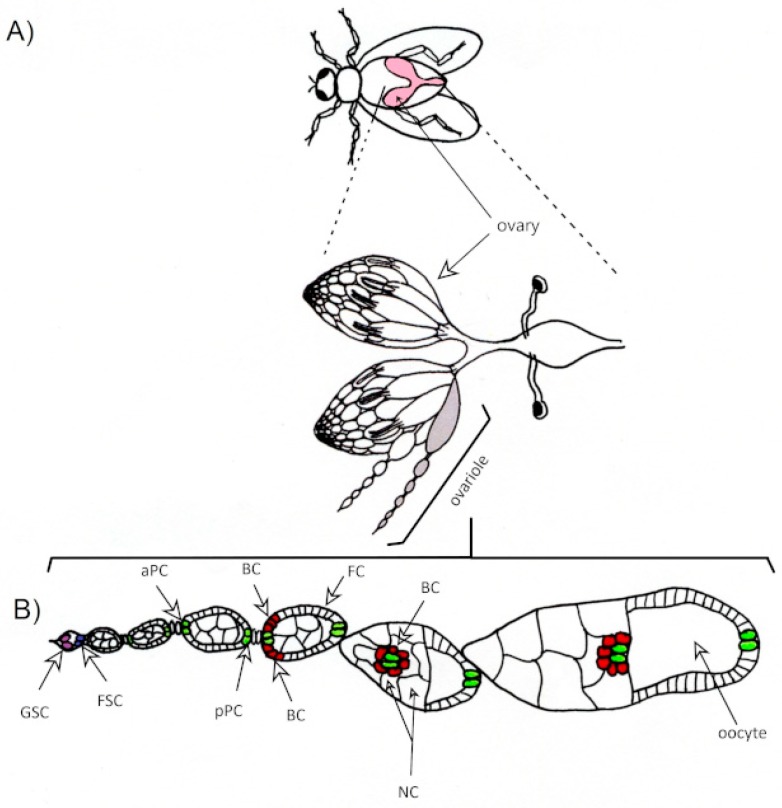
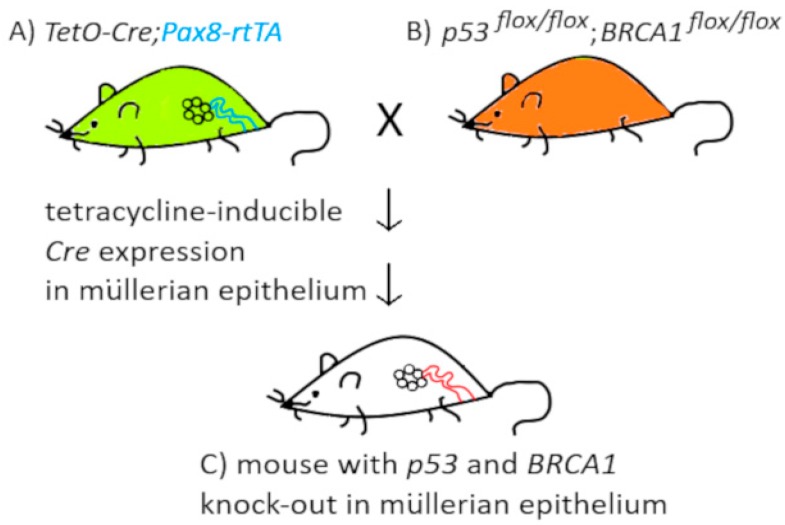
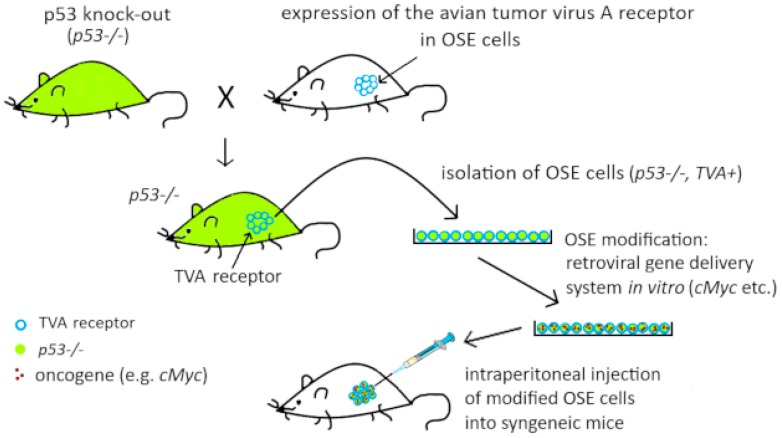
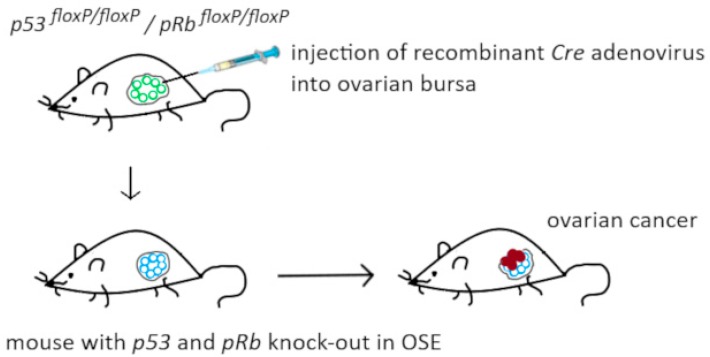
An understanding of the molecular pathogenesis and heterogeneity of ovarian cancer holds promise for the development of early detection strategies and novel, efficient therapies. In this review, we discuss the advantages and limitations of animal models available for basic and preclinical studies. The fruit fly model is suitable mainly for basic research on cellular migration, invasiveness, adhesion, and the epithelial-to-mesenchymal transition. Higher-animal models allow to recapitulate the architecture and microenvironment of the tumor. We discuss a syngeneic mice model and the patient derived xenograft model (PDX), both useful for preclinical studies. Conditional knock-in and knock-out methodology allows to manipulate selected genes at a given time and in a certain tissue. Such models have built our knowledge about tumor-initiating genetic events and cell-of-origin of ovarian cancers; it has been shown that high-grade serous ovarian cancer may be initiated in both the ovarian surface and tubal epithelium. It is postulated that clawed frog models could be developed, enabling studies on tumor immunity and anticancer immune response. In laying hen, ovarian cancer develops spontaneously, which provides the opportunity to study the genetic, biochemical, and environmental risk factors, as well as tumor initiation, progression, and histological origin; this model can also be used for drug testing. The chick embryo chorioallantoic membrane is another attractive model and allows the study of drug response.
了解卵巢癌的分子发病机制和异质性有望推动早期检测策略以及新型高效疗法的发展。在本综述中,我们讨论了可用于基础研究和临床前研究的动物模型的优缺点。果蝇模型主要适用于细胞迁移、侵袭、黏附以及上皮-间质转化的基础研究。高等动物模型能够重现肿瘤的结构和微环境。我们讨论了同基因小鼠模型和患者来源的异种移植模型(PDX),这两种模型都对临床前研究有用。条件性基因敲入和敲除方法能够在特定时间和特定组织中操纵选定的基因。此类模型增进了我们对卵巢癌起始遗传事件和起源细胞的了解;研究表明,高级别浆液性卵巢癌可能起源于卵巢表面上皮和输卵管上皮。据推测,可以开发非洲爪蟾模型,用于研究肿瘤免疫和抗癌免疫反应。在蛋鸡中,卵巢癌会自发发生,这为研究遗传、生化和环境风险因素以及肿瘤的起始、进展和组织学起源提供了机会;该模型也可用于药物测试。鸡胚绒毛尿囊膜是另一个有吸引力的模型,可用于研究药物反应。