Kelley School of Business, Indiana University, Bloomington, IN, 47405, USA.
Department of Statistics, Indiana University, Bloomington, IN, 47408, USA.
Nat Commun. 2019 Sep 20;10(1):4314. doi: 10.1038/s41467-019-12317-z.
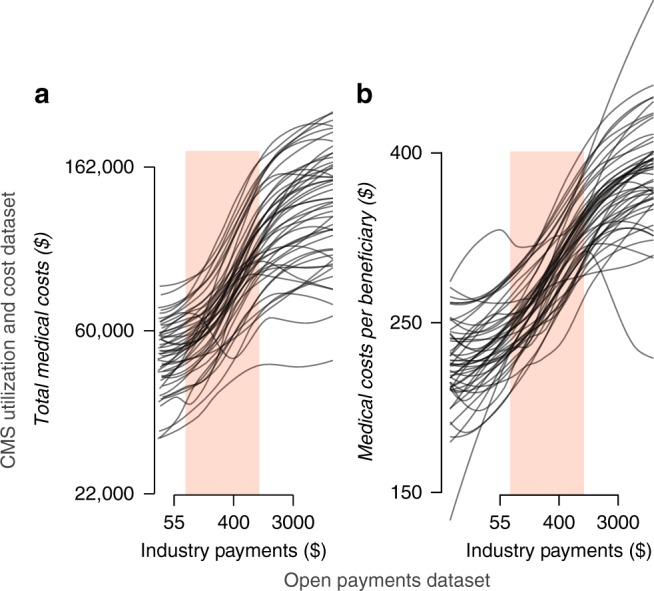
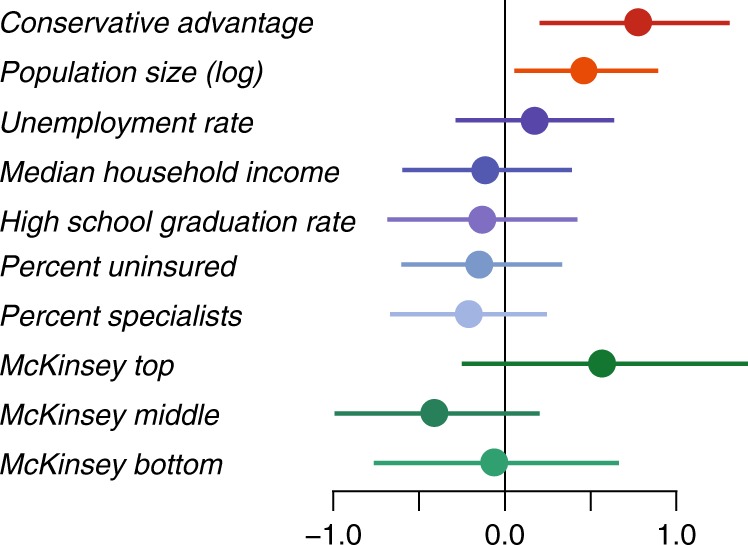
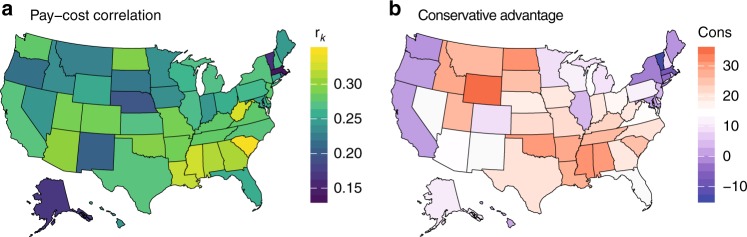
Healthcare industry players make payments to medical providers for non-research expenses. While these payments may pose conflicts of interest, their relationship with overall healthcare costs remains largely unknown. In this study, we linked Open Payments data on providers' industry payments with Medicare data on healthcare costs. We investigated 374,766 providers' industry payments and healthcare costs. We demonstrate that providers receiving higher amounts of industry payments tend to bill higher drug and medical costs. Specifically, we find that a 10% increase in industry payments is associated with 1.3% higher medical and 1.8% higher drug costs. For a typical provider, for example, a 10% or $25 increase in annual industry payments would be associated with approximately $1,100 higher medical costs and $100 higher drug costs. Furthermore, the association between payments and healthcare costs varies markedly across states and correlates with political leaning, being stronger in more conservative states.
医疗保健行业参与者向医疗服务提供者支付非研究费用。虽然这些支付可能存在利益冲突,但它们与整体医疗保健成本的关系在很大程度上尚不清楚。在这项研究中,我们将提供者的行业支付的公开支付数据与医疗保险的医疗保健成本数据联系起来。我们调查了 374,766 名提供者的行业支付和医疗保健成本。我们表明,接受更多行业支付的提供者往往开出更高的药品和医疗费用。具体来说,我们发现行业支付增加 10%与医疗费用增加 1.3%和药品费用增加 1.8%相关。例如,对于一个典型的提供者来说,行业支付每年增加 10%或 25 美元,与医疗费用增加约 1100 美元和药品费用增加 100 美元相关。此外,支付与医疗保健成本之间的关联在各州之间差异显著,并与政治倾向相关,在更为保守的州更强。