Department of Microbiology and Medical Zoology, University of Puerto Rico-Medical Sciences Campus, San Juan, PR, USA.
Takeda Vaccines Inc, Cambridge, MA, USA.
Nat Commun. 2019 Sep 20;10(1):4316. doi: 10.1038/s41467-019-12295-2.
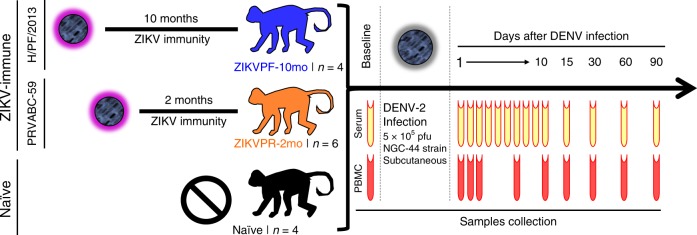
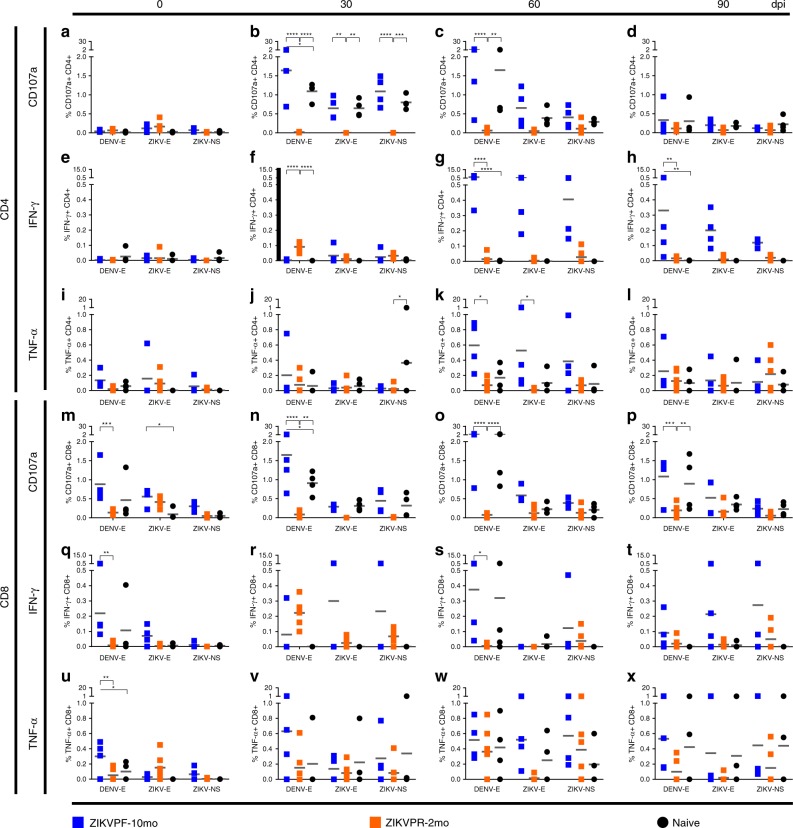
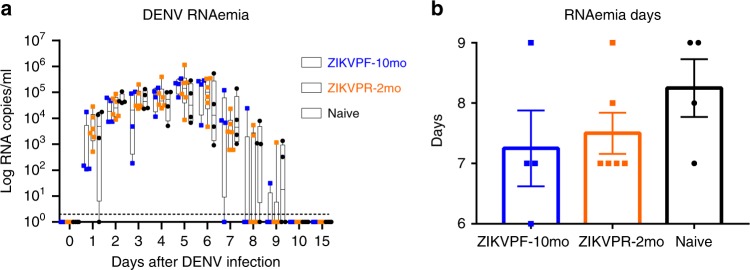
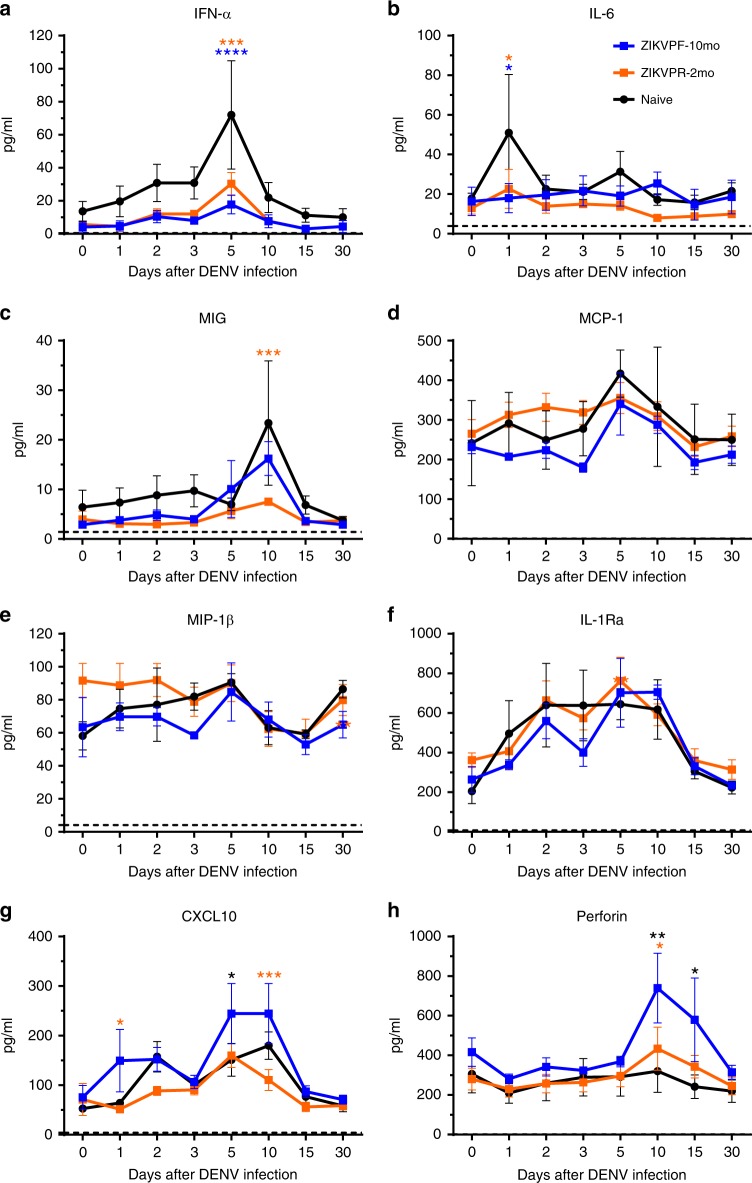
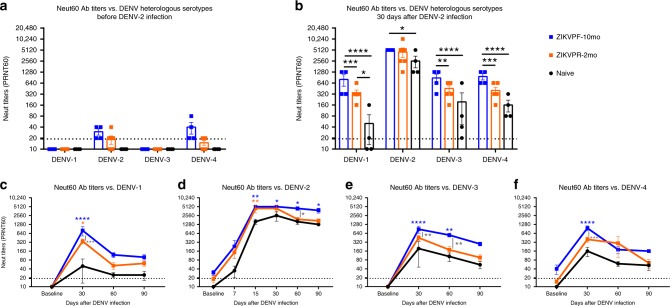
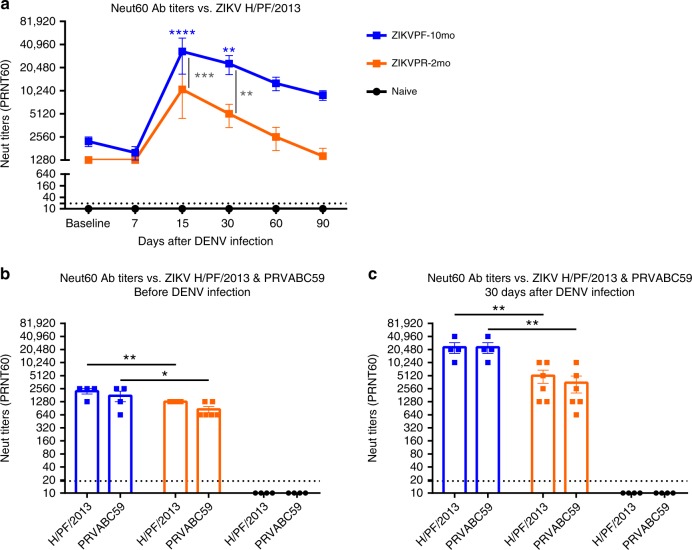
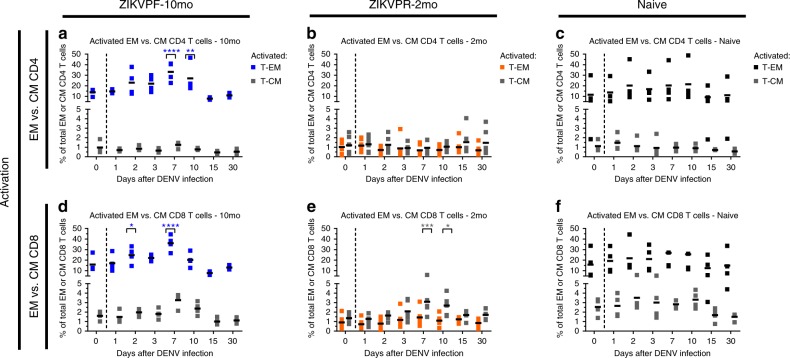
Zika virus (ZIKV) and dengue virus (DENV) are co-endemic in many parts of the world, but the impact of ZIKV infection on subsequent DENV infection is not well understood. Here we show in rhesus macaques that the time elapsed after ZIKV infection affects the immune response to DENV infection. We show that previous ZIKV exposure increases the magnitude of the antibody and T cell responses against DENV. The time interval between ZIKV and subsequent DENV infection further affects the immune response. A mid-convalescent period of 10 months after ZIKV infection results in higher and more durable antibody and T cell responses to DENV infection than a short period of 2 months. In contrast, previous ZIKV infection does not affect DENV viremia or pro-inflammatory status. Collectively, we find no evidence of a detrimental effect of ZIKV immunity in a subsequent DENV infection. This supports the implementation of ZIKV vaccines that could also boost immunity against future DENV epidemics.
寨卡病毒(ZIKV)和登革热病毒(DENV)在世界许多地区共同流行,但 ZIKV 感染对随后的 DENV 感染的影响尚不清楚。在这里,我们在恒河猴中表明,ZIKV 感染后经过的时间会影响对 DENV 感染的免疫反应。我们发现先前的 ZIKV 暴露会增加针对 DENV 的抗体和 T 细胞反应的幅度。ZIKV 和随后的 DENV 感染之间的时间间隔进一步影响免疫反应。ZIKV 感染后 10 个月的中期恢复期导致对 DENV 感染的抗体和 T 细胞反应更高且更持久,而 2 个月的短期恢复期则不会。相比之下,先前的 ZIKV 感染不会影响 DENV 病毒血症或促炎状态。总的来说,我们没有发现 ZIKV 免疫在随后的 DENV 感染中产生有害影响的证据。这支持了 ZIKV 疫苗的实施,该疫苗也可以增强对未来 DENV 流行的免疫力。