Centre for Environmental Sustainability and Remediation, School of Science, RMIT University, Bundoora, VIC 3083, Australia.
Department of Biochemistry, Faculty of Agriculture, Benha University, Moshtohor, Toukh, Qaliuobia 13736, Egypt.
Molecules. 2019 Sep 19;24(18):3400. doi: 10.3390/molecules24183400.
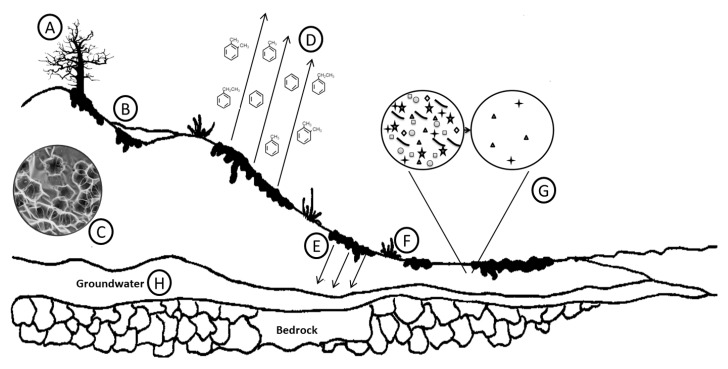
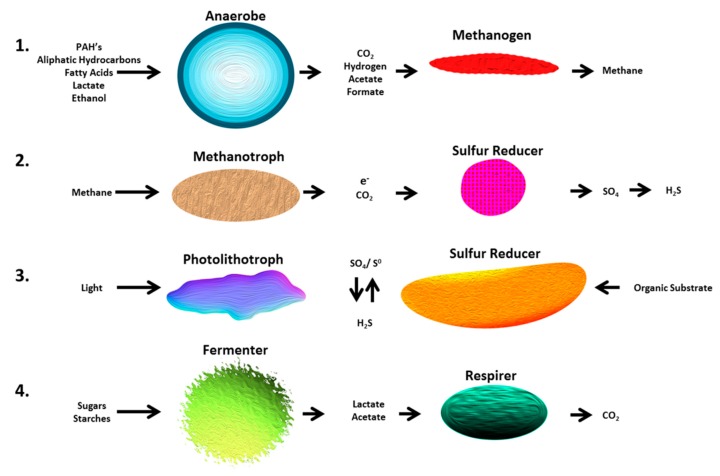
Petroleum hydrocarbons represent the most frequent environmental contaminant. The introduction of petroleum hydrocarbons into a pristine environment immediately changes the nature of that environment, resulting in reduced ecosystem functionality. Natural attenuation represents the single, most important biological process which removes petroleum hydrocarbons from the environment. It is a process where microorganisms present at the site degrade the organic contaminants without the input of external bioremediation enhancers (i.e., electron donors, electron acceptors, other microorganisms or nutrients). So successful is this natural attenuation process that in environmental biotechnology, bioremediation has developed steadily over the past 50 years based on this natural biodegradation process. Bioremediation is recognized as the most environmentally friendly remediation approach for the removal of petroleum hydrocarbons from an environment as it does not require intensive chemical, mechanical, and costly interventions. However, it is under-utilized as a commercial remediation strategy due to incomplete hydrocarbon catabolism and lengthy remediation times when compared with rival technologies. This review aims to describe the fate of petroleum hydrocarbons in the environment and discuss their interactions with abiotic and biotic components of the environment under both aerobic and anaerobic conditions. Furthermore, the mechanisms for dealing with petroleum hydrocarbon contamination in the environment will be examined. When petroleum hydrocarbons contaminate land, they start to interact with its surrounding, including physical (dispersion), physiochemical (evaporation, dissolution, sorption), chemical (photo-oxidation, auto-oxidation), and biological (plant and microbial catabolism of hydrocarbons) interactions. As microorganism (including bacteria and fungi) play an important role in the degradation of petroleum hydrocarbons, investigations into the microbial communities within contaminated soils is essential for any bioremediation project. This review highlights the fate of petroleum hydrocarbons in tertial environments, as well as the contributions of different microbial consortia for optimum petroleum hydrocarbon bioremediation potential. The impact of high-throughput metagenomic sequencing in determining the underlying degradation mechanisms is also discussed. This knowledge will aid the development of more efficient, cost-effective commercial bioremediation technologies.
石油烃是最常见的环境污染物。石油烃进入原始环境会立即改变环境的性质,导致生态系统功能降低。自然衰减是从环境中去除石油烃的最重要的单一生物过程。这是一个微生物在现场降解有机污染物而无需外部生物修复增强剂(即电子供体、电子受体、其他微生物或营养素)的过程。自然衰减过程非常成功,以至于在环境生物技术中,生物修复在过去 50 年中一直基于这种天然生物降解过程稳步发展。生物修复被认为是从环境中去除石油烃的最环保的修复方法,因为它不需要密集的化学、机械和昂贵的干预。然而,与竞争技术相比,由于不完全的烃类代谢和较长的修复时间,它作为商业修复策略的应用并不广泛。本综述旨在描述石油烃在环境中的归宿,并讨论它们在有氧和无氧条件下与环境的非生物和生物成分的相互作用。此外,还将研究处理环境中石油烃污染的机制。当石油烃污染土地时,它们开始与周围环境相互作用,包括物理(分散)、物理化学(蒸发、溶解、吸附)、化学(光氧化、自动氧化)和生物(植物和微生物对烃类的代谢)相互作用。由于微生物(包括细菌和真菌)在石油烃的降解中起着重要作用,因此对污染土壤中的微生物群落进行调查对于任何生物修复项目都是必不可少的。本综述重点介绍了石油烃在第三环境中的归宿,以及不同微生物群落对最佳石油烃生物修复潜力的贡献。还讨论了高通量宏基因组测序在确定潜在降解机制方面的作用。这些知识将有助于开发更高效、更具成本效益的商业生物修复技术。