Ouédraogo Lassané, Fuchs Dominik, Schaefer Hanno, Kiendrebeogo Martin
Centre National de Recherche Scientifique et Technologique (CNRST), Institut de l'Environnement et de Recherches Agricoles, 03 BP 7047 Ouagadougou 03, Burkina Faso.
Laboratoire de Biochimie & Chimie Appliquées, Université Joseph Ki-Zerbo, 09 BP 848 Ouagadougou 09, Burkina Faso.
Plants (Basel). 2019 Sep 19;8(9):353. doi: 10.3390/plants8090353.
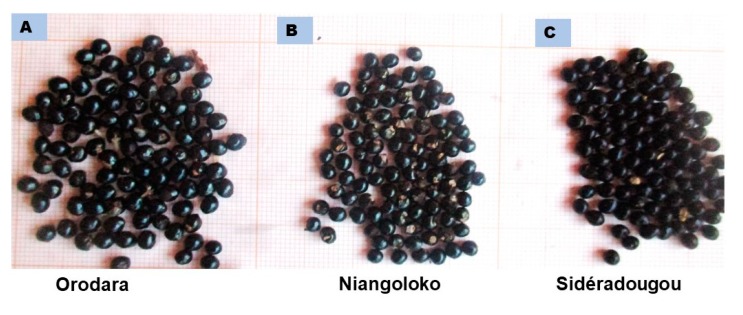
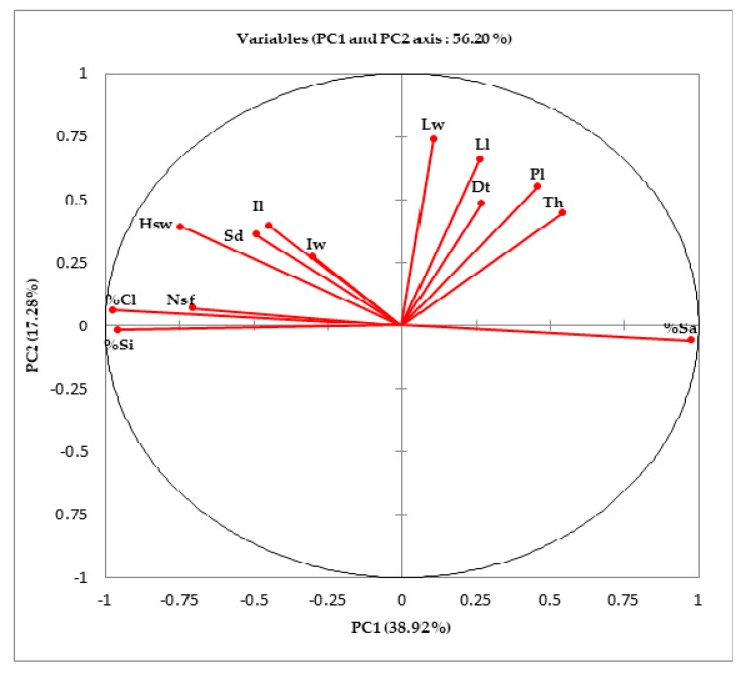
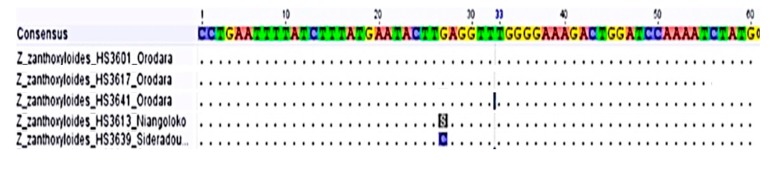
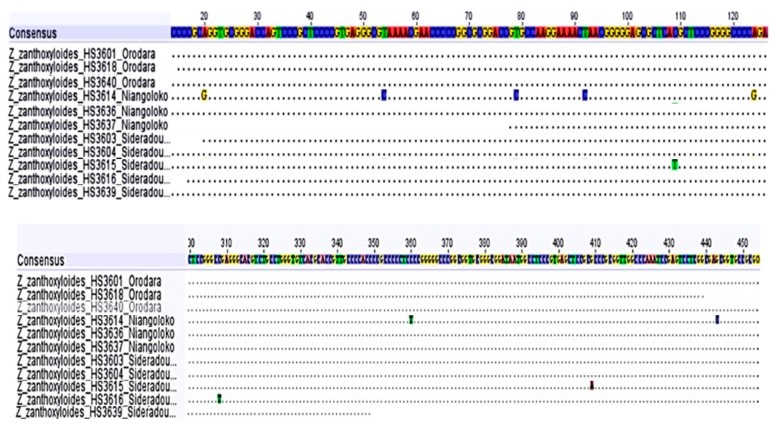
is a West African forest tree that is used for example against malaria and sickle cell anemia in Burkina Faso. The goal of this study was to analyze the genetic and morphological diversity of the species within wild populations in Burkina Faso, where it is potentially under threat due to the uncontrolled harvesting of its roots. Seventy-two trees from three different sites in Southwestern Burkina Faso were analyzed. Each tree was characterized by 12 traits specifying the period of flowering and maturity as well as morphological characteristics of the stem, leaves, and seeds. The molecular analysis was performed using two plastid DNA regions ( and ) and two nuclear regions (GBSSI and ITS) to identify the genetic diversity of the species for further development of a management plan for ex situ reproduction and in situ conservation. We found variability in morphological traits correlating with the geographic distance of the study sites. The molecular analysis, in contrast, revealed hardly any genetic variability among the tested trees and no population structure. Whether the differences in morphological traits are caused by different environmental conditions or by genetic variability in genes linked to morphological traits needs further testing. The apparent lack of genetic differentiation suggests that germplasm throughout the study region is suitable for planting in conservation actions. Efficient conservation management should involve local communities, especially those interested in traditional medicine.
是一种西非森林树木,例如在布基纳法索被用于对抗疟疾和镰状细胞贫血。本研究的目的是分析布基纳法索野生种群中该物种的遗传和形态多样性,在该国,由于其根部被无节制采挖,该物种可能受到威胁。对来自布基纳法索西南部三个不同地点的72棵树进行了分析。每棵树由12个性状表征,这些性状规定了开花和成熟时期以及茎、叶和种子的形态特征。使用两个质体DNA区域(和)以及两个核区域(GBSSI和ITS)进行分子分析,以确定该物种的遗传多样性,以便进一步制定迁地繁殖和就地保护的管理计划。我们发现形态性状的变异性与研究地点的地理距离相关。相比之下,分子分析显示受试树木之间几乎没有遗传变异性,也没有种群结构。形态性状的差异是由不同的环境条件还是与形态性状相关基因的遗传变异性引起的,这需要进一步测试。明显缺乏遗传分化表明整个研究区域的种质适合用于保护行动中的种植。有效的保护管理应让当地社区参与,特别是那些对传统医学感兴趣的社区。