Laboratory of Plant Biology and Ecology, University Ouaga I Pr Joseph Ki-Zerbo, UFR/SVT, 03 BP 7021, Ouagadougou 03, Burkina Faso.
Department of Environmental Science, University of Seychelles, Anse Royale, Seychelles.
J Ethnobiol Ethnomed. 2019 Jun 24;15(1):28. doi: 10.1186/s13002-019-0305-4.
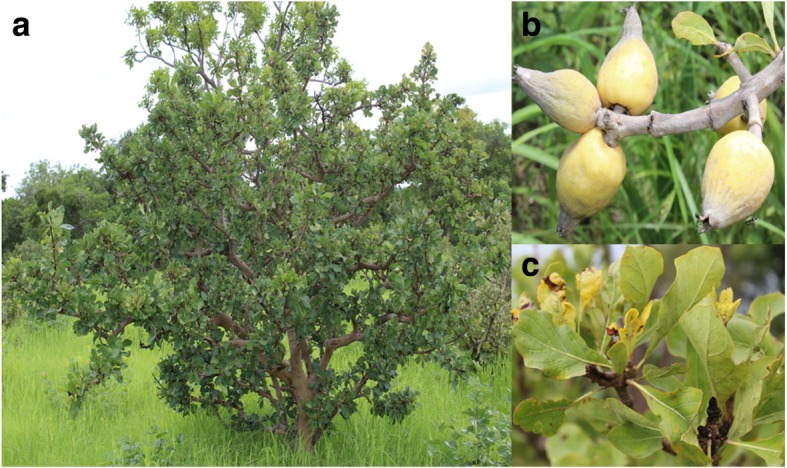
Traditional knowledge (TK) on the different uses of under-valued fruit tree species including Gardenia erubescens Stapf & Hutch.-a plant species of least concern (LC) based on International Union for Conservation of Nature (IUCN) classification yet considered threatened due to overharvesting by a National Assessment in addition to 59 other species in Burkina Faso. This study aimed to collect and synthesize information on traditional knowledge and cultural importance of G. erubescens. This information will contribute to document traditional knowledge systems that are fast eroding due to the lack of transmission of the knowledge and will also highlight G. erubescens as a priority species for conservation given that this species is widely used among householders in rural areas in Burkina Faso.
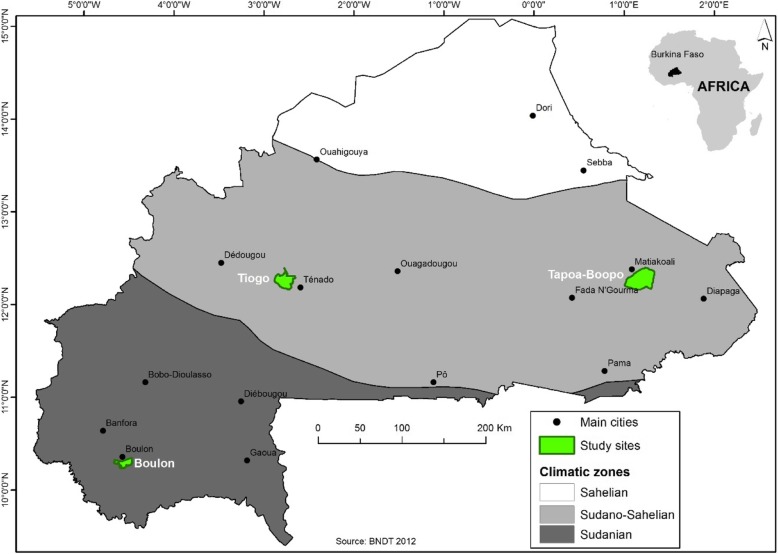
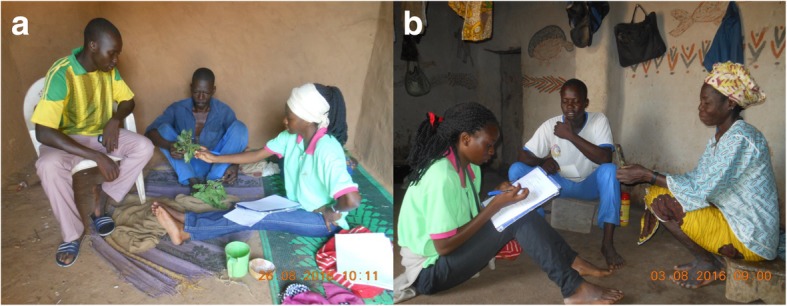
This study assesses TK on the uses and cultural importance (CI) of G. erubescens, among 514 randomly selected respondents across 15 villages bordering three community forest areas located in Eastern and Centre-Western Regions of Burkina Faso through face-to-face semi-structured interviews. Additionally, the uses and CI of G. erubescens were evaluated in relation to informant's gender, ethnicity, generation, and location. Ethnobotanical indices (relative frequency of citation, relative use value, and CI) were computed using generalized linear models, Kruskal-Wallis, and Mann-Whitney tests.
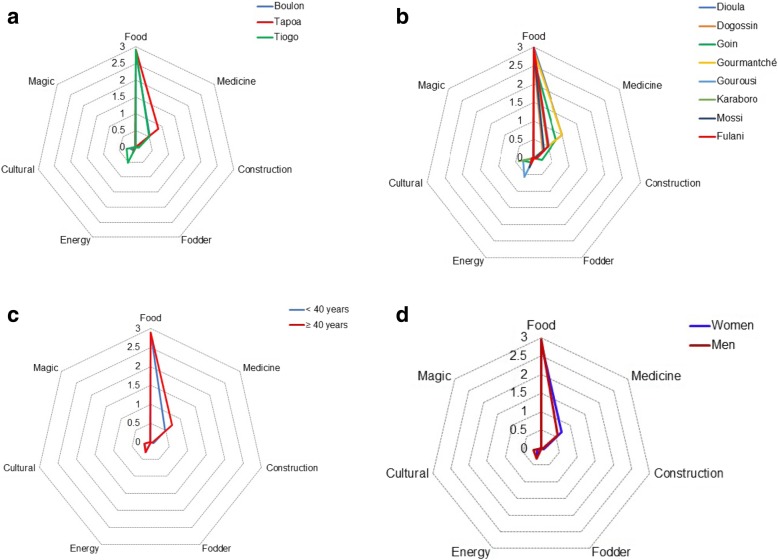
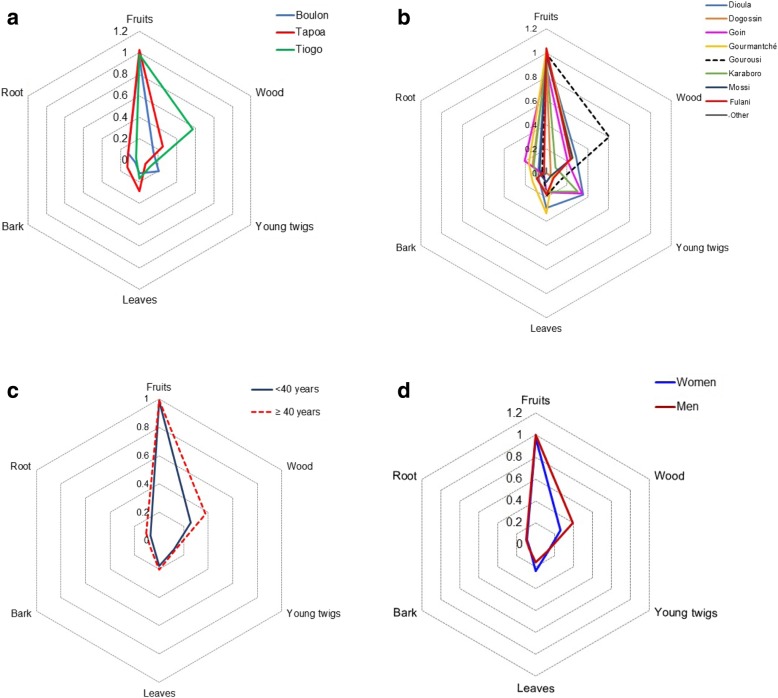
Results indicated 30 specific uses of G. erubescens of which food values recorded the highest uses as reported by 58.97% respondents followed by medicine (17.22%) with a very low 0.23% for magical uses. Food and medicinal uses were the most important for women while men valued more the species for constructions, cultural, and magical uses. The fruit is the most preferred and marketable part of the plant while the leaves, fruits, roots, leafy twigs, and bark are mainly harvested for pharmacopeia and psycho-magical problems.
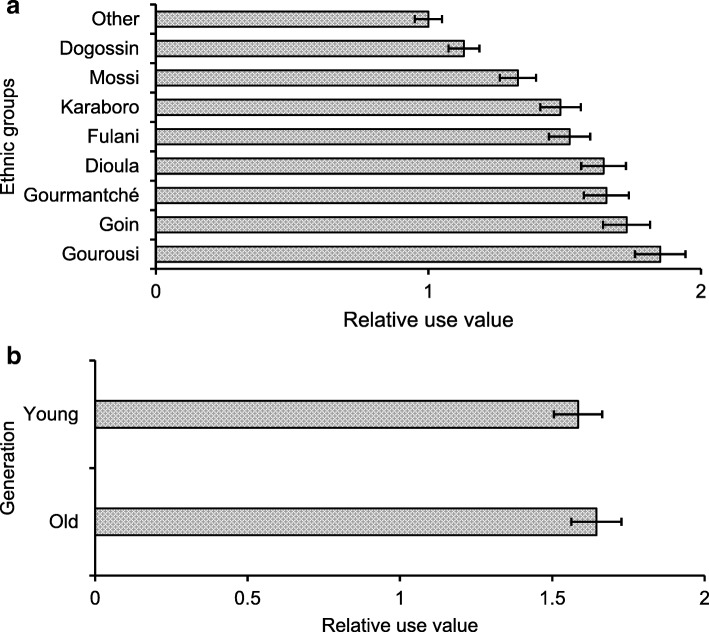
Traditional knowledge on the uses of G. erubescens varied significantly in relation to gender, ethnicity, generations, and case study locations. Despite the importance of G. erubescens for food and other livelihood values, this specie is of LC to the IUCN; yet, a National Assessment considers it as threatened. The multiple uses of this specie based on TK systems for uses such as food, income, medicine, etc. is an indication that G. erubescens if sustainable managed could form an important safety net especially for rural households in Burkina Faso that are highly dependent on trees and forest resources.
传统知识(TK)涉及被低估的果树物种的不同用途,包括 Gardenia erubescens Stapf & Hutch.——一种基于国际自然保护联盟 (IUCN) 分类的最不受关注的物种(LC),但由于国家评估以及布基纳法索的 59 个其他物种的过度采集而被认为受到威胁。本研究旨在收集和综合有关 G. erubescens 的传统知识和文化重要性的信息。这些信息将有助于记录由于缺乏知识的传播而迅速消失的传统知识系统,并突出 G. erubescens 作为优先保护物种,因为这种物种在布基纳法索农村地区的家庭中被广泛使用。
本研究通过面对面的半结构化访谈,在布基纳法索东部和中西地区的三个社区森林区边界的 15 个村庄中,对随机选择的 514 名受访者进行了 G. erubescens 用途和文化重要性(CI)的 TK 评估。此外,还评估了 G. erubescens 的用途和 CI 与信息提供者的性别、族裔、代际和地点之间的关系。使用广义线性模型、克鲁斯卡尔-沃利斯检验和曼-惠特尼检验计算了相对频率引用、相对使用值和 CI 等民族植物学指数。
结果表明,G. erubescens 有 30 种具体用途,其中食物价值的使用率最高,有 58.97%的受访者报告,其次是药物(17.22%),而魔法用途的使用率仅为 0.23%。食物和药用用途对女性最重要,而男性则更看重该物种在建筑、文化和魔法方面的用途。水果是该植物最受欢迎和最具市场价值的部分,而叶子、果实、根、叶状嫩枝和树皮主要用于药物和心理魔法问题。
与性别、族裔、代际和案例研究地点有关,G. erubescens 的用途传统知识差异显著。尽管 G. erubescens 对食物和其他生计价值很重要,但该物种对 IUCN 来说是最不受关注的物种;然而,国家评估认为它受到威胁。基于 TK 系统,该物种具有多种用途,如食物、收入、药物等,这表明如果可持续管理,G. erubescens 可以形成一个重要的安全网,特别是对布基纳法索高度依赖树木和森林资源的农村家庭。