Kokkinos Christos
Laboratory of Analytical Chemistry, Department of Chemistry, National and Kapodistrian University of Athens, 15771 Athens, Greece.
Nanomaterials (Basel). 2019 Sep 23;9(10):1361. doi: 10.3390/nano9101361.
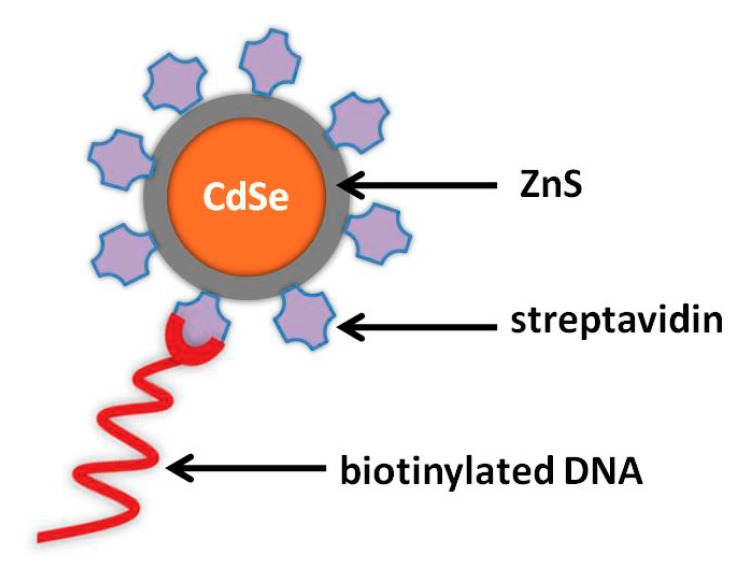
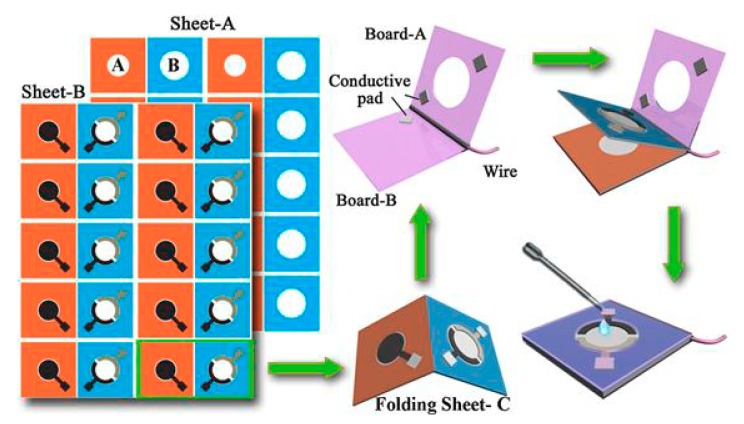
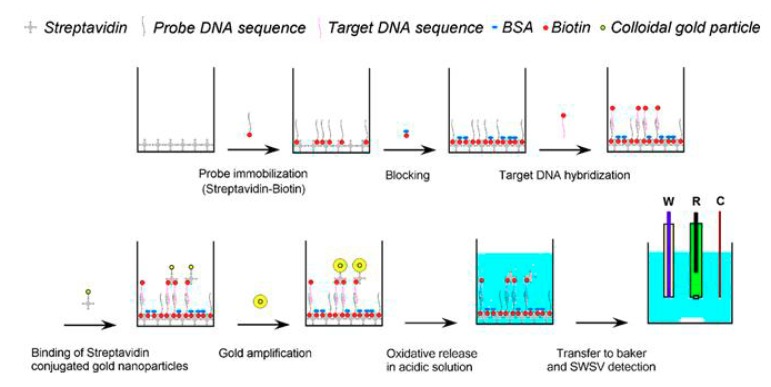
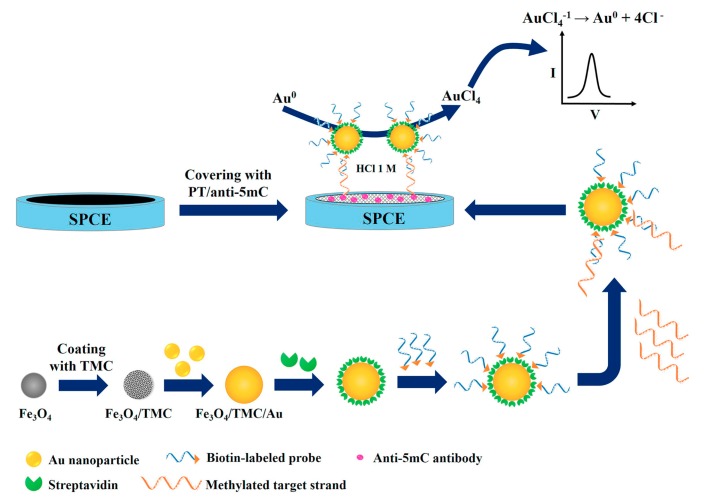
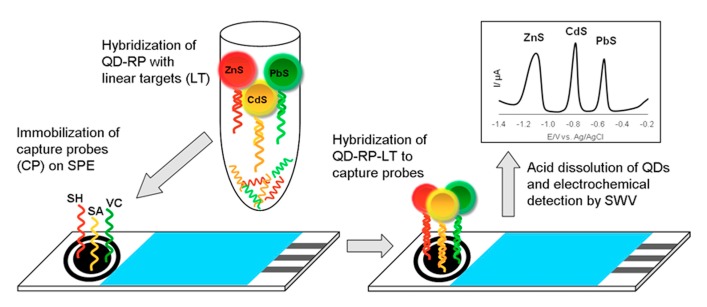
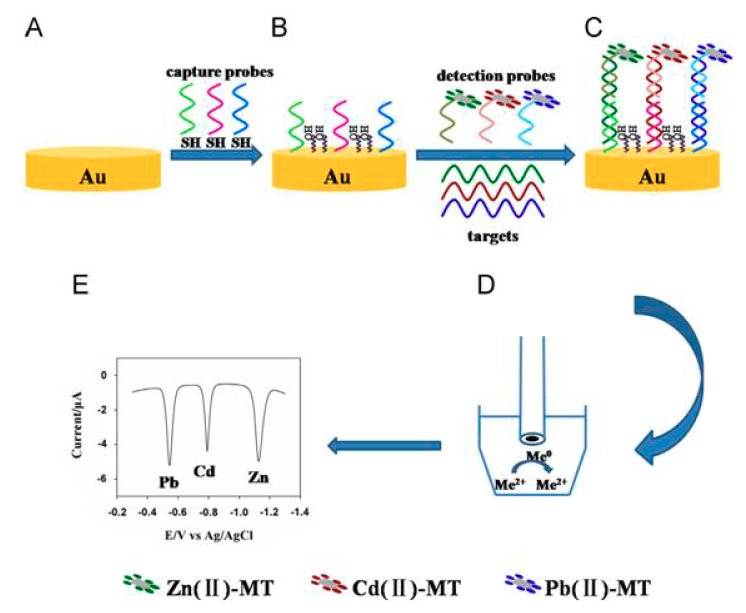
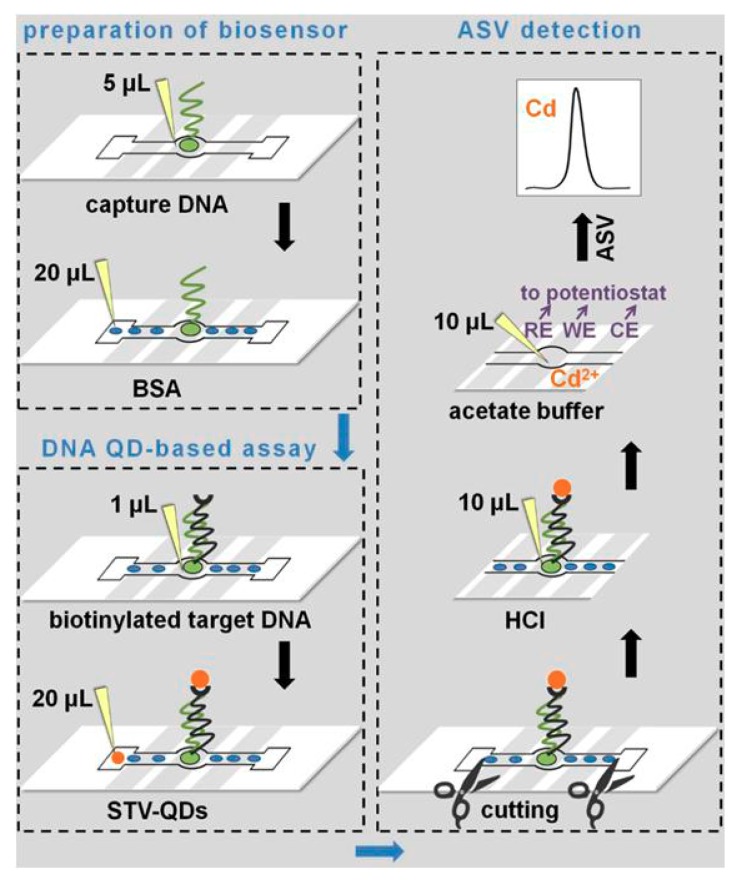
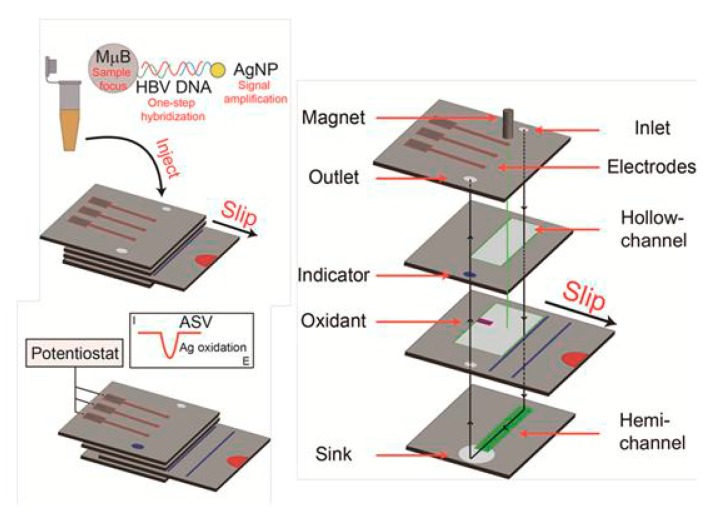
This work reviews the field of DNA biosensors based on electrochemical determination of nanoparticle labels. These labeling platforms contain the attachment of metal nanoparticles (NPs) or quantum dots (QDs) on the target DNA or on a biorecognition reporting probe. Following the development of DNA bioassay, the nanotags are oxidized to ions, which are determined by voltammetric methods, such as pulse voltammetry (PV) and stripping voltammetry (SV). The synergistic effects of NPs amplification (as each nanoprobe releases a large number of detectable ions) and the inherent sensitivity of voltammetric techniques (e.g., thanks to the preconcentration step of SV) leads to the construction of ultrasensitive, low cost, miniaturized, and integrated biodevices. This review focuses on accomplishments in DNA sensing using voltammetric determination of nanotags (such as gold and silver NPs, and Cd- and Pb-based QDs), includes published works on integrated three electrode biodevices and paper-based biosystems, and discusses strategies for multiplex DNA assays and signal enhancement procedures. Besides, this review mentions the electroactive NP synthesis procedures and their conjugation protocols with biomolecules that enable their function as labels in DNA electrochemical biosensors.
本文综述了基于纳米颗粒标记物电化学测定的DNA生物传感器领域。这些标记平台包括在目标DNA或生物识别报告探针上附着金属纳米颗粒(NPs)或量子点(QDs)。随着DNA生物分析技术的发展,纳米标签被氧化成离子,通过伏安法(如脉冲伏安法(PV)和溶出伏安法(SV))进行测定。纳米颗粒放大作用(因为每个纳米探针会释放大量可检测离子)与伏安技术的固有灵敏度(例如,得益于溶出伏安法的预浓缩步骤)的协同效应,促成了超灵敏、低成本、小型化和集成化生物器件的构建。本综述聚焦于使用纳米标签(如金和银纳米颗粒以及基于镉和铅的量子点)的伏安测定法在DNA传感方面所取得的成果,涵盖已发表的关于集成三电极生物器件和纸基生物系统的研究工作,并讨论了多重DNA检测策略和信号增强程序。此外,本综述还提及了电活性纳米颗粒的合成方法及其与生物分子的缀合方案,这些方案使它们能够在DNA电化学生物传感器中充当标签。