West Christine L, Amin Jessica Y, Farhin Sohana, Stanisz Andrew M, Mao Yu-Kang, Kunze Wolfgang A
St. Joseph's Healthcare, The Brain-Body Institute, McMaster University, Hamilton, ON, Canada.
Department of Biology, McMaster University, Hamilton, ON, Canada.
Front Neurosci. 2019 Sep 10;13:955. doi: 10.3389/fnins.2019.00955. eCollection 2019.
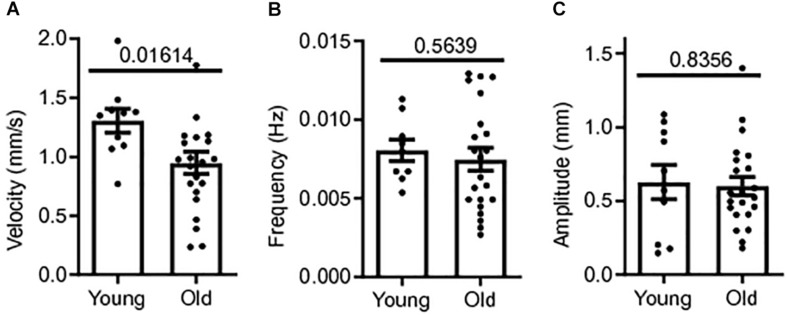
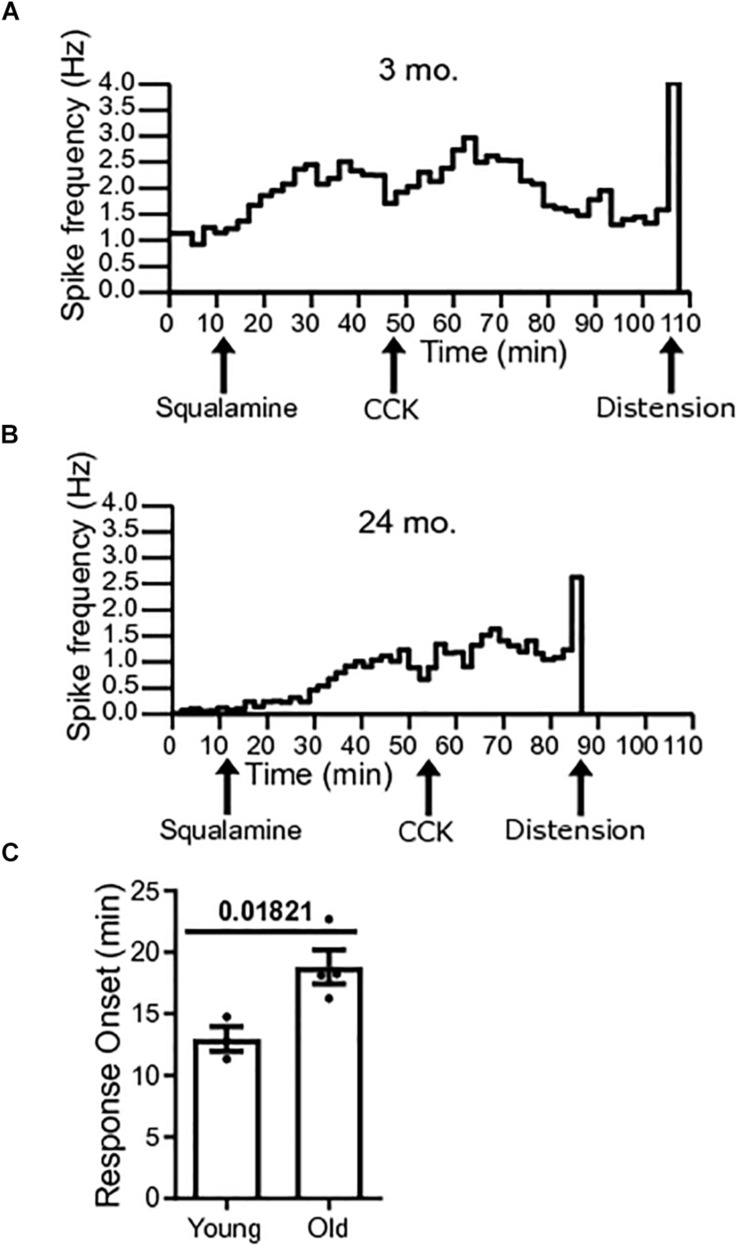
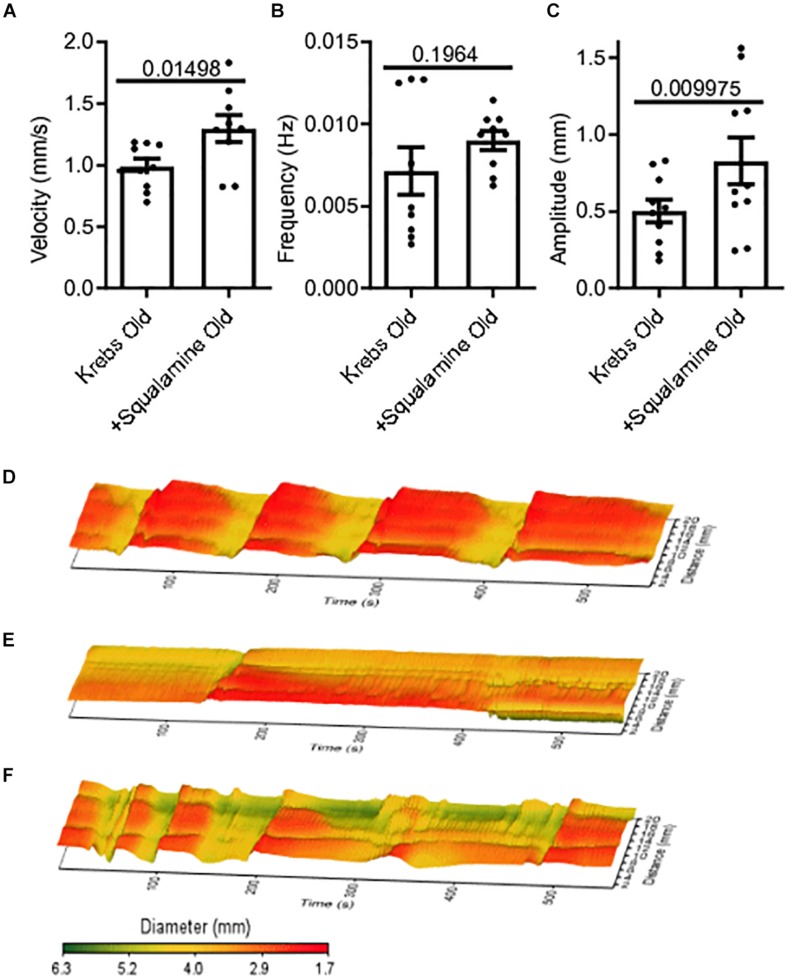
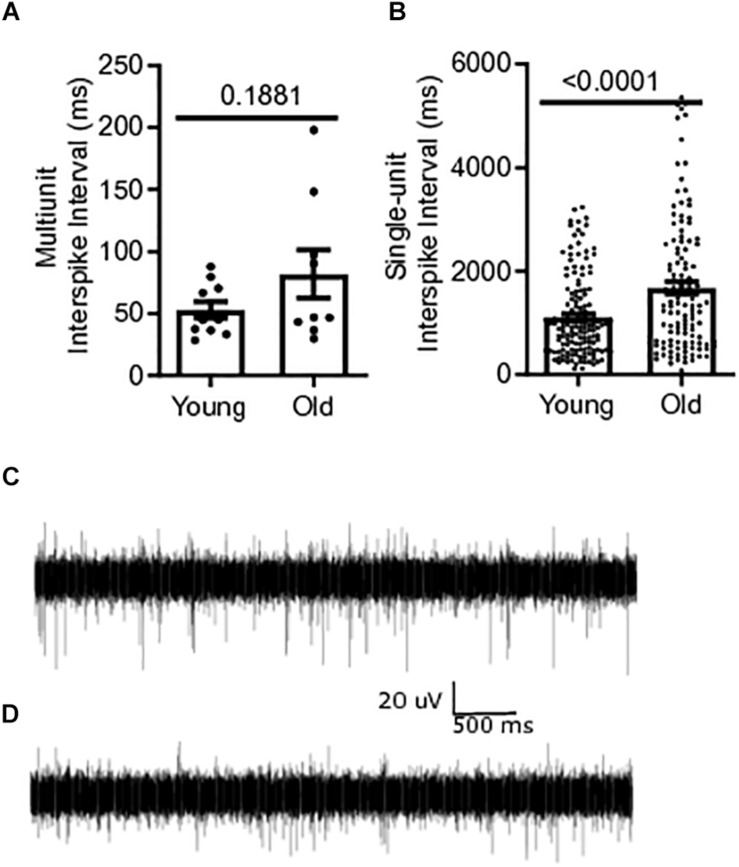
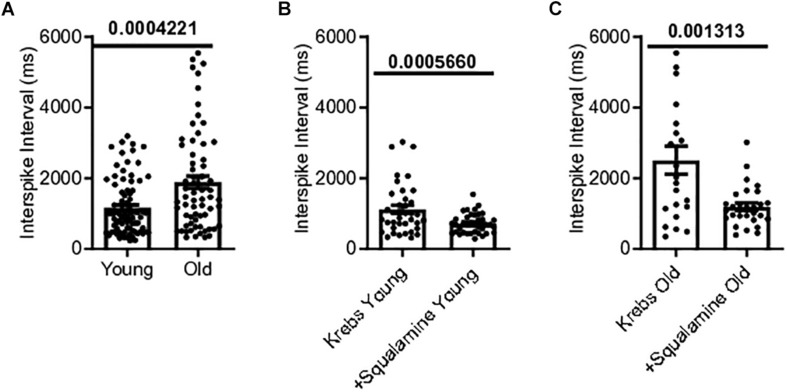
There is a general decline in gastrointestinal function in old age including decreased intestinal motility, sensory signaling, and afferent sensitivity. There is also increased prevalence of significant constipation in aged populations. We hypothesized this may be linked to reduced colonic motility and alterations in vagal-gut-brain sensory signaling. Using preparations from young (3 months) and old (18-24 months) male CD1 mice we report functional age-related differences in colonic motility and jejunal mesenteric afferent firing. Furthermore, we tested the effect of the aminosterol squalamine on colonic motility and jejunal vagal firing rate. Old mice had significantly reduced velocity of colonic migrating motor complexes (MMC) by 27% compared to young mice ( = 0.0161). Intraluminal squalamine increased colonic MMC velocity by 31% in old mice ( = 0.0150), which also had significantly reduced mesenteric afferent single-unit firing rates from the jejunum by 51% ( < 0.0001). The jejunal vagal afferent firing rate was reduced in aged mice by 62% ( = 0.0004). While the time to peak response to squalamine was longer in old mice compared to young mice (18.82 ± 1.37 min vs. 12.95 ± 0.99 min; = 0.0182), it significantly increased vagal afferent firing rate by 36 and 56% in young and old mice, respectively ( = 0.0006, = 0.0013). Our results show for the first time that the jejunal vagal afferent firing rate is reduced in aged-mice. They also suggest that there is translational potential for the therapeutic use of squalamine in the treatment of age-related constipation and dysmotility.
老年人群的胃肠功能普遍下降,包括肠道蠕动、感觉信号和传入敏感性降低。老年人群中严重便秘的患病率也有所增加。我们推测这可能与结肠蠕动减少以及迷走神经-肠道-脑感觉信号的改变有关。使用来自年轻(3个月)和老年(18 - 24个月)雄性CD1小鼠的组织,我们报告了结肠蠕动和空肠肠系膜传入神经放电在功能上与年龄相关的差异。此外,我们测试了氨基甾醇角鲨胺对结肠蠕动和空肠迷走神经放电率的影响。与年轻小鼠相比,老年小鼠的结肠移行性运动复合波(MMC)速度显著降低了27%(P = 0.0161)。腔内注射角鲨胺使老年小鼠的结肠MMC速度提高了31%(P = 0.0150),老年小鼠空肠系膜传入神经单单位放电率也显著降低了51%(P < 0.0001)。老年小鼠的空肠迷走神经传入放电率降低了62%(P = 0.0004)。虽然老年小鼠对角鲨胺达到峰值反应的时间比年轻小鼠长(18.82 ± 1.37分钟对12.95 ± 0.99分钟;P = 0.0182),但它分别使年轻和老年小鼠的迷走神经传入放电率显著提高了36%和56%(P = 0.0006,P = 0.0013)。我们的结果首次表明老年小鼠的空肠迷走神经传入放电率降低。它们还表明角鲨胺在治疗与年龄相关的便秘和动力障碍方面具有转化应用潜力。