Su Fei, Kumaravelu Karthik, Wang Jiang, Grill Warren M
Department of Biomedical Engineering, Duke University, Durham, NC, United States.
School of Mechanical and Electrical Engineering, Shandong Agricultural University, Tai'an, China.
Front Neurosci. 2019 Sep 10;13:956. doi: 10.3389/fnins.2019.00956. eCollection 2019.
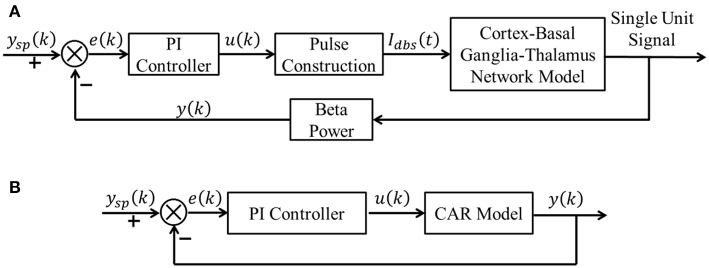
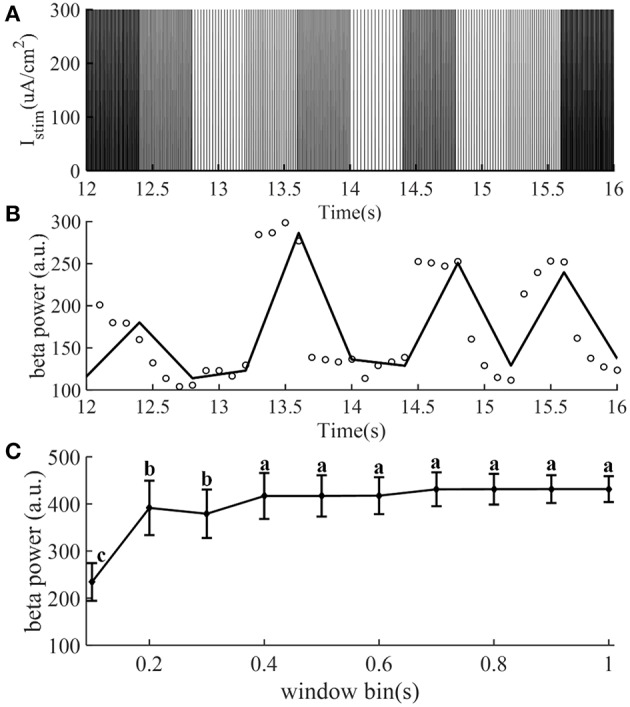
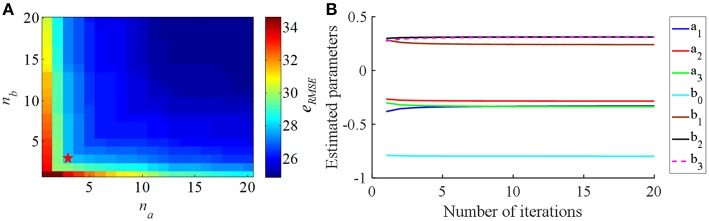
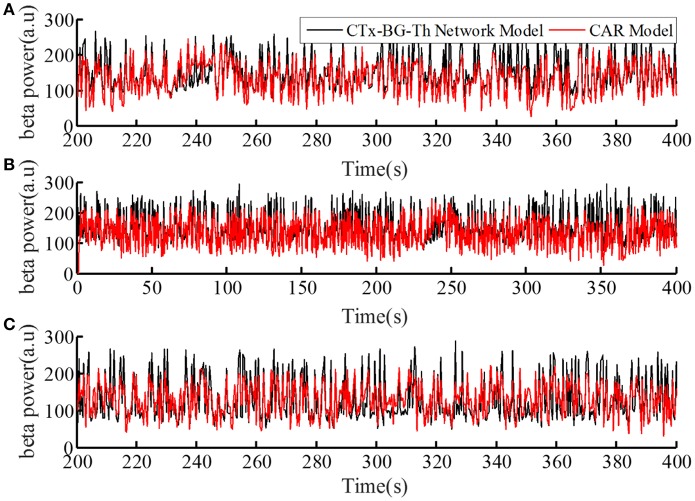
High-frequency deep brain stimulation (DBS) of the subthalamic nucleus (STN) is effective in suppressing the motor symptoms of Parkinson's disease (PD). Current clinically-deployed DBS technology operates in an open-loop fashion, i.e., fixed parameter high-frequency stimulation is delivered continuously, invariant to the needs or status of the patient. This poses two major challenges: (1) depletion of the stimulator battery due to the energy demands of continuous high-frequency stimulation, (2) high-frequency stimulation-induced side-effects. Closed-loop deep brain stimulation (CL DBS) may be effective in suppressing parkinsonian symptoms with stimulation parameters that require less energy and evoke fewer side effects than open loop DBS. However, the design of CL DBS comes with several challenges including the selection of an appropriate biomarker reflecting the symptoms of PD, setting a suitable reference signal, and implementing a controller to adapt to dynamic changes in the reference signal. Dynamic changes in beta oscillatory activity occur during the course of voluntary movement, and thus there may be a performance advantage to tracking such dynamic activity. We addressed these challenges by studying the performance of a closed-loop controller using a biophysically-based network model of the basal ganglia. The model-based evaluation consisted of two parts: (1) we implemented a Proportional-Integral (PI) controller to compute optimal DBS frequencies based on the magnitude of a dynamic reference signal, the oscillatory power in the beta band (13-35 Hz) recorded from model globus pallidus internus (GPi) neurons. (2) We coupled a linear auto-regressive model based mapping function with the Routh-Hurwitz stability analysis method to compute the parameters of the PI controller to track dynamic changes in the reference signal. The simulation results demonstrated successful tracking of both constant and dynamic beta oscillatory activity by the PI controller, and the PI controller followed dynamic changes in the reference signal, something that cannot be accomplished by constant open-loop DBS.
丘脑底核(STN)的高频深部脑刺激(DBS)可有效抑制帕金森病(PD)的运动症状。目前临床应用的DBS技术以开环方式运行,即持续给予固定参数的高频刺激,与患者的需求或状态无关。这带来了两个主要挑战:(1)持续高频刺激的能量需求导致刺激器电池耗尽;(2)高频刺激引起的副作用。闭环深部脑刺激(CL DBS)可能通过比开环DBS所需能量更少且副作用更少的刺激参数有效抑制帕金森症状。然而,CL DBS的设计面临若干挑战,包括选择反映PD症状的合适生物标志物、设置合适的参考信号以及实现一个控制器以适应参考信号的动态变化。在自主运动过程中,β振荡活动会发生动态变化,因此跟踪这种动态活动可能具有性能优势。我们通过使用基于生物物理的基底神经节网络模型研究闭环控制器的性能来应对这些挑战。基于模型的评估包括两个部分:(1)我们实现了一个比例积分(PI)控制器,根据动态参考信号的大小、从模型苍白球内侧部(GPi)神经元记录的β频段(13 - 35Hz)振荡功率来计算最佳DBS频率。(2)我们将基于线性自回归模型的映射函数与劳斯 - 赫尔维茨稳定性分析方法相结合,以计算PI控制器的参数,从而跟踪参考信号的动态变化。仿真结果表明,PI控制器成功跟踪了恒定和动态的β振荡活动,并且PI控制器能够跟随参考信号的动态变化,这是恒定开环DBS无法实现的。