Glinton Kevin E, Elsea Sarah H
Department of Molecular and Human Genetics, Baylor College of Medicine, Houston, TX, United States.
Front Psychiatry. 2019 Sep 10;10:647. doi: 10.3389/fpsyt.2019.00647. eCollection 2019.
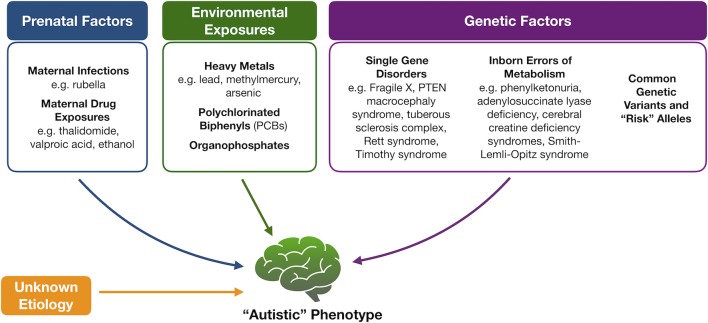
Autism spectrum disorders (ASDs) are a group of neurodevelopment disorders characterized by childhood onset deficits in social communication and interaction. Although the exact etiology of most cases of ASDs is unknown, a portion has been proposed to be associated with various metabolic abnormalities including mitochondrial dysfunction, disorders of cholesterol metabolism, and folate abnormalities. Targeted biochemical testing like plasma amino acid and acylcarnitine profiles have demonstrated limited utility in helping to diagnose and manage such patients. Untargeted metabolomics has emerged, however, as a promising tool in screening for underlying biochemical abnormalities and managing treatment and as a means of investigating possible novel biomarkers for the disorder. Here, we review the principles and methodology behind untargeted metabolomics, recent pilot studies utilizing this technology, and areas in which it may be integrated into the care of children with this disorder in the future.
自闭症谱系障碍(ASD)是一组神经发育障碍,其特征是儿童期出现社交沟通和互动缺陷。尽管大多数ASD病例的确切病因尚不清楚,但有一部分病例被认为与各种代谢异常有关,包括线粒体功能障碍、胆固醇代谢紊乱和叶酸异常。诸如血浆氨基酸和酰基肉碱谱等靶向生化检测在帮助诊断和管理此类患者方面的效用有限。然而,非靶向代谢组学已成为一种有前景的工具,可用于筛查潜在的生化异常、管理治疗以及研究该疾病可能的新型生物标志物。在此,我们综述非靶向代谢组学背后的原理和方法、近期利用该技术的初步研究,以及未来它可能融入该疾病患儿护理的领域。