Medical School, Federal University of Roraima, Boa Vista, Brazil.
Department of Biotechnology and Biomedicine, Technical University of Denmark, Lyngby, Denmark.
Front Immunol. 2019 Sep 6;10:2090. doi: 10.3389/fimmu.2019.02090. eCollection 2019.
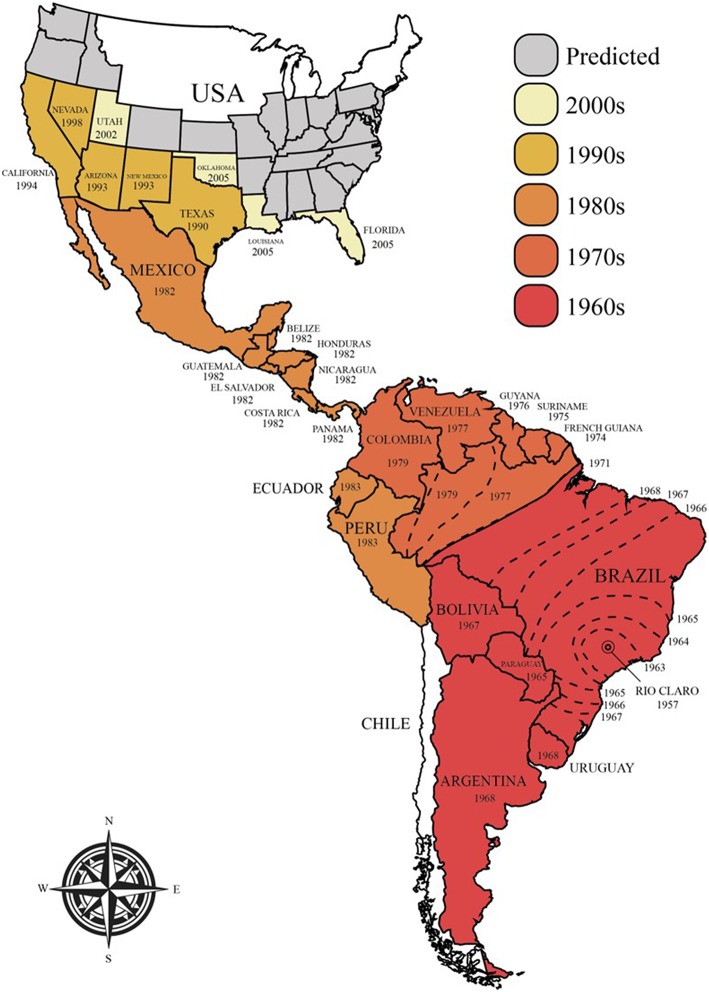
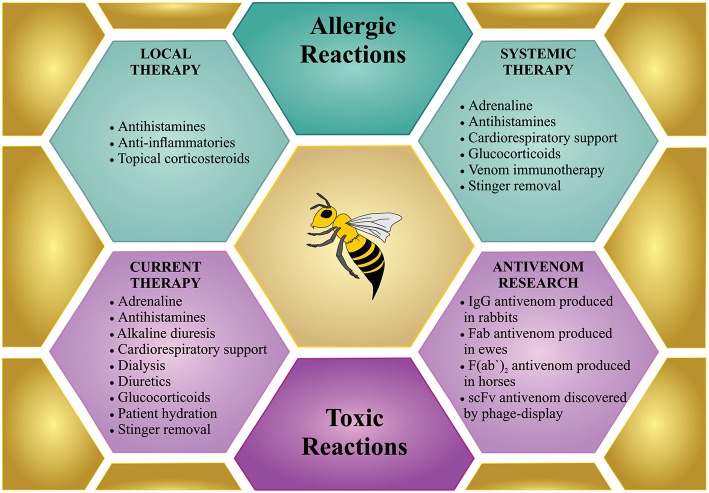
Honey bees can be found all around the world and fulfill key pollination roles within their natural ecosystems, as well as in agriculture. Most species are typically docile, and most interactions between humans and bees are unproblematic, despite their ability to inject a complex venom into their victims as a defensive mechanism. Nevertheless, incidences of bee stings have been on the rise since the accidental release of Africanized bees to Brazil in 1956 and their subsequent spread across the Americas. These bee hybrids are more aggressive and are prone to attack, presenting a significant healthcare burden to the countries they have colonized. To date, treatment of such stings typically focuses on controlling potential allergic reactions, as no specific antivenoms against bee venom currently exist. Researchers have investigated the possibility of developing bee antivenoms, but this has been complicated by the very low immunogenicity of the key bee toxins, which fail to induce a strong antibody response in the immunized animals. However, with current cutting-edge technologies, such as phage display, alongside the rise of monoclonal antibody therapeutics, the development of a recombinant bee antivenom is achievable, and promising results towards this goal have been reported in recent years. Here, current knowledge on the venom biology of Africanized bees and current treatment options against bee envenoming are reviewed. Additionally, recent developments within next-generation bee antivenoms are presented and discussed.
世界各地都有蜜蜂,它们在自然生态系统中以及农业中发挥着关键的授粉作用。大多数物种通常都很温顺,而且大多数人类与蜜蜂的互动都没有问题,尽管它们有能力将复杂的毒液注入受害者体内作为防御机制。然而,自 1956 年非洲化蜜蜂意外释放到巴西并随后在美洲传播以来,蜜蜂蜇伤的事件一直在增加。这些蜜蜂杂种更具攻击性,容易受到攻击,给它们殖民的国家带来了重大的医疗保健负担。迄今为止,此类蜇伤的治疗通常侧重于控制潜在的过敏反应,因为目前尚无针对蜂毒的特定抗毒液。研究人员已经研究了开发蜜蜂抗毒液的可能性,但由于关键蜂毒素的免疫原性极低,这使得免疫动物无法产生强烈的抗体反应,因此这变得很复杂。然而,随着当前的尖端技术,如噬菌体展示,以及单克隆抗体治疗的兴起,开发重组蜜蜂抗毒液是可行的,近年来已经报道了朝着这一目标取得的有希望的结果。在这里,我们回顾了非洲化蜜蜂毒液生物学和目前针对蜜蜂螫伤的治疗选择。此外,还介绍和讨论了下一代蜜蜂抗毒液的最新进展。