Department of Physiology, University of Texas Southwestern Medical Center, Dallas, TX, 75390-9040, USA.
State Key Laboratory of Mycology, Institute of Microbiology, Chinese Academy of Sciences, Beijing, 100101, China.
Nat Commun. 2019 Sep 25;10(1):4352. doi: 10.1038/s41467-019-12239-w.
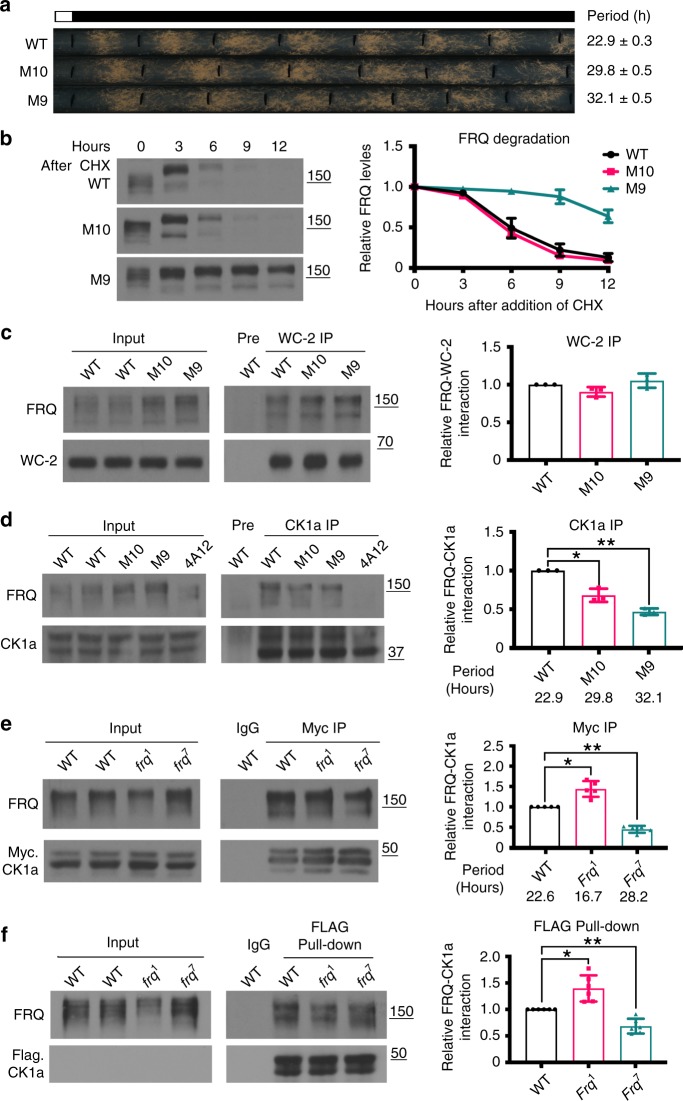
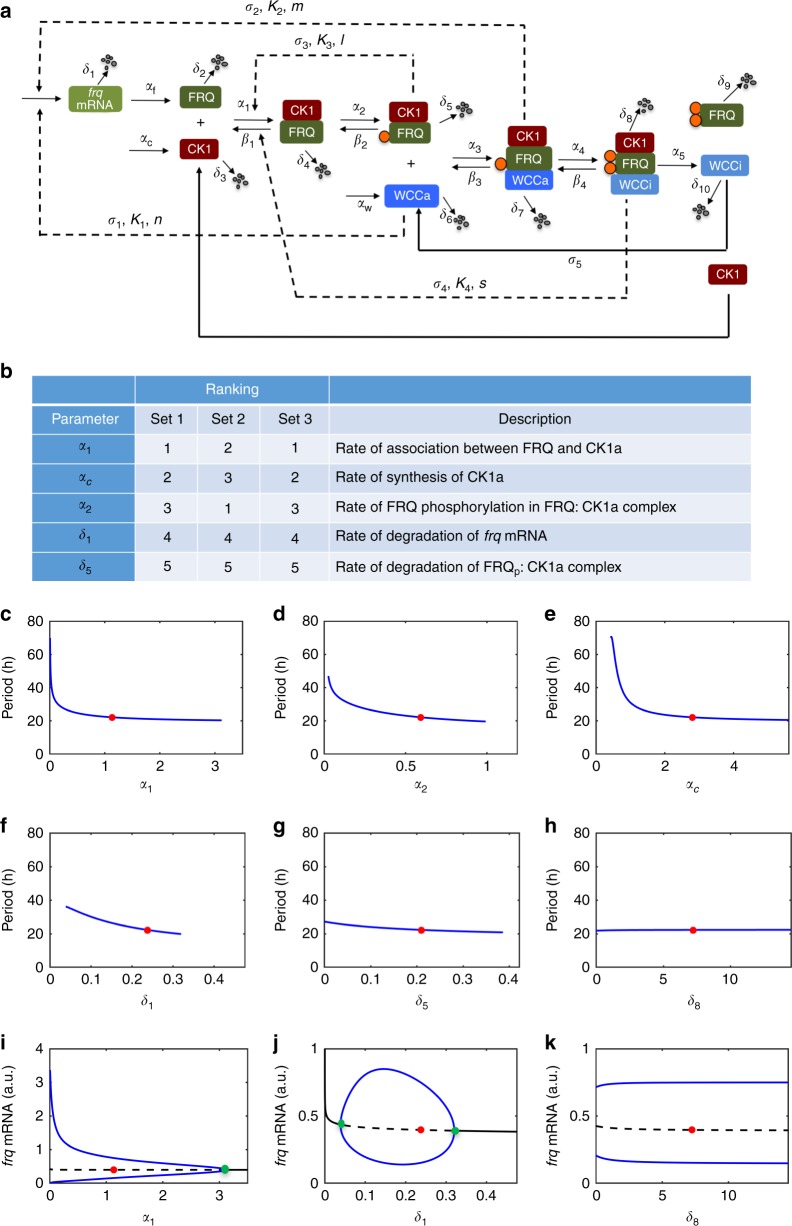
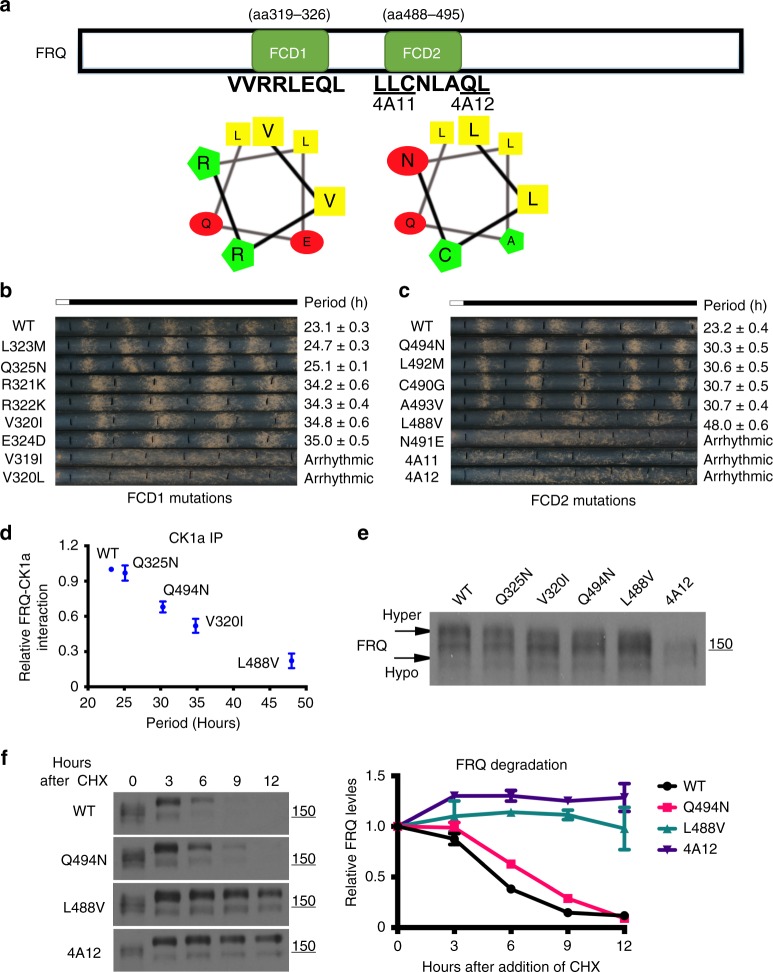
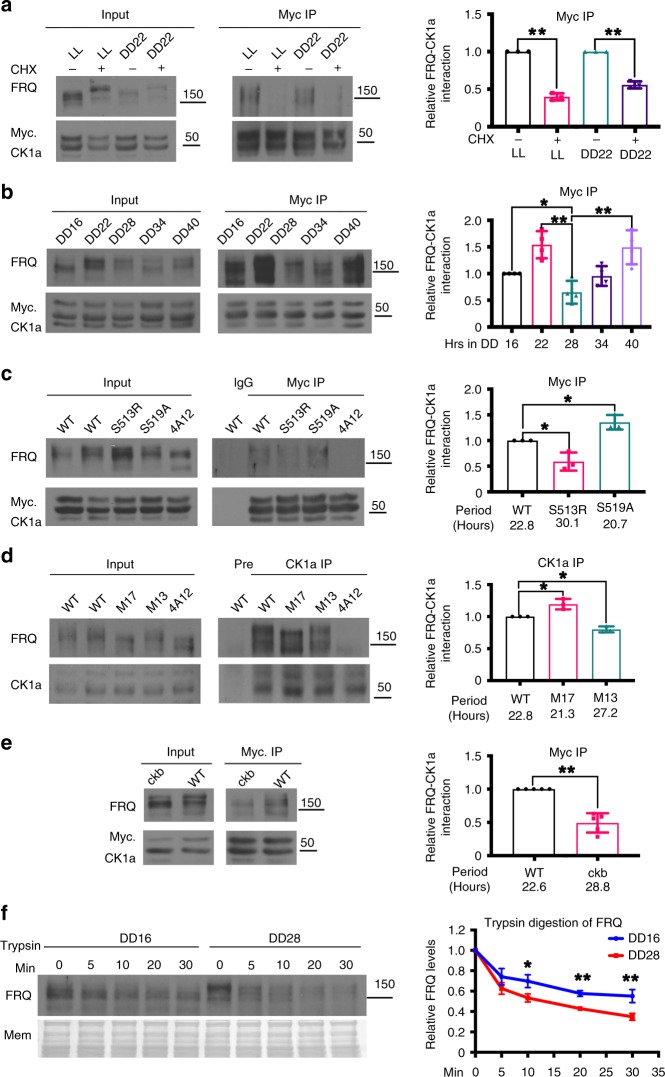
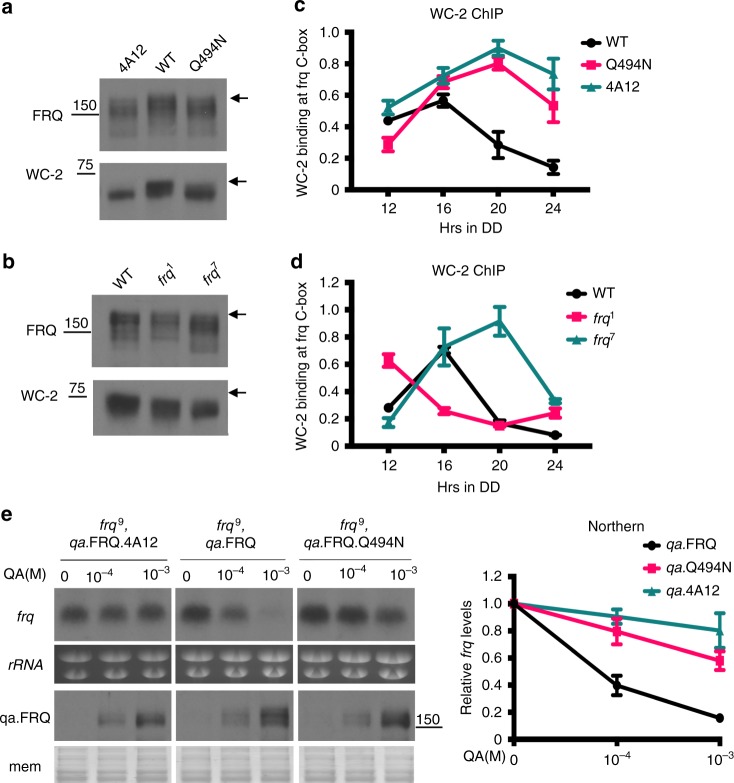
Circadian clock mechanisms have been extensively investigated but the main rate-limiting step that determines circadian period remains unclear. Formation of a stable complex between clock proteins and CK1 is a conserved feature in eukaryotic circadian mechanisms. Here we show that the FRQ-CK1 interaction, but not FRQ stability, correlates with circadian period in Neurospora circadian clock mutants. Mutations that specifically affect the FRQ-CK1 interaction lead to severe alterations in circadian period. The FRQ-CK1 interaction has two roles in the circadian negative feedback loop. First, it determines the FRQ phosphorylation profile, which regulates FRQ stability and also feeds back to either promote or reduce the interaction itself. Second, it determines the efficiency of circadian negative feedback process by mediating FRQ-dependent WC phosphorylation. Our conclusions are further supported by mathematical modeling and in silico experiments. Together, these results suggest that the FRQ-CK1 interaction is a major rate-limiting step in circadian period determination.
生物钟机制已经得到了广泛的研究,但决定生物钟周期的主要限速步骤仍不清楚。在真核生物钟机制中,时钟蛋白和 CK1 之间形成稳定的复合物是一个保守特征。在这里,我们表明,FRQ-CK1 相互作用,而不是 FRQ 的稳定性,与 Neurospora 生物钟突变体的生物钟周期相关。特异性影响 FRQ-CK1 相互作用的突变导致生物钟周期严重改变。FRQ-CK1 相互作用在生物钟负反馈环中有两个作用。首先,它决定了 FRQ 的磷酸化谱,这调节 FRQ 的稳定性,也反馈以促进或减少自身的相互作用。其次,它通过介导 FRQ 依赖性 WC 磷酸化来决定生物钟负反馈过程的效率。我们的结论还得到了数学建模和计算机模拟实验的进一步支持。总之,这些结果表明,FRQ-CK1 相互作用是生物钟周期确定的主要限速步骤。