
关于让木质素再度焕发光彩——来自过去的一些经验教训。
About Making Lignin Great Again-Some Lessons From the Past.
作者信息
Glasser Wolfgang G
机构信息
Sustainable Biomaterials, Virginia Tech, Blacksburg, VA, United States.
出版信息
Front Chem. 2019 Aug 29;7:565. doi: 10.3389/fchem.2019.00565. eCollection 2019.
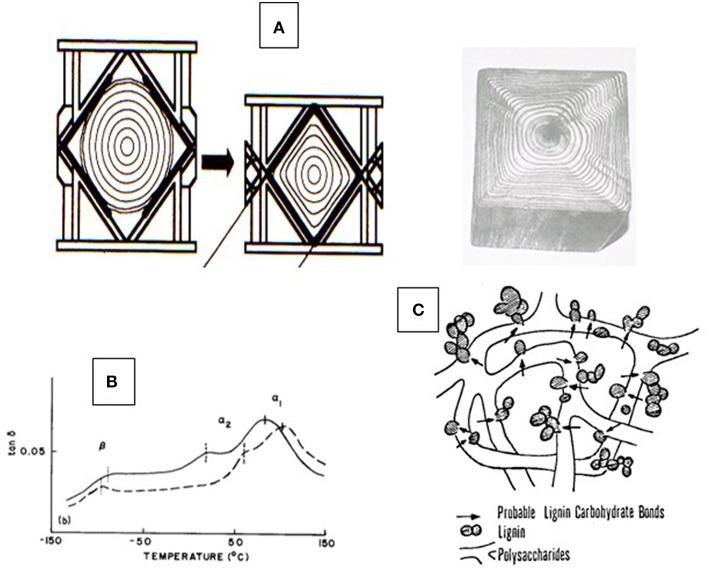
Lignin, the second most abundant biopolymer on the planet, serves land-plants as bonding agent in juvenile cell tissues and as stiffening (modulus-building) agent in mature cell walls. The chemical structure analysis of cell wall lignins from two partially delignified wood species representing between 6 and 65% of total wood lignin has revealed that cell wall-bound lignins are virtually invariable in terms of inter-unit linkages, and resemble the native state. Variability is recognized as the result of isolation procedure. In native state, lignin has a low glass-to-rubber transition temperature and is part of a block copolymer with non-crystalline polysaccharides. This molecular architecture determines all of lignin's properties, foremost of all its failure to undergo interfacial failure by separation from (semi-) crystalline cellulose under a wide range of environmental conditions. This seemingly unexpected compatibility (on the nano-level) between a carbohydrate component and the highly aromatic lignin represents a lesson by nature that human technology is only now beginning to mimic. Since the isolation of lignin from lignocellulosic biomass (i.e., by pulping or biorefining) necessitates significant molecular alteration of lignin, isolated lignins are highly variable in structure and reflect the isolation method. While numerous procedures exist for converting isolated (carbon-rich) lignins into well-defined commodity chemicals by various liquefaction techniques (such as pyrolysis, hydrogenolysis, etc.), the use of lignin in man-made thermosetting and thermoplastic structural materials appears to offer greatest value. The well-recognized variabilities of isolated lignins can in large part be remedied by targeted chemical modification, and by adopting nature's principles of functionalization leading to inter-molecular compatibility. Lignins isolated from large-scale industrial delignification processes operating under invariable isolation conditions produce polymers of virtually invariable character. This makes lignin from pulp mills a potentially valuable biopolymeric resource. The restoration of molecular character resembling that in native plants is illustrated in this review via the demonstrated (and in part commercially-implemented) use of pulp lignins in bio-degradable (or compostable) polymeric materials.
木质素是地球上第二丰富的生物聚合物,在陆地植物中,它在幼嫩细胞组织中充当粘合剂,在成熟细胞壁中充当强化(模量构建)剂。对两种部分脱木质素木材物种的细胞壁木质素进行化学结构分析,这两种木材占木材总木质素的6%至65%,结果表明,细胞壁结合的木质素在单元间连接方面几乎不变,类似于天然状态。变异性被认为是分离过程的结果。在天然状态下,木质素具有较低的玻璃化转变温度,并且是与非晶态多糖形成的嵌段共聚物的一部分。这种分子结构决定了木质素的所有特性,其中最重要的是在广泛的环境条件下,它不会通过与(半)结晶纤维素分离而发生界面破坏。碳水化合物成分与高度芳香化的木质素之间这种看似意外的(纳米级)相容性是大自然的一个启示,人类技术直到现在才开始模仿。由于从木质纤维素生物质中分离木质素(即通过制浆或生物精炼)需要对木质素进行重大的分子改变,因此分离出的木质素在结构上高度可变,并反映了分离方法。虽然有许多程序可以通过各种液化技术(如热解、氢解等)将分离出的(富含碳的)木质素转化为定义明确的商品化学品,但在人造热固性和热塑性结构材料中使用木质素似乎具有最大价值。分离出的木质素公认的变异性在很大程度上可以通过有针对性的化学改性以及采用导致分子间相容性的自然功能化原理来补救。在恒定分离条件下运行的大规模工业脱木质素过程中分离出的木质素会产生性质几乎不变的聚合物。这使得纸浆厂的木质素成为一种潜在有价值的生物聚合物资源。通过在可生物降解(或可堆肥)聚合物材料中使用纸浆木质素的实例(部分已商业化应用),本综述阐述了如何恢复类似于天然植物中的分子特性。



 Zotero 插件