Rong Yuluo, Liu Wei, Lv Chengtang, Wang Jiaxing, Luo Yongjun, Jiang Dongdong, Li Linwei, Zhou Zheng, Zhou Wei, Li Qingqing, Yin Guoyong, Yu Lipeng, Fan Jin, Cai Weihua
Department of Orthopaedics, First Affiliated Hospital of Nanjing Medical University, Nanjing 210029, Jiangsu, China.
Department of Orthopaedics, Yancheng Third People's Hospital, Yancheng 224000, Jiangsu, China.
Aging (Albany NY). 2019 Sep 28;11(18):7723-7745. doi: 10.18632/aging.102283.
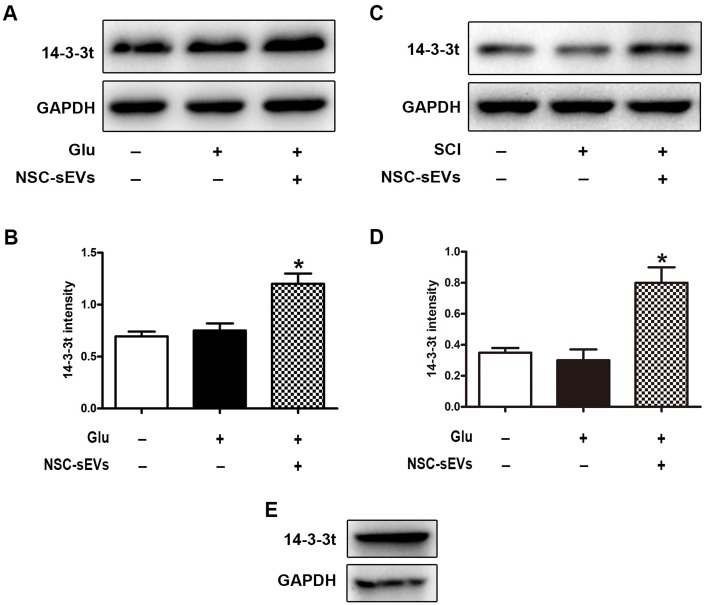
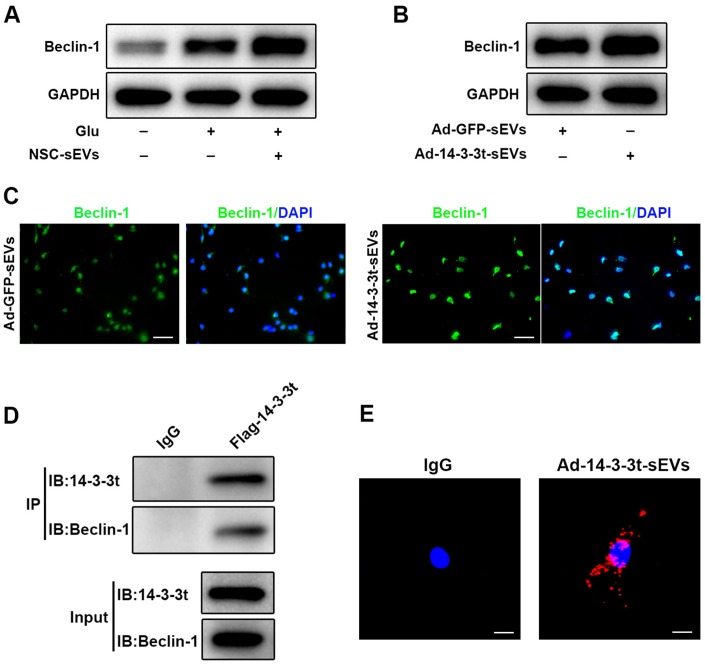
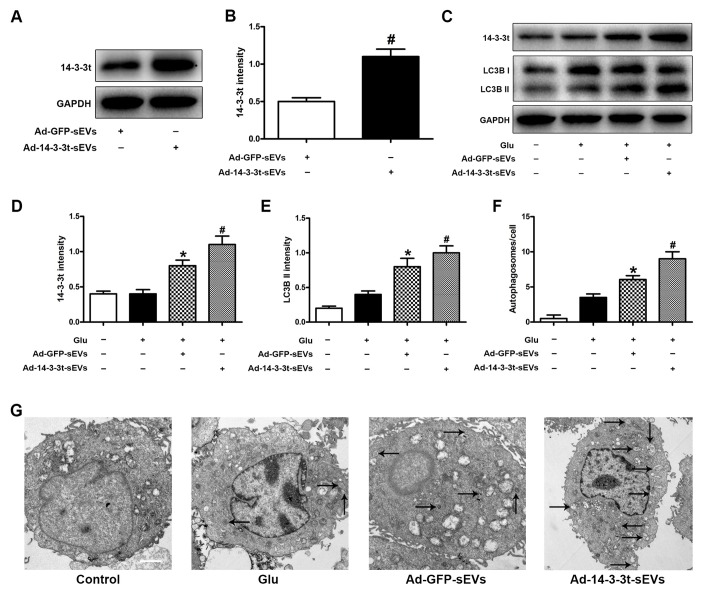
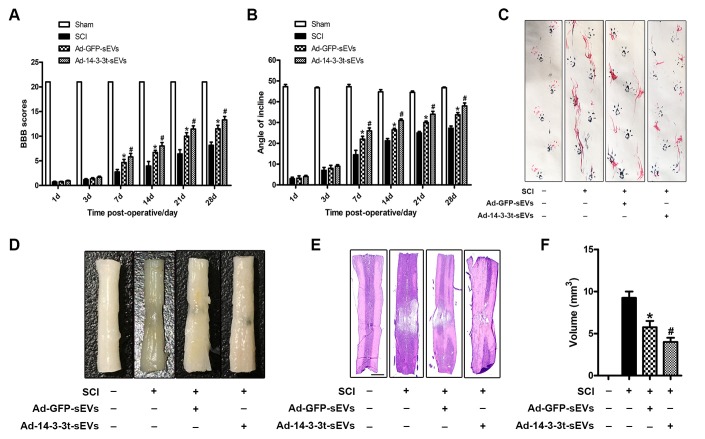
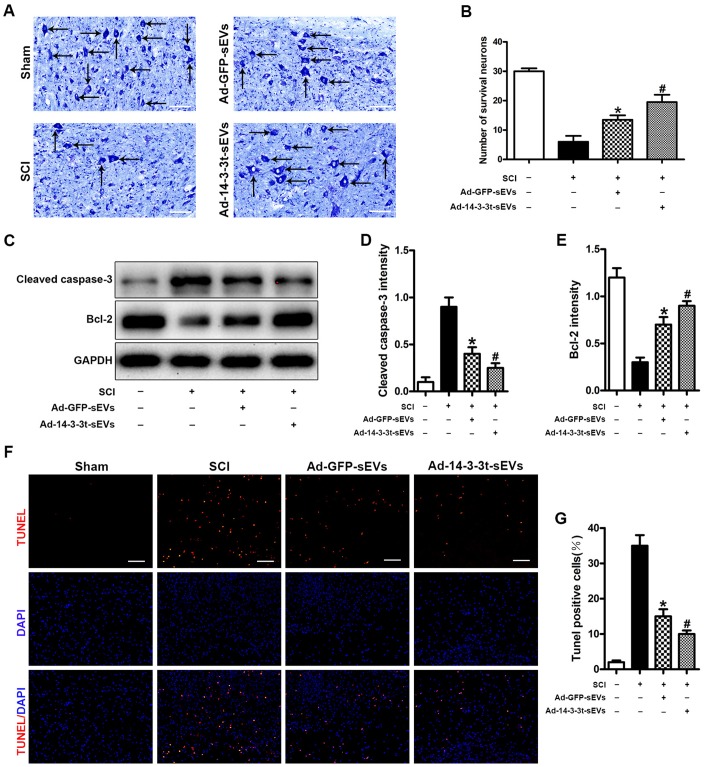
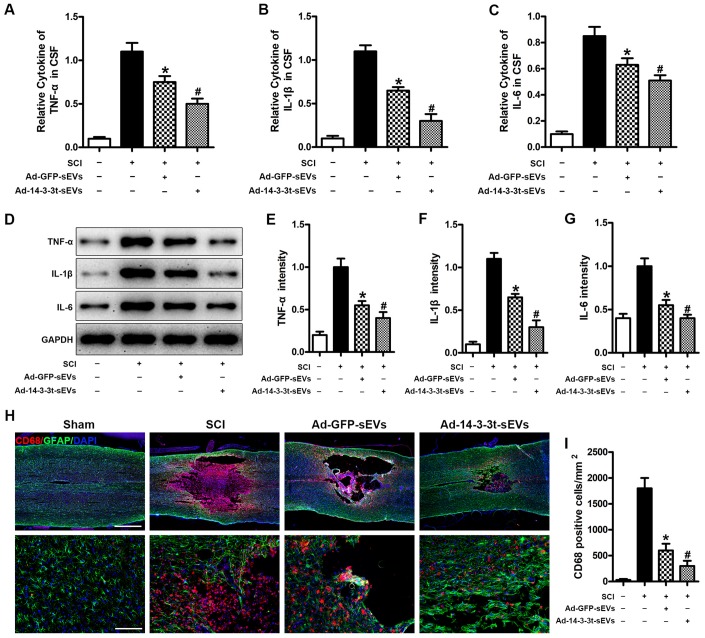
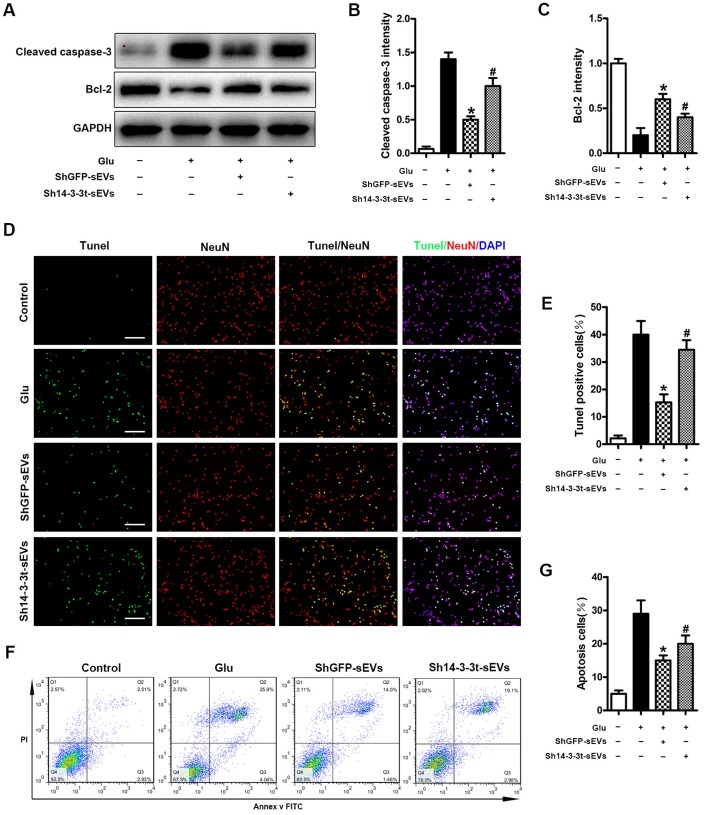
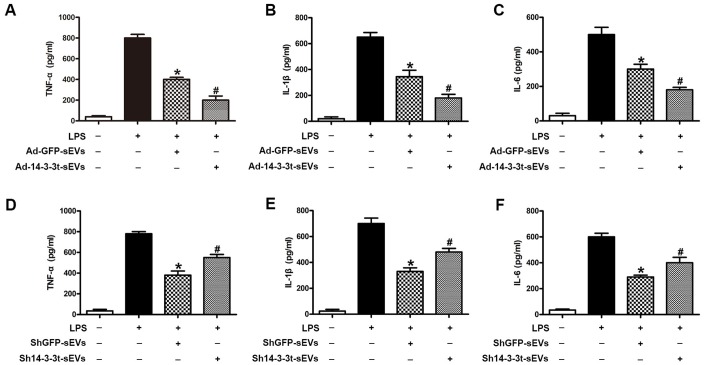
Neural stem cell-derived small extracellular vesicles (NSC-sEVs) play an important role in the repair of tissue damage. Our previous and studies found that preconditioning with NSC-sEVs promoted the recovery of functional behaviors following spinal cord injury by activating autophagy. However, the underlying mechanisms for such observations remain unclear. In this study, we further explored the mechanisms by which NSC-sEVs repair spinal cord injury via autophagy. We found that NSC-sEVs contain 14-3-3t protein, of which the overexpression or knockdown enhanced and decreased autophagy, respectively. In addition, 14-3-3t overexpression enhanced the anti-apoptotic and anti-inflammatory effects of NSC-sEVs, further promoting functional behavior recovery following spinal cord injury. The overexpression of 14-3-3t was used to further validate the results through a series of experiments. Conversely, knockdown of 14-3-3t attenuated the anti-apoptotic and anti-inflammatory effects of NSC-sEVs. Further studies also confirmed that NSC-sEVs increased Beclin-1 expression, with which 14-3-3t interacted and promoted its localization to autophagosome precursors. In this study, we found that NSC-sEVs deliver 14-3-3t, which interacts with Beclin-1 to activate autophagy. Our results indicate that 14-3-3t acts via a newly-discovered mechanism for the activation of autophagy by NSC-sEVs.
神经干细胞衍生的小细胞外囊泡(NSC-sEVs)在组织损伤修复中发挥着重要作用。我们之前的研究发现,用NSC-sEVs进行预处理可通过激活自噬促进脊髓损伤后功能行为的恢复。然而,这些观察结果的潜在机制仍不清楚。在本研究中,我们进一步探讨了NSC-sEVs通过自噬修复脊髓损伤的机制。我们发现NSC-sEVs含有14-3-3t蛋白,其中该蛋白的过表达或敲低分别增强和降低了自噬。此外,14-3-3t的过表达增强了NSC-sEVs的抗凋亡和抗炎作用,进一步促进了脊髓损伤后功能行为的恢复。通过一系列实验,利用14-3-3t的过表达进一步验证了结果。相反,敲低14-3-3t减弱了NSC-sEVs的抗凋亡和抗炎作用。进一步的研究还证实,NSC-sEVs增加了Beclin-1的表达,14-3-3t与Beclin-1相互作用并促进其定位于自噬体前体。在本研究中,我们发现NSC-sEVs传递14-3-3t,其与Beclin-1相互作用以激活自噬。我们的结果表明,14-3-3t通过一种新发现的机制发挥作用,即NSC-sEVs激活自噬。