ARC Centre of Excellence for Mathematical and Statistical Frontiers, Queensland University of Technology (QUT), Brisbane, Australia.
School of Mathematics, Science and Engineering Faculty, Queensland University of Technology (QUT), Brisbane, Australia.
Int J Health Geogr. 2019 Oct 1;18(1):21. doi: 10.1186/s12942-019-0185-9.
It is well known that the burden caused by cancer can vary geographically, which may relate to differences in health, economics or lifestyle. However, to date, there was no comprehensive picture of how the cancer burden, measured by cancer incidence and survival, varied by small geographical area across Australia.
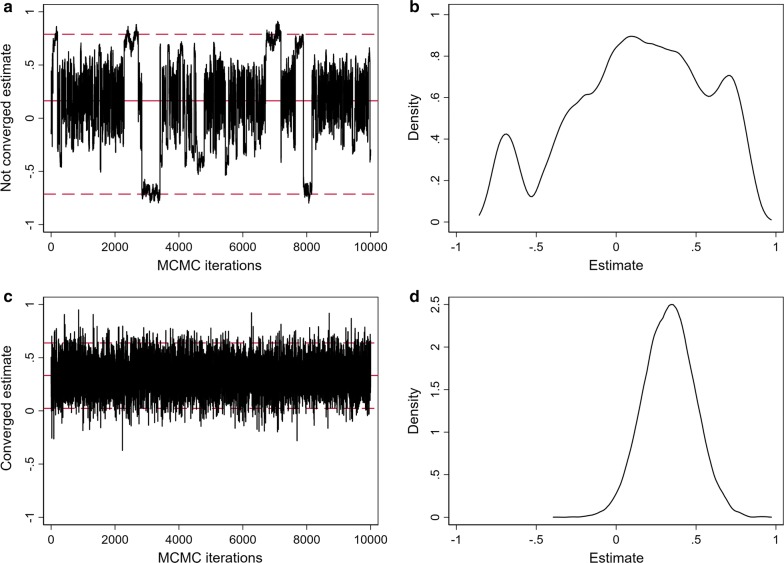
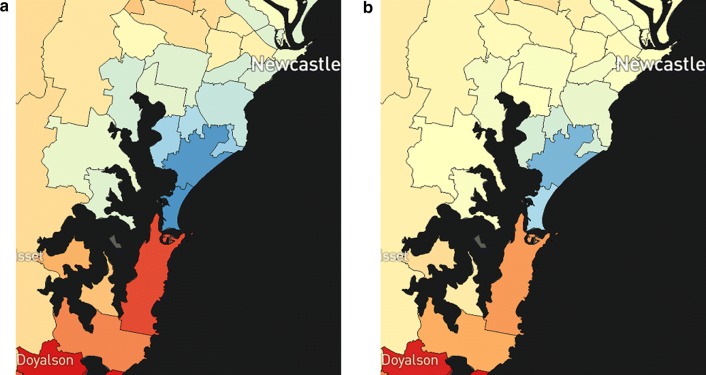
The Atlas consists of 2148 Statistical Areas level 2 across Australia defined by the Australian Statistical Geography Standard which provide the best compromise between small population and small area. Cancer burden was estimated for males, females, and persons separately, with 50 unique sex-specific (males, females, all persons) cancer types analysed. Incidence and relative survival were modelled with Bayesian spatial models using the Leroux prior which was carefully selected to provide adequate spatial smoothing while reflecting genuine geographic variation. Markov Chain Monte Carlo estimation was used because it facilitates quantifying the uncertainty of the posterior estimates numerically and visually.
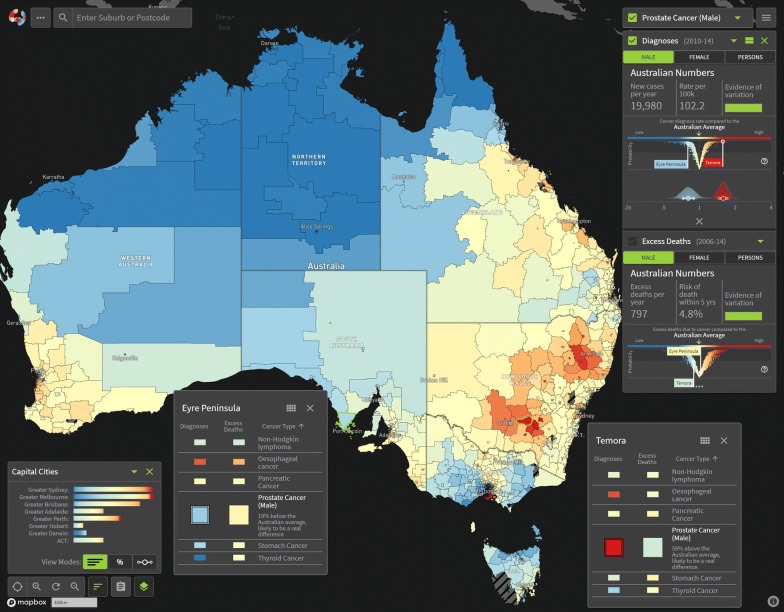
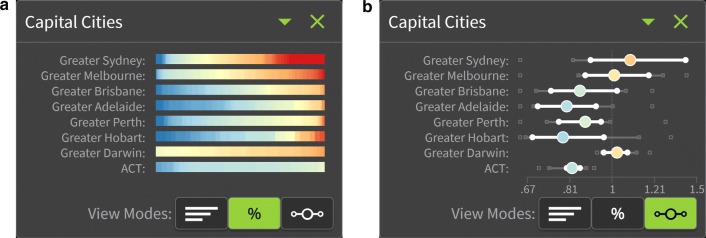
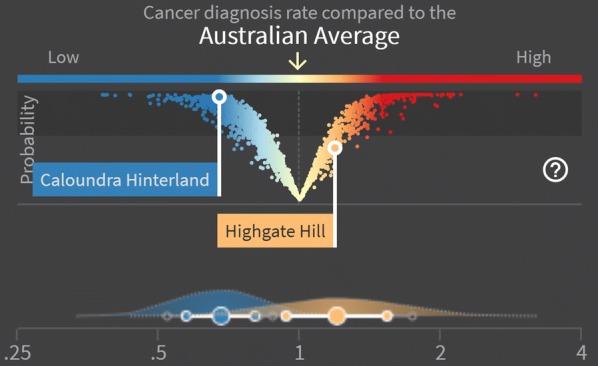
The results of the statistical model and visualisation development were published through the release of the Australian Cancer Atlas ( https://atlas.cancer.org.au ) in September, 2018. The Australian Cancer Atlas provides the first freely available, digital, interactive picture of cancer incidence and survival at the small geographical level across Australia with a focus on incorporating uncertainty, while also providing the tools necessary for accurate estimation and appropriate interpretation and decision making.
The success of the Atlas will be measured by how widely it is used by key stakeholders to guide research and inform decision making. It is hoped that the Atlas and the methodology behind it motivates new research opportunities that lead to improvements in our understanding of the geographical patterns of cancer burden, possible causes or risk factors, and the reasons for differences in variation between cancer types, both within Australia and globally. Future versions of the Atlas are planned to include new data sources to include indicators such as cancer screening and treatment, and extensions to the statistical methods to incorporate changes in geographical patterns over time.
众所周知,癌症负担在地理上存在差异,这可能与健康、经济或生活方式的差异有关。然而,迄今为止,还没有一幅全面的画面来展示澳大利亚各地小地理区域的癌症负担(以癌症发病率和生存率衡量)是如何变化的。
该图谱由澳大利亚统计局标准定义的澳大利亚 2148 个统计区 2 级组成,这些统计区在小人口和小面积之间提供了最佳的平衡。男性、女性和所有人的癌症负担分别进行了估计,分析了 50 种独特的性别特异性(男性、女性、所有人)癌症类型。发病率和相对生存率采用贝叶斯空间模型进行建模,使用 Leroux 先验,该先验经过精心选择,可在提供充分空间平滑的同时反映真实的地理变化。马尔可夫链蒙特卡罗估计用于量化后验估计的不确定性数值和可视化。
统计模型和可视化开发的结果于 2018 年 9 月通过发布澳大利亚癌症图谱(https://atlas.cancer.org.au)发布。澳大利亚癌症图谱提供了澳大利亚各地小地理区域癌症发病率和生存率的第一个免费、数字、交互式图片,重点是纳入不确定性,同时还提供了准确估计和适当解释和决策所需的工具。
该图谱的成功将通过关键利益相关者广泛使用它来指导研究和为决策提供信息来衡量。希望该图谱及其背后的方法激发新的研究机会,从而提高我们对癌症负担的地理模式、可能的原因或风险因素以及癌症类型之间差异变化的原因的理解,无论是在澳大利亚还是在全球范围内。未来版本的图谱计划包括新的数据源,以包括癌症筛查和治疗等指标,并扩展统计方法,以纳入随时间变化的地理模式变化。