Tufts University, Department of Biomedical Engineering, 4 Colby St. Medford, MA, 02155, USA.
Tufts University, Department of Biomedical Engineering, 4 Colby St. Medford, MA, 02155, USA.
Biomaterials. 2019 Dec;225:119517. doi: 10.1016/j.biomaterials.2019.119517. Epub 2019 Sep 25.
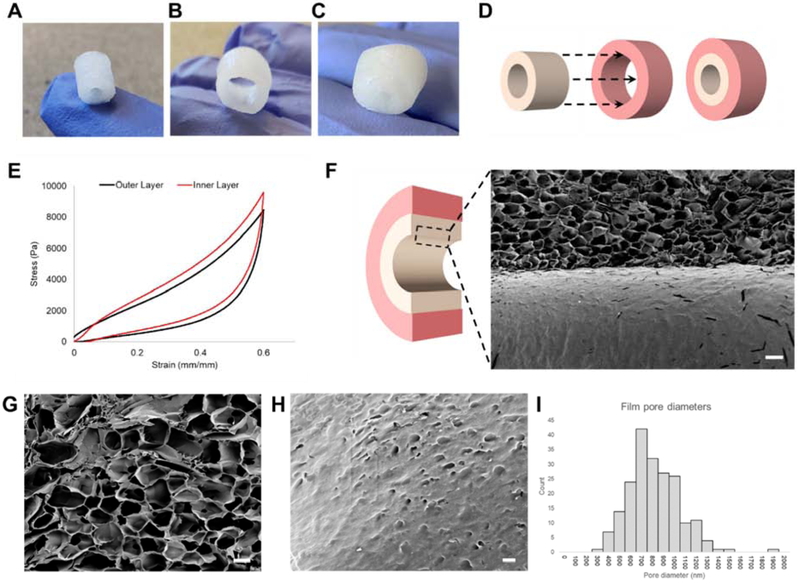
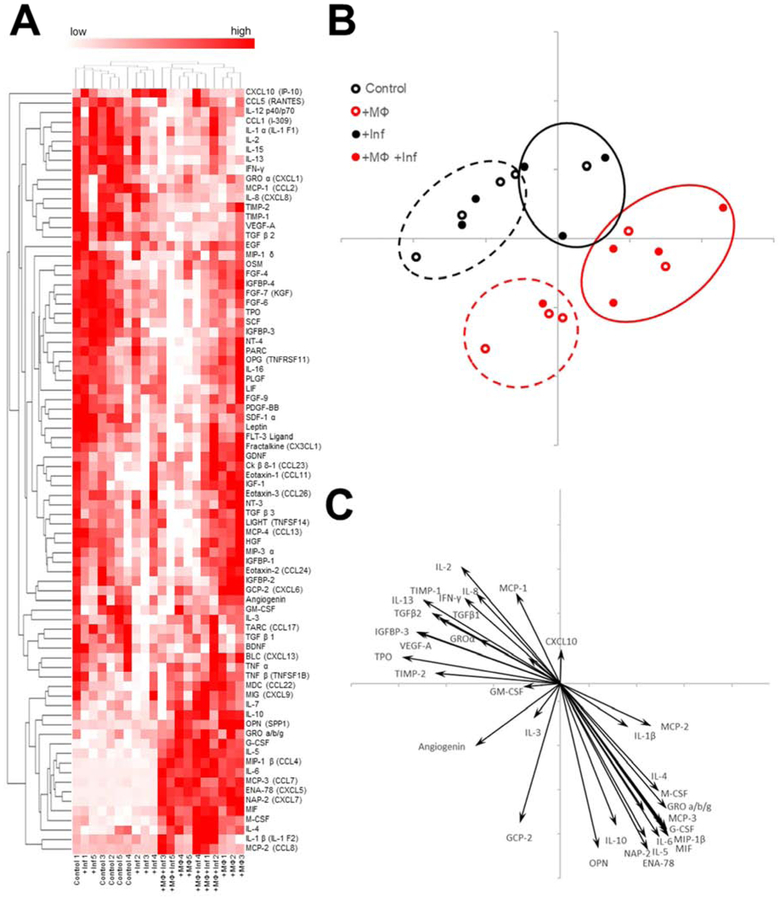
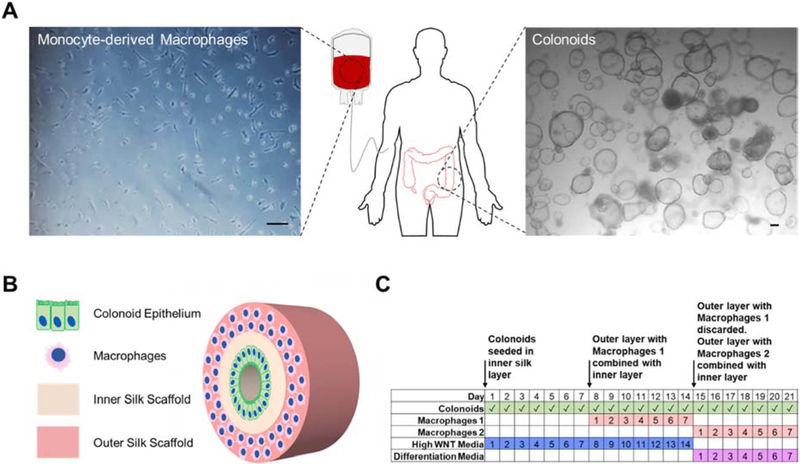
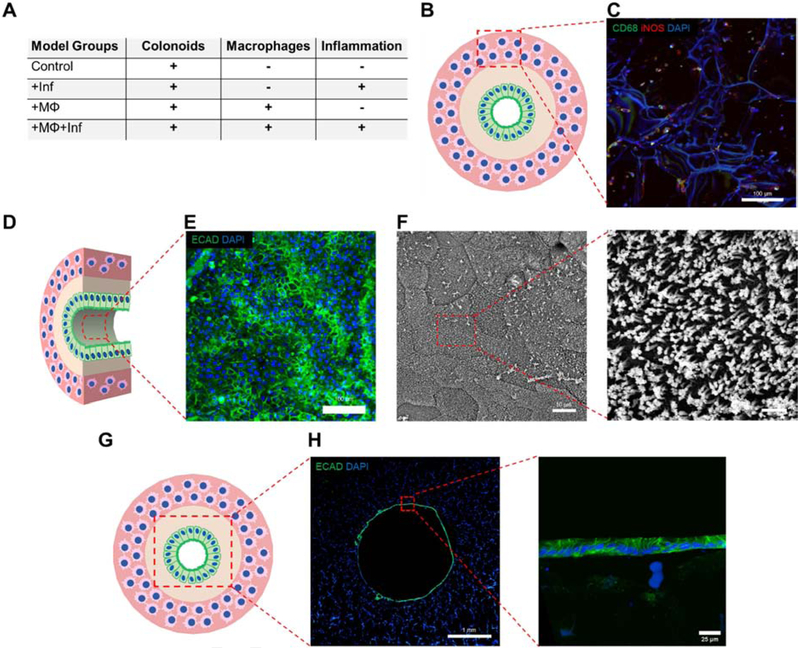
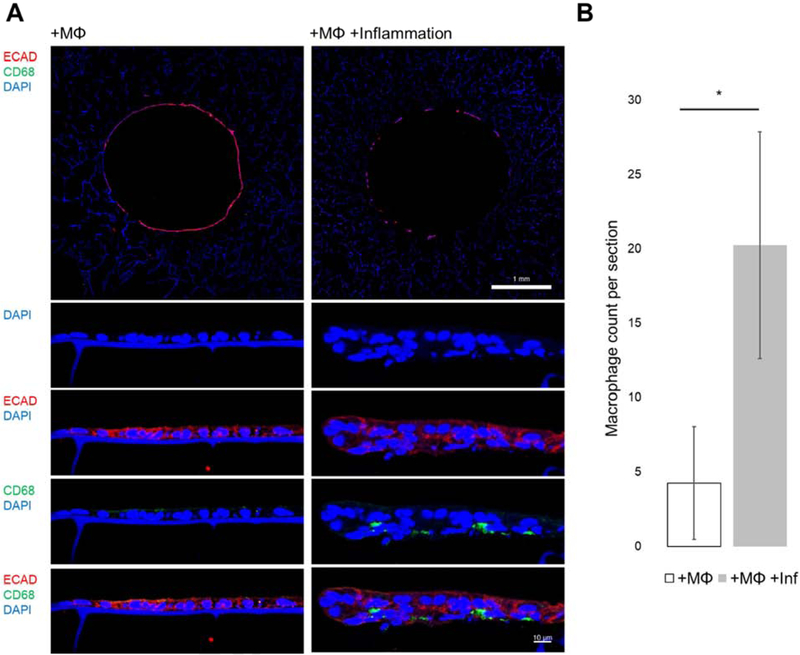
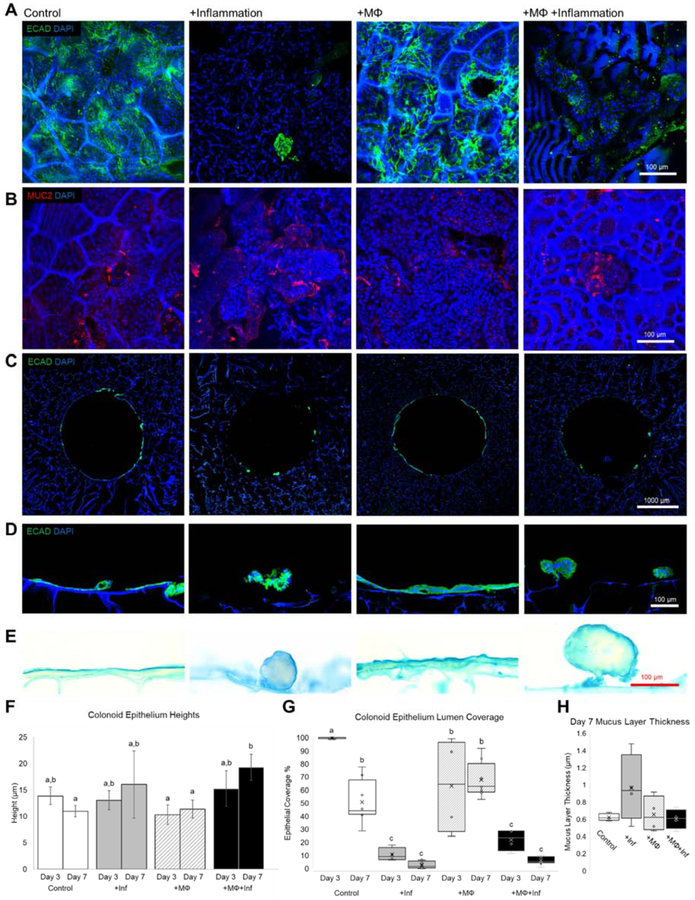
An in vitro model of intestinal epithelium with an immune component was bioengineered to mimic immunologic responses seen in inflammatory bowel disease. While intestinal immune phenomena can be modeled in transwells and 2D culture systems, 3D tissue models improve physiological relevance by providing a 3D substrate which enable migration of macrophages towards the epithelium. An intestinal epithelial layer comprised of non-transformed human colon organoid cells and a subepithelial layer laden with monocyte-derived macrophages was bioengineered to mimic native intestinal mucosa cell organization using spongy biomaterial scaffolds. Confluent monolayers with microvilli, a mucus layer, and infiltration of macrophages to the basal side of the epithelium were observed. Inflammation, induced by E. coli O111:B4 lipopolysaccharide and interferon γ resulted in morphological changes to the epithelium, resulting in ball-like structures, decreased epithelial coverage, and increased migration of macrophages to the epithelium. Analysis of cytokines present in the inflamed tissue model demonstrated significantly upregulated secretion of pro-inflammatory cytokines that are often associated with active inflammatory bowel disease, including CXCL10, IL-1β, IL-6, MCP-2, and MIP-1β. The macrophage layer enhanced epithelial and biochemical responses to inflammatory insult, and this new tissue system may be useful to study and develop potential therapies for inflammatory bowel disease.
研究人员构建了一种具有免疫成分的肠道上皮体外模型,以模拟炎症性肠病中观察到的免疫反应。虽然肠道免疫现象可以在 Transwell 和 2D 培养系统中建模,但 3D 组织模型通过提供允许巨噬细胞向上皮迁移的 3D 基质,提高了生理相关性。使用海绵生物材料支架,研究人员构建了由非转化人结肠类器官细胞组成的肠道上皮层和富含单核细胞衍生巨噬细胞的黏膜下层,以模拟天然肠道黏膜细胞组织。观察到具有微绒毛、黏液层和巨噬细胞浸润到上皮基底侧的融合单层。用大肠杆菌 O111:B4 脂多糖和干扰素 γ 诱导炎症,导致上皮形态发生变化,形成球状结构,上皮覆盖率降低,巨噬细胞向上皮迁移增加。对炎症组织模型中存在的细胞因子进行分析表明,促炎细胞因子的分泌显著上调,这些细胞因子通常与活动期炎症性肠病有关,包括 CXCL10、IL-1β、IL-6、MCP-2 和 MIP-1β。巨噬细胞层增强了上皮和生化对炎症损伤的反应,这种新的组织系统可能有助于研究和开发炎症性肠病的潜在治疗方法。