University of Potsdam, Research Focus Cognitive Sciences, Division of Social and Preventive Medicine, Am Neuen Palais 10, 14469 Potsdam, Germany.
International Psychoanalytic University, Stromstraße 3b, 10555 Berlin, Germany.
Neural Plast. 2019 Jul 1;2019:9478656. doi: 10.1155/2019/9478656. eCollection 2019.
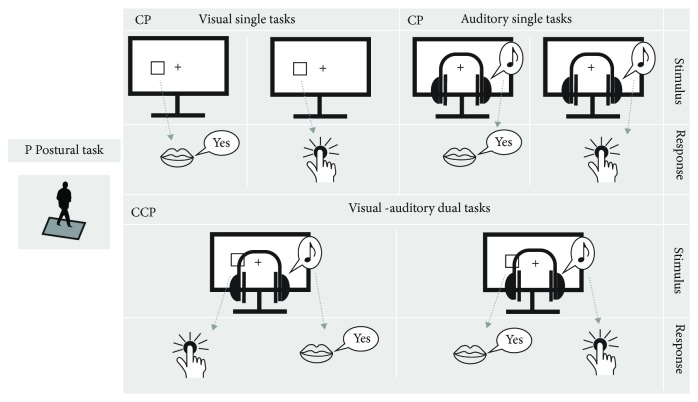
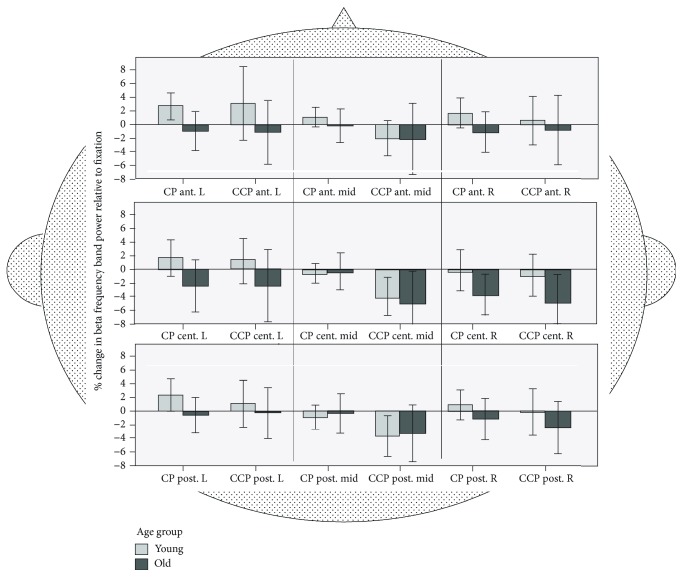
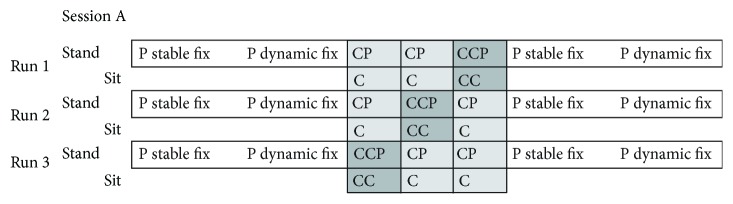
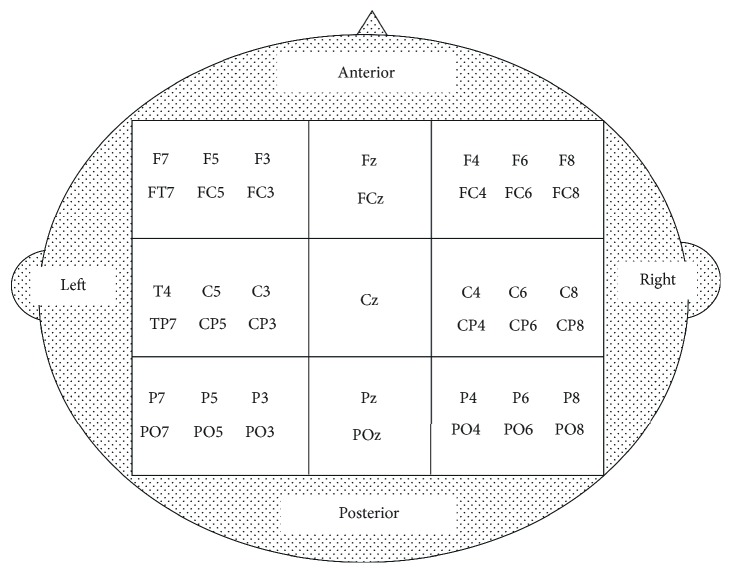
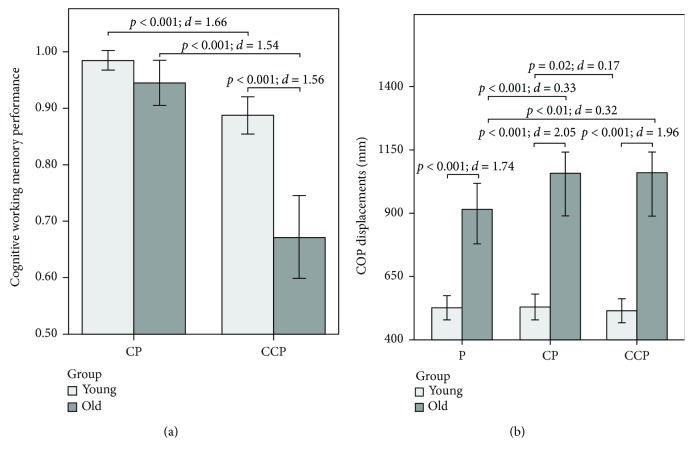
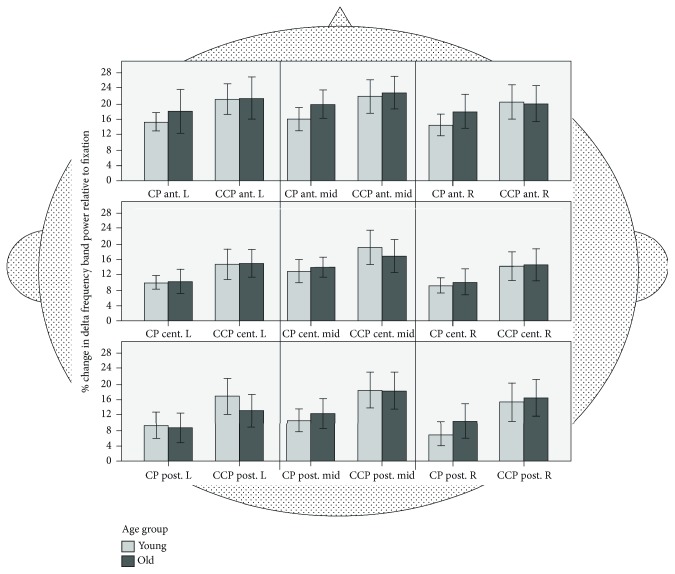
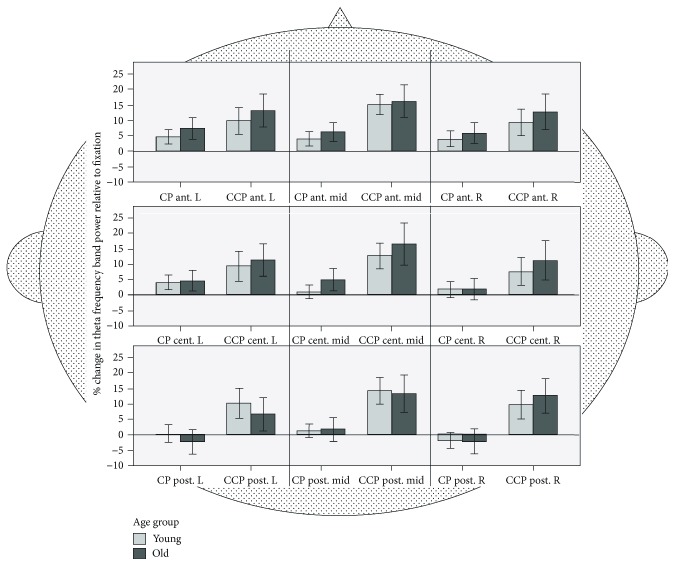
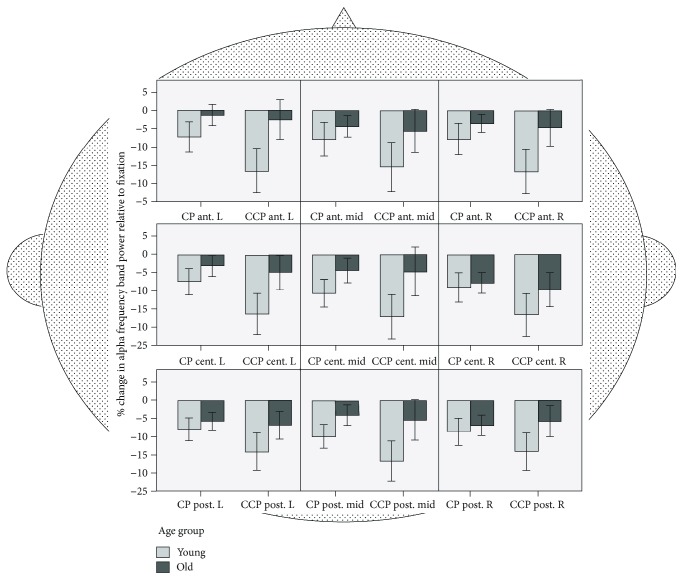
The concurrent performance of cognitive and postural tasks is particularly impaired in old adults and associated with an increased risk of falls. Biological aging of the cognitive and postural control system appears to be responsible for increased cognitive-motor interference effects. We examined neural and behavioral markers of motor-cognitive dual-task performance in young and old adults performing spatial one-back working memory single and dual tasks during semitandem stance. On the neural level, we used EEG to test for age-related modulations in the frequency domain related to cognitive-postural task load. Twenty-eight healthy young and 30 old adults participated in this study. The tasks included a postural single task, a cognitive-postural dual task, and a cognitive-postural triple task (cognitive dual-task with postural demands). Postural sway (i.e., total center of pressure displacements) was recorded in semistance position on an unstable surface that was placed on top of a force plate while performing cognitive tasks. Neural activation was recorded using a 64-channel mobile EEG system. EEG frequencies were attenuated by the baseline postural single-task condition and demarcated in nine Regions-of-Interest (ROIs), i.e., anterior, central, posterior, over the cortical midline, and both hemispheres. Our findings revealed impaired cognitive dual-task performance in old compared to young participants in the form of significantly lower cognitive performance in the triple-task condition. Furthermore, old adults compared with young adults showed significantly larger postural sway, especially in cognitive-postural task conditions. With respect to EEG frequencies, young compared to old participants showed significantly lower alpha-band activity in cognitive-cognitive-postural triple-task conditions compared with cognitive-postural dual tasks. In addition, with increasing task difficulty, we observed synchronized theta and delta frequencies, irrespective of age. Task-dependent alterations of the alpha frequency band were most pronounced over frontal and central ROIs, while alterations of the theta and delta frequency bands were found in frontal, central, and posterior ROIs. Theta and delta synchronization exhibited a decrease from anterior to posterior regions. For old adults, task difficulty was reflected by theta synchronization in the posterior ROI. For young adults, it was reflected by alpha desynchronization in bilateral anterior ROIs. In addition, we could not identify any effects of task difficulty and age on the beta frequency band. Our results shed light on age-related cognitive and postural declines and how they interact. Modulated alpha frequencies during high cognitive-postural task demands in young but not old adults might be reflective of a constrained neural adaptive potential in old adults. Future studies are needed to elucidate associations between the identified age-related performance decrements with task difficulty and changes in brain activity.
认知和姿势任务的并发表现,在老年人中特别受损,并与跌倒风险增加相关。认知和姿势控制系统的生物老化似乎是认知运动干扰效应增加的原因。我们在半串联姿势下,检查了年轻和老年人执行空间一背工作记忆单任务和双任务时的运动认知双任务表现的神经和行为标志物。在神经水平上,我们使用 EEG 测试与认知姿势任务负荷相关的频域中的与年龄相关的调制。28 名健康的年轻人和 30 名老年人参加了这项研究。任务包括姿势单任务、认知姿势双任务和认知姿势三重任务(带有姿势要求的认知双任务)。在不稳定表面上的半串联位置上记录姿势摆动(即总压力中心位移),同时在执行认知任务时在力板上放置。使用 64 通道移动 EEG 系统记录神经激活。EEG 频率通过基线姿势单任务条件衰减,并在九个感兴趣区域(ROI)中划定,即额、中央、后、皮质中线以上和两个半球。我们的发现表明,与年轻人相比,老年人在三重任务条件下的认知表现明显下降,表现出认知双任务表现受损。此外,与年轻人相比,老年人在认知姿势任务条件下的姿势摆动明显更大。关于 EEG 频率,与认知姿势双任务相比,年轻人在认知认知姿势三重任务条件下的 alpha 波段活动明显较低。此外,随着任务难度的增加,我们观察到无论年龄如何,theta 和 delta 频率的同步。与年龄相关的 alpha 频带的改变在额和中央 ROI 中最为明显,而 theta 和 delta 频带的改变在额、中央和后 ROI 中发现。theta 和 delta 同步从额区到后区呈下降趋势。对于老年人,任务难度在后 ROI 中表现为 theta 同步。对于年轻人,它在后侧 ROI 中表现为双侧前侧 ROI 的 alpha 去同步。此外,我们无法确定任务难度和年龄对 beta 频带的任何影响。我们的结果揭示了与年龄相关的认知和姿势下降以及它们如何相互作用。在年轻但不是老年成年人中,高认知姿势任务需求期间调制的 alpha 频率可能反映了老年成年人神经适应性潜力的受限。未来的研究需要阐明识别与任务难度和大脑活动变化相关的与年龄相关的表现下降之间的关联。