National Laboratory of Solid State Microstructures and Department of Physics, Collaborative Innovation Center of Advanced Microstructures, Nanjing University, Nanjing, Jiangsu, China.
Center for Soft Condensed Matter Physics and Interdisciplinary Research, School of Physical Science and Technology, Soochow University, Suzhou, Jiangsu, China.
Nat Commun. 2019 Oct 4;10(1):4520. doi: 10.1038/s41467-019-12470-5.
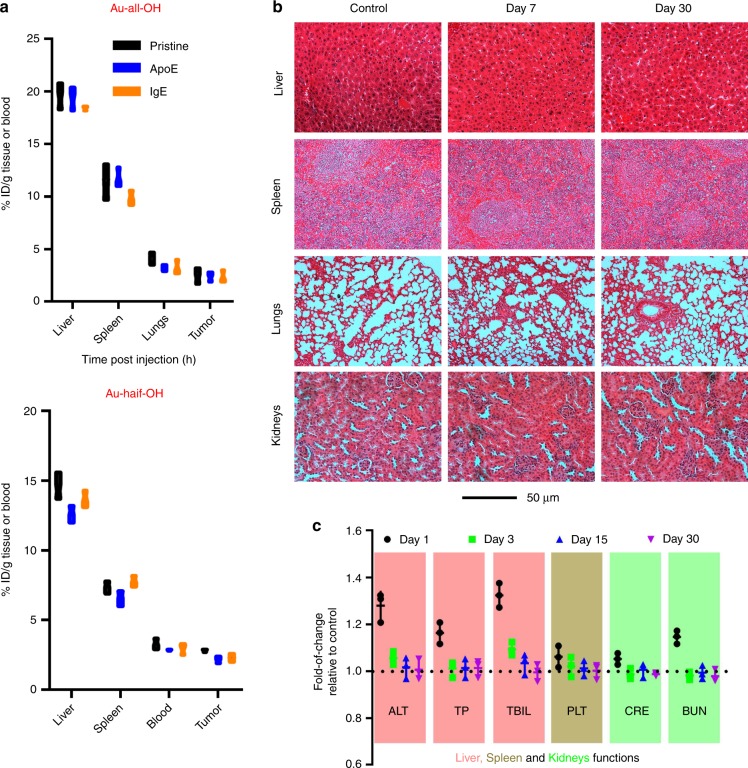
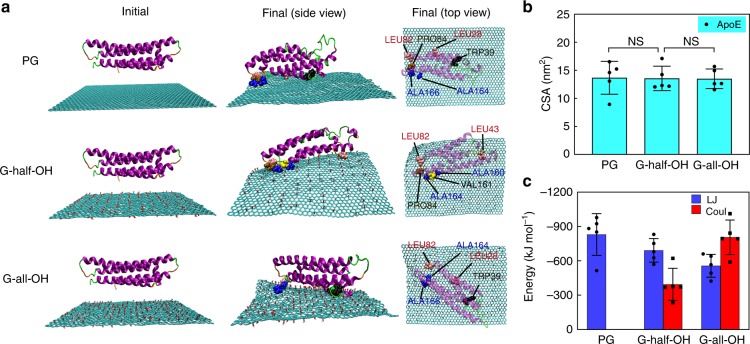
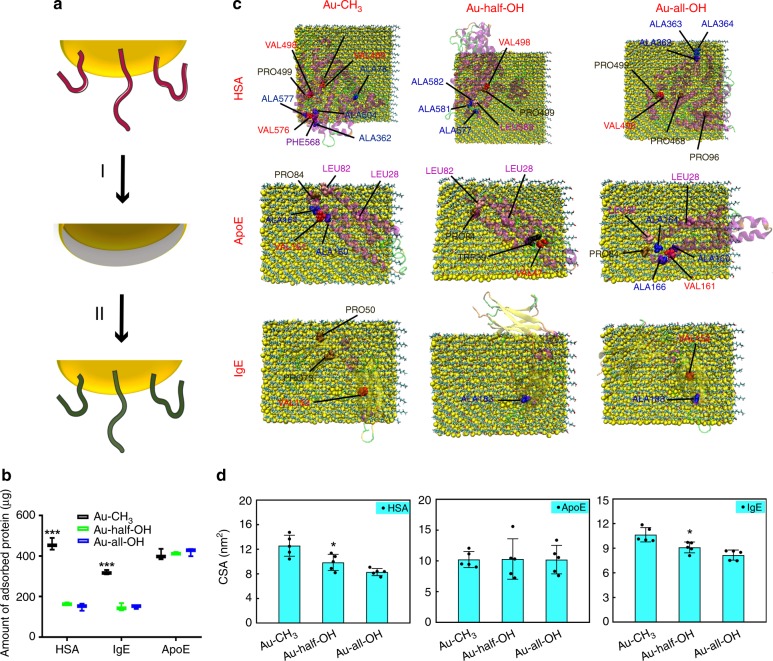
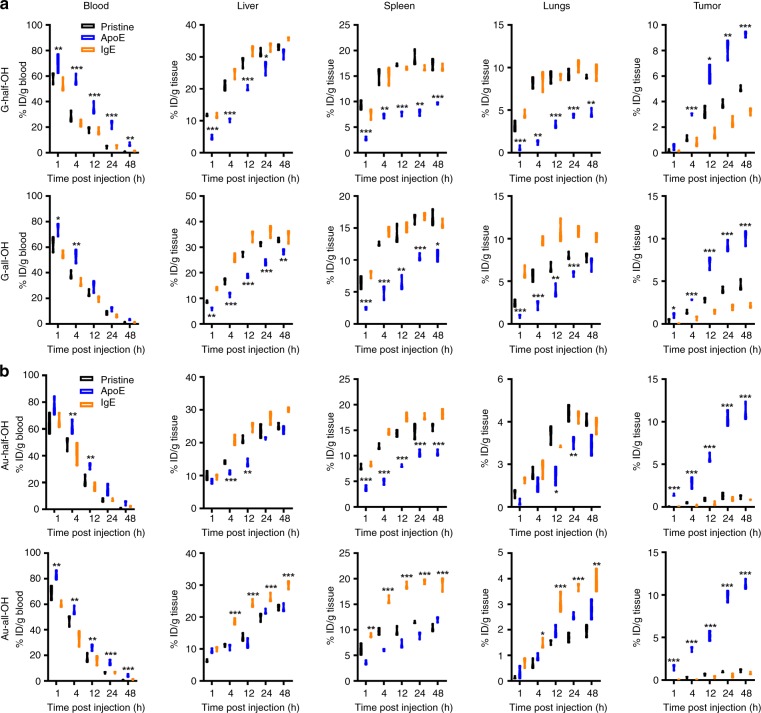
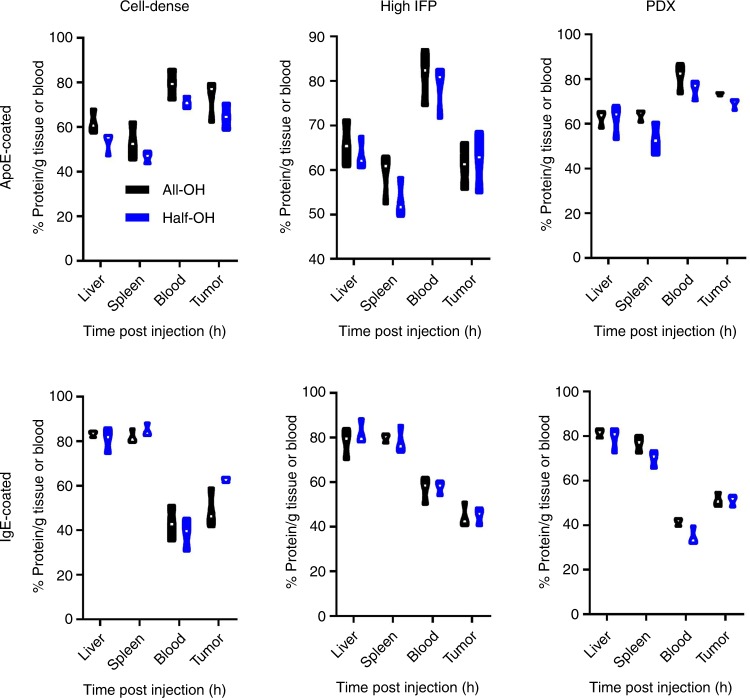
Control over the protein corona of nanomaterials allows them to function better. Here, by taking graphene/gold as examples, we comprehensively assessed the association of surface properties with the protein corona. As revealed by in vitro measurements and computations, the interaction between graphene/gold and HSA/IgE was inversely correlated with the hydroxyl group availability, whereas the interaction between that and ApoE was comparatively less relevant. Molecular simulations revealed that the number and the distribution of surface hydroxyl groups could regulate the manner in which nanomaterials interact with proteins. Moreover, we validated that ApoE pre-adsorption before injection enhances the blood circulation of nanomaterials relative to their pristine and IgE-coated counterparts. This benefit can be attributed to the invulnerability of the complementary system provided by ApoE, whose encasement does not increase cytotoxicity. Overall, this study offers a robust yet simple way to create protein corona enriched in dysopsonins to realize better delivery efficacy.
控制纳米材料的蛋白质冠层可以使它们更好地发挥作用。在这里,我们以石墨烯/金为例,全面评估了表面性质与蛋白质冠层的关联。通过体外测量和计算表明,石墨烯/金与 HSA/IgE 的相互作用与羟基的可用性呈反比,而与 ApoE 的相互作用则相对不那么相关。分子模拟表明,表面羟基的数量和分布可以调节纳米材料与蛋白质相互作用的方式。此外,我们验证了在注射前预先吸附 ApoE 可以增强纳米材料相对于原始材料和 IgE 涂层材料的血液循环。这种益处可以归因于 ApoE 提供的互补系统的不敏感性,其包裹不会增加细胞毒性。总的来说,这项研究提供了一种稳健而简单的方法来创造富含非吞噬配体的蛋白质冠层,以实现更好的递药效果。