Centre for BioNano Interactions, School of Chemistry, University College Dublin, Belfield, Dublin, 4, Ireland.
School of Physics, CRANN and AMBER, Trinity College Dublin, Dublin, 2, Ireland.
Nat Commun. 2018 Apr 20;9(1):1577. doi: 10.1038/s41467-018-04009-x.
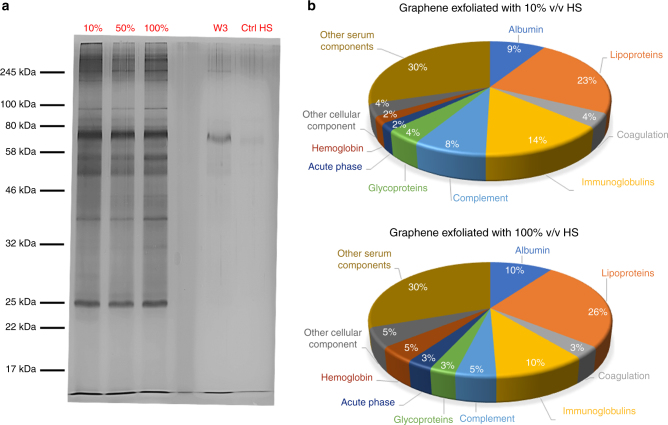
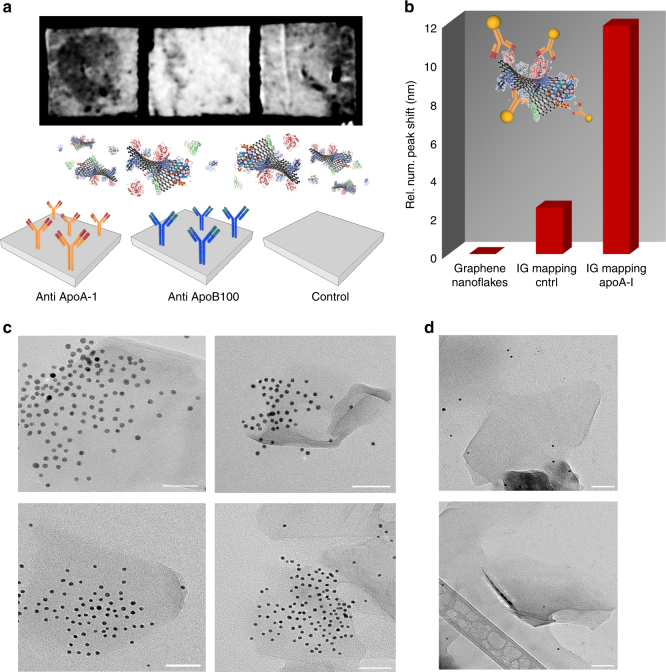
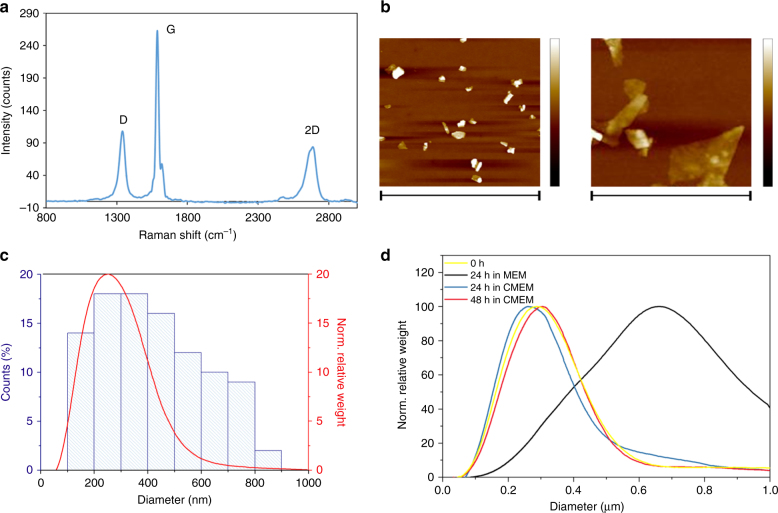
The systematic study of nanoparticle-biological interactions requires particles to be reproducibly dispersed in relevant fluids along with further development in the identification of biologically relevant structural details at the materials-biology interface. Here, we develop a biocompatible long-term colloidally stable water dispersion of few-layered graphene nanoflakes in the biological exposure medium in which it will be studied. We also report the study of the orientation and functionality of key proteins of interest in the biolayer (corona) that are believed to mediate most of the early biological interactions. The evidence accumulated shows that graphene nanoflakes are rich in effective apolipoprotein A-I presentation, and we are able to map specific functional epitopes located in the C-terminal portion that are known to mediate the binding of high-density lipoprotein to binding sites in receptors that are abundant in the liver. This could suggest a way of connecting the materials' properties to the biological outcomes.
纳米颗粒-生物相互作用的系统研究要求颗粒能够在相关液体中可重复地分散,同时还需要进一步确定材料-生物界面处与生物学相关的结构细节。在这里,我们开发了一种在生物暴露介质中具有生物相容性的、长期胶体稳定的少层石墨烯纳米片水分散体,该介质将用于对其进行研究。我们还报告了对生物层(冠)中感兴趣的关键蛋白质的取向和功能的研究,这些蛋白质被认为介导了大多数早期的生物相互作用。积累的证据表明,石墨烯纳米片富含有效的载脂蛋白 A-I 呈现,并且我们能够绘制位于 C 末端的特定功能表位,这些表位已知介导高密度脂蛋白与肝脏中丰富的受体结合位点的结合。这可能表明了一种将材料特性与生物学结果联系起来的方法。