Department of Molecular and Cellular Biology, Harvard University, Cambridge, MA, 02138, USA.
School of Engineering and Applied Sciences, Harvard University, Cambridge, MA, 02138, USA.
Nat Commun. 2019 Oct 4;10(1):4516. doi: 10.1038/s41467-019-12533-7.
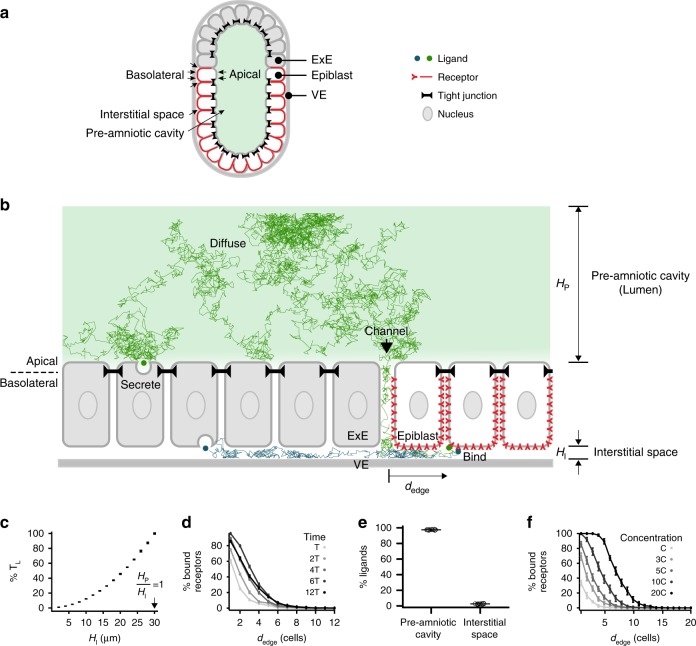
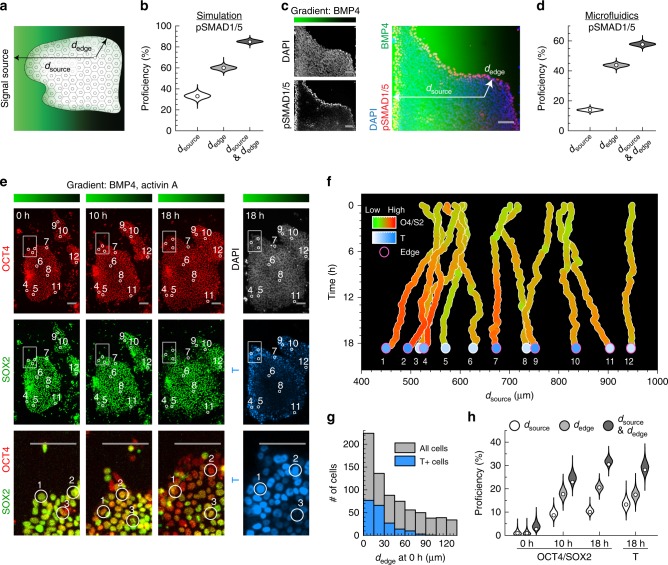
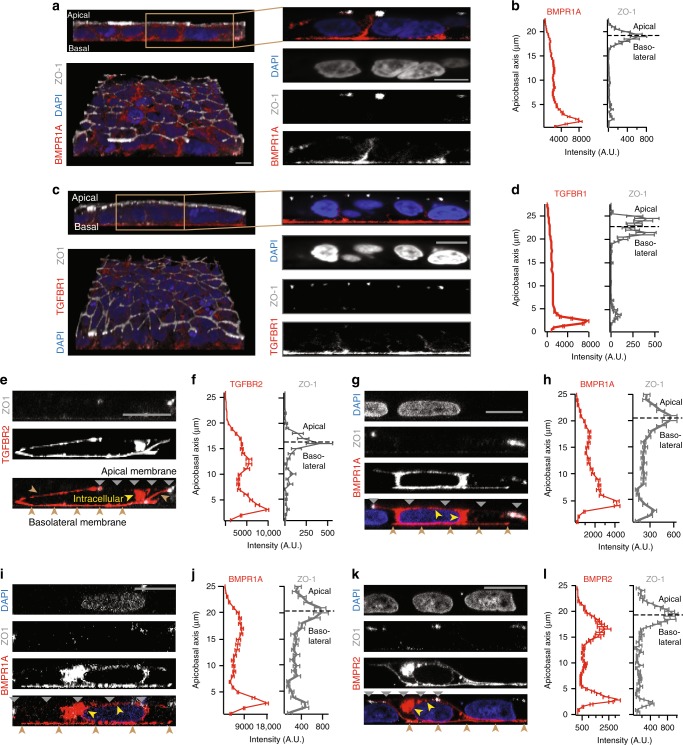
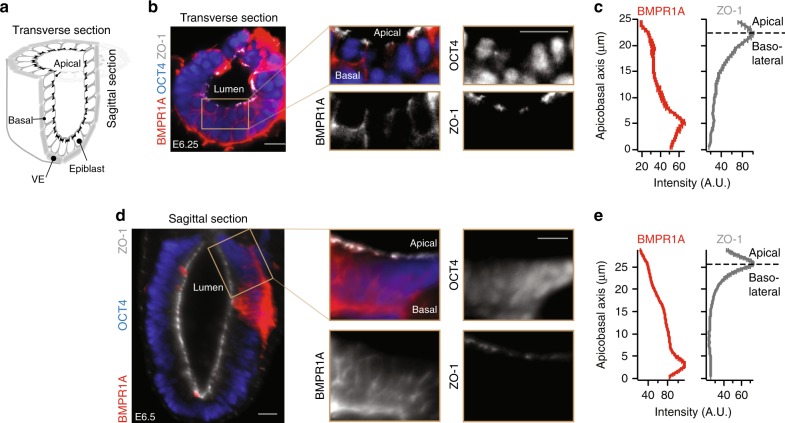
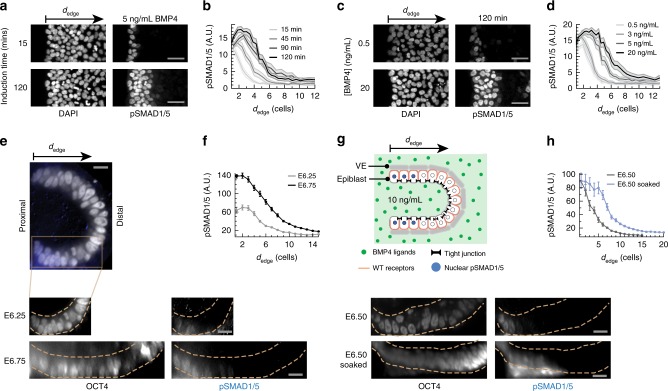
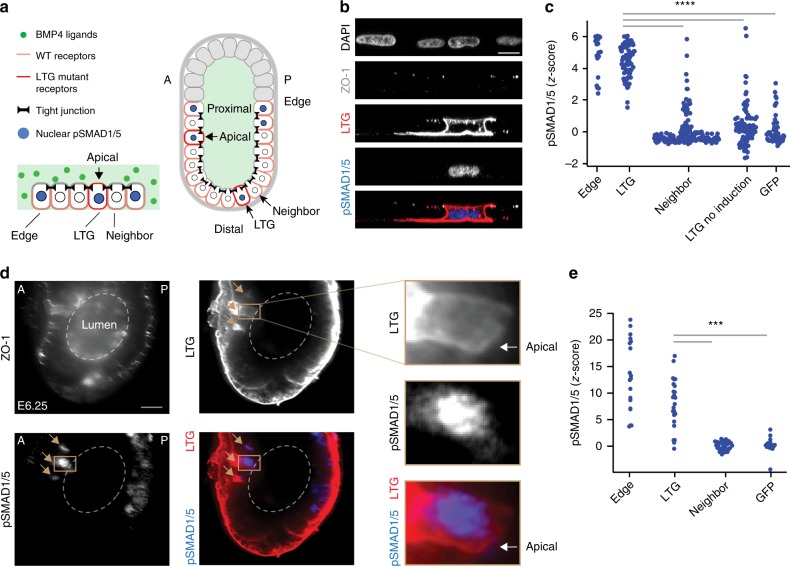
Morphogen signals are essential for cell fate specification during embryogenesis. Some receptors that sense these morphogens are known to localize to only the apical or basolateral membrane of polarized cell lines in vitro. How such localization affects morphogen sensing and patterning in the developing embryo remains unknown. Here, we show that the formation of a robust BMP signaling gradient in the early mouse embryo depends on the restricted, basolateral localization of BMP receptors. The mis-localization of receptors to the apical membrane results in ectopic BMP signaling in the mouse epiblast in vivo. With evidence from mathematical modeling, human embryonic stem cells in vitro, and mouse embryos in vivo, we find that the geometric compartmentalization of BMP receptors and ligands creates a signaling gradient that is buffered against fluctuations. Our results demonstrate the importance of receptor localization and embryo geometry in shaping morphogen signaling during embryogenesis.
形态发生素信号对于胚胎发生过程中的细胞命运特化至关重要。一些感知这些形态发生素的受体已知仅在体外极化细胞系的顶膜或基底外侧膜上定位。这种定位如何影响发育中的胚胎中的形态发生素感应和模式形成仍然未知。在这里,我们表明,早期小鼠胚胎中 BMP 信号的形成取决于 BMP 受体的受限、基底外侧定位。受体向顶膜的错误定位导致体内小鼠上胚层中出现异位 BMP 信号。通过数学建模、体外人胚胎干细胞和体内小鼠胚胎的证据,我们发现 BMP 受体和配体的几何分区创建了一个对波动具有缓冲作用的信号梯度。我们的结果表明,受体定位和胚胎几何形状在塑造胚胎发生过程中的形态发生素信号方面的重要性。