Harvard-MIT Division of Health Sciences and Technology, Harvard Medical School, Boston, MA, USA.
Harvard-MIT Division of Health Sciences and Technology, Harvard Medical School, Boston, MA, USA; Department of Brain and Cognitive Sciences, Massachusetts Institute of Technology, Cambridge, MA, USA; Department of Anesthesia, Critical Care and Pain Medicine, Massachusetts General Hospital, Harvard Medical School, Boston, MA, USA; Institute for Medical Engineering and Sciences, Massachusetts Institute of Technology, Cambridge, MA, USA.
Neuroimage. 2020 Jan 15;205:116231. doi: 10.1016/j.neuroimage.2019.116231. Epub 2019 Oct 4.
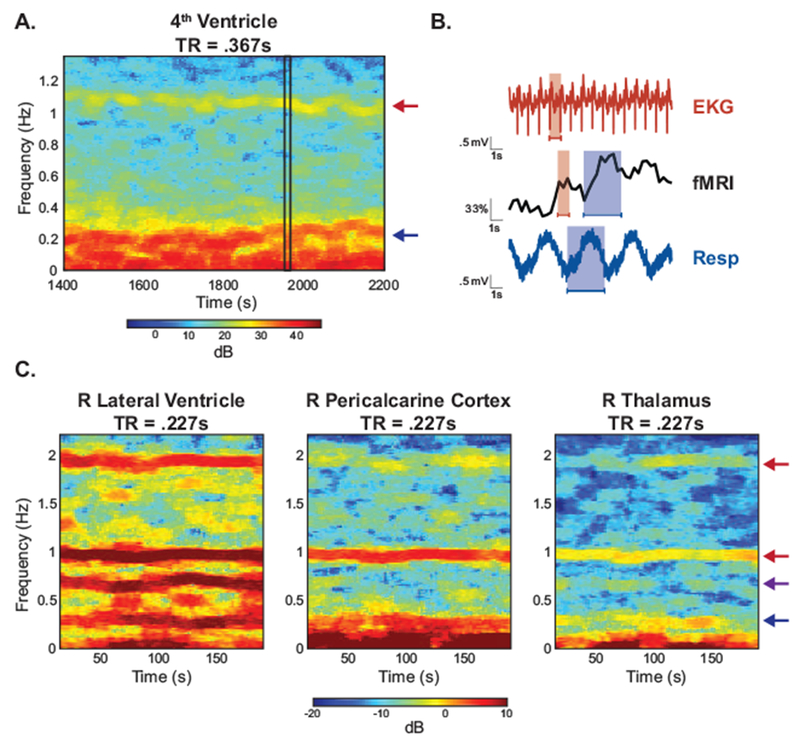
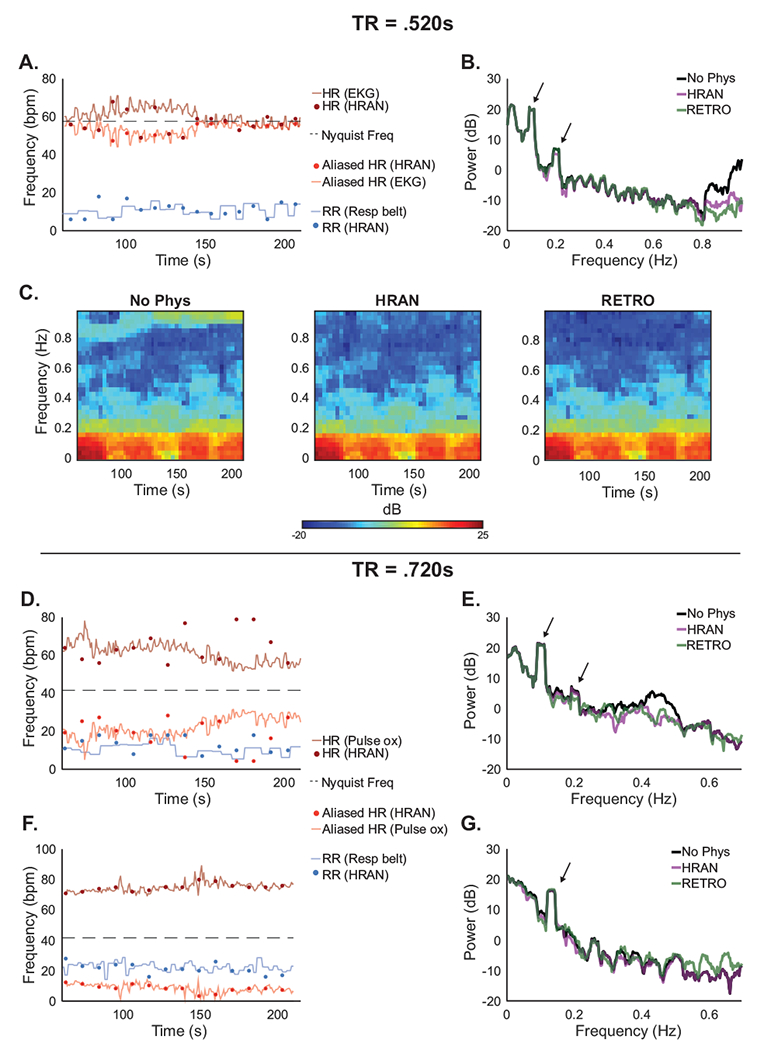
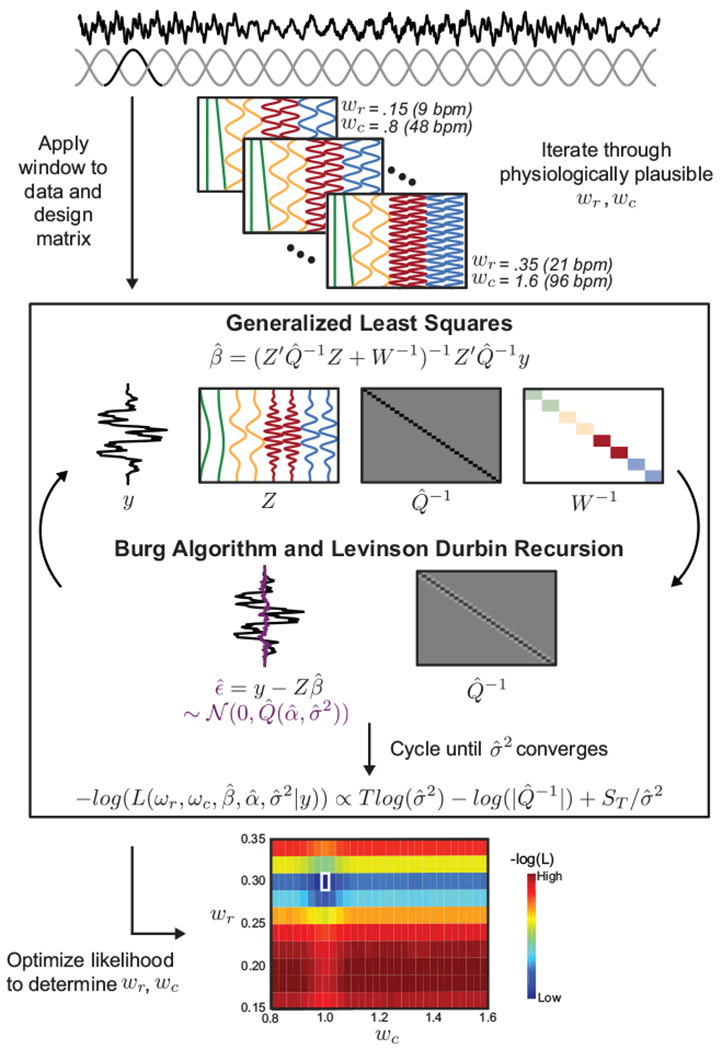
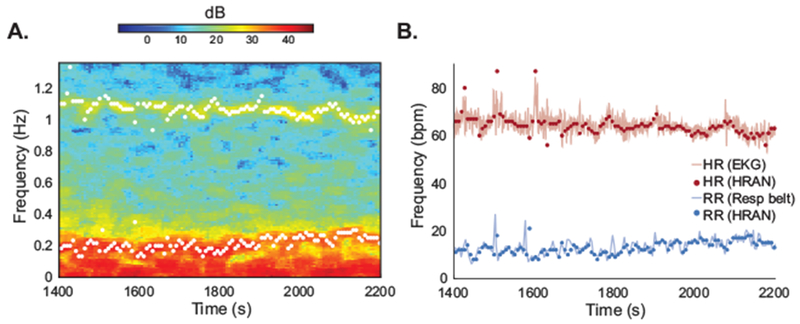
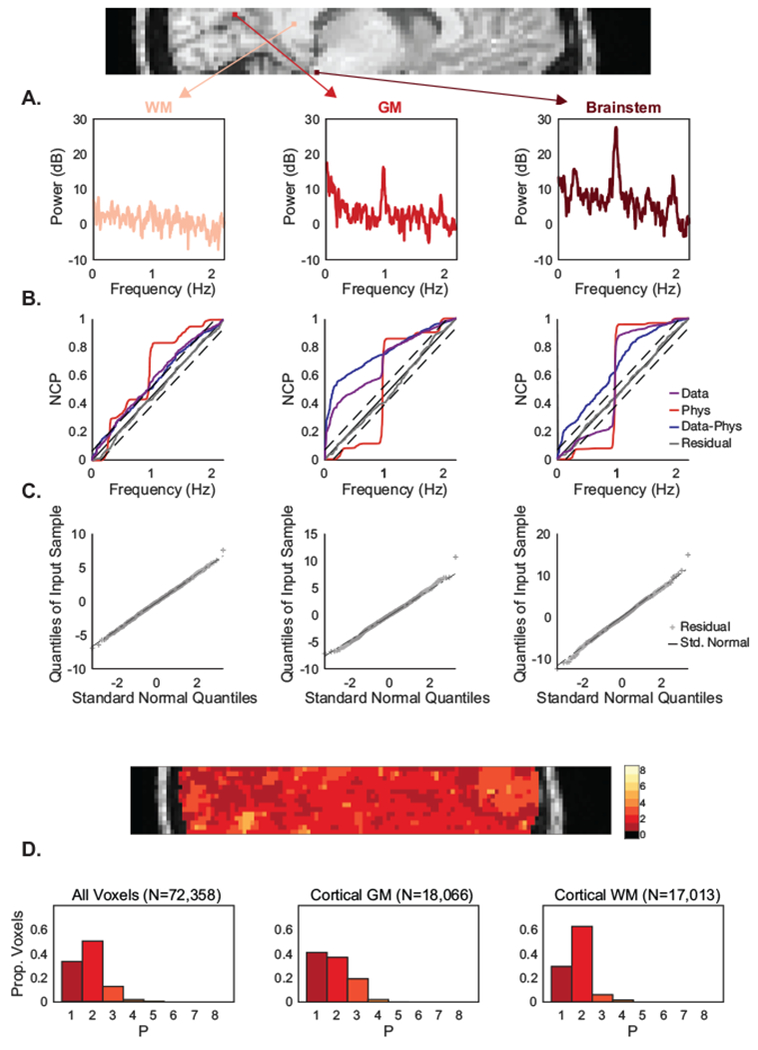
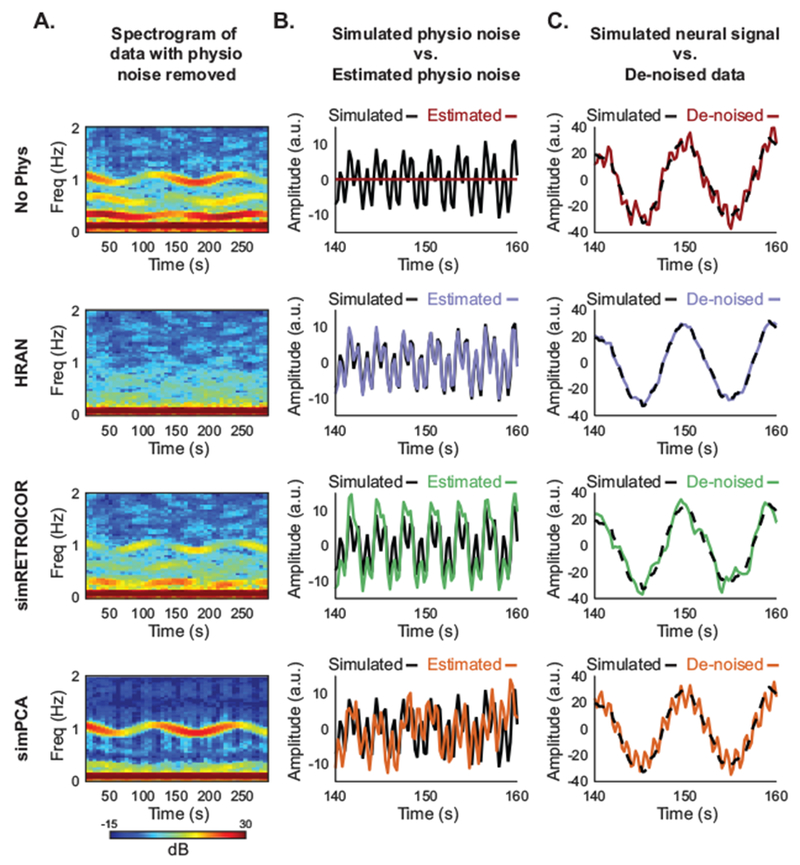
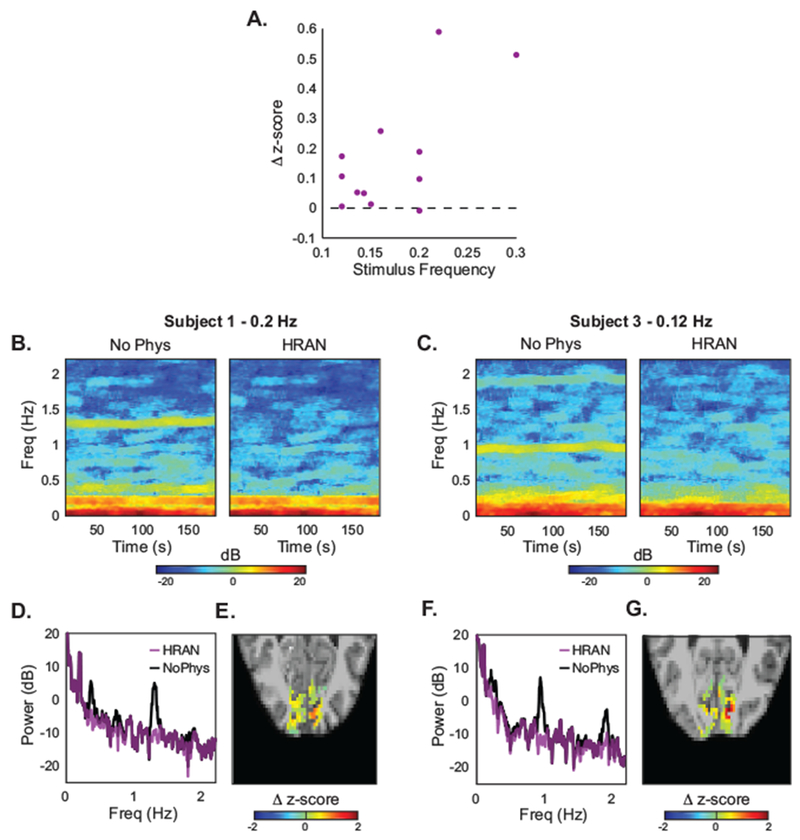
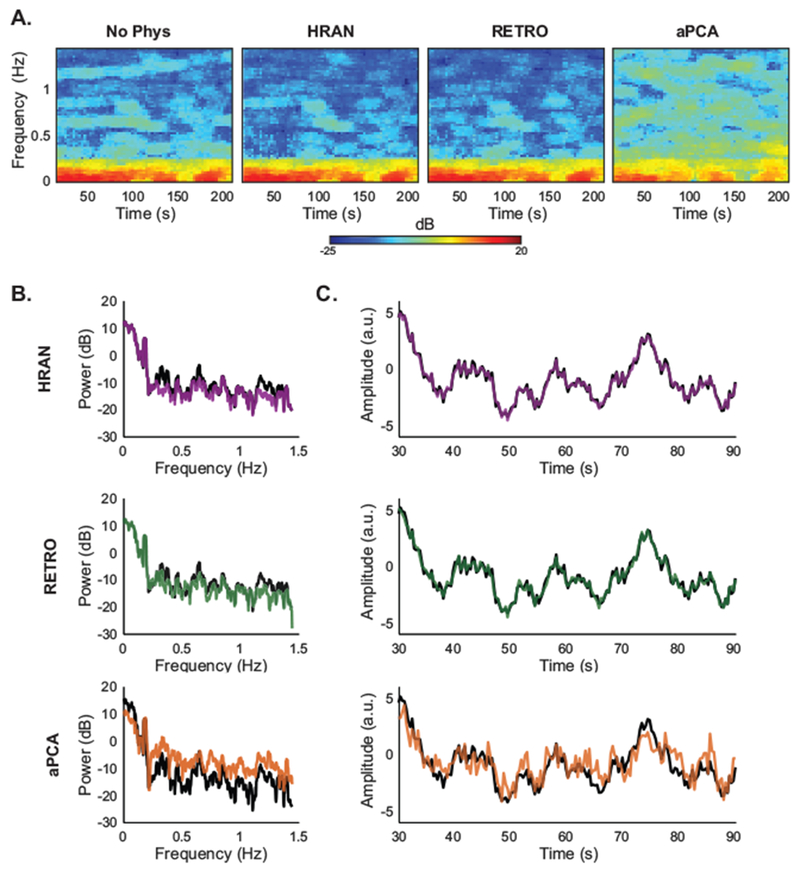
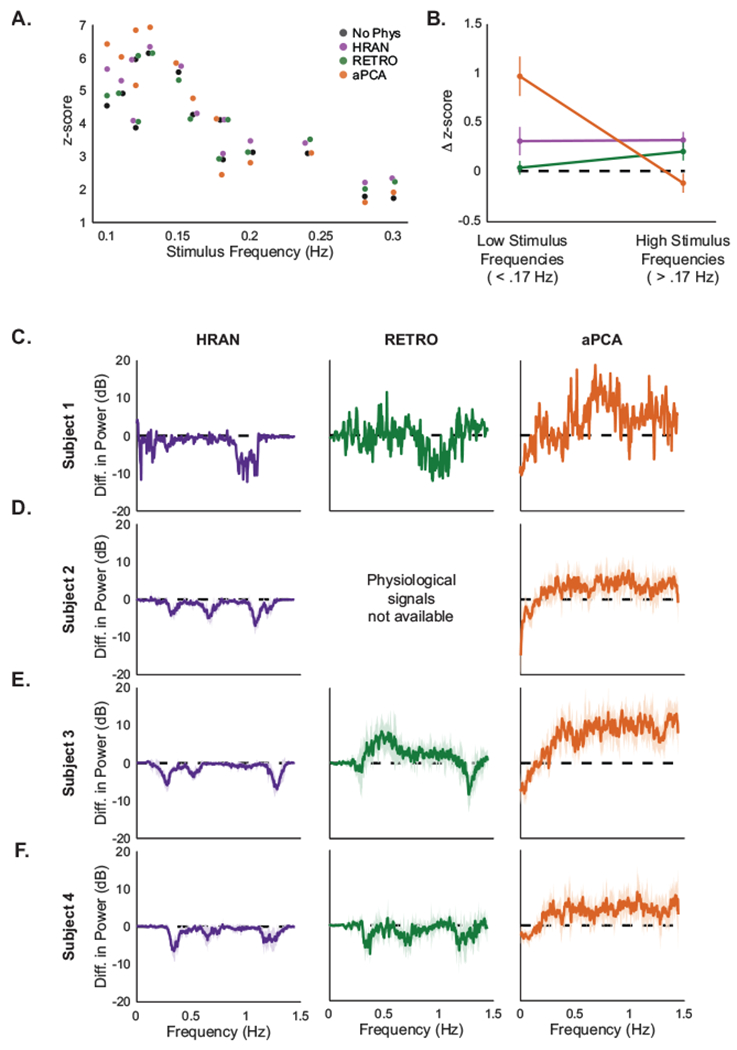
Recent improvements in the speed and sensitivity of fMRI acquisition techniques suggest that fast fMRI can be used to detect and precisely localize sub-second neural dynamics. This enhanced temporal resolution has enormous potential for neuroscientists. However, physiological noise poses a major challenge for the analysis of fast fMRI data. Physiological noise scales with sensitivity, and its autocorrelation structure is altered in rapidly sampled data, suggesting that new approaches are needed for physiological noise removal in fast fMRI. Existing strategies either rely on external physiological recordings, which can be noisy or difficult to collect, or employ data-driven approaches which make assumptions that may not hold true in fast fMRI. We created a statistical model of harmonic regression with autoregressive noise (HRAN) to estimate and remove cardiac and respiratory noise from the fMRI signal directly. This technique exploits the fact that cardiac and respiratory noise signals are fully sampled (rather than aliasing) when imaging at fast rates, allowing us to track and model physiology over time without requiring external physiological measurements. We then created a joint model of neural hemodynamics, and physiological and autocorrelated noise to more accurately remove noise. We first verified that HRAN accurately estimates cardiac and respiratory dynamics and that our model demonstrates goodness-of-fit in fast fMRI data. In task-driven data, we then demonstrated that HRAN is able to remove physiological noise while leaving the neural signal intact, thereby increasing detection of task-driven voxels. Finally, we established that in both simulations and fast fMRI data HRAN is able to improve statistical inferences as compared with gold-standard physiological noise removal techniques. In conclusion, we created a tool that harnesses the novel information in fast fMRI to remove physiological noise, enabling broader use of the technology to study human brain function.
最近,功能磁共振成像(fMRI)采集技术在速度和灵敏度方面的改进表明,快速 fMRI 可用于检测和精确定位亚秒级的神经动力学。这种增强的时间分辨率为神经科学家提供了巨大的潜力。然而,生理噪声对快速 fMRI 数据的分析构成了重大挑战。生理噪声与灵敏度成正比,并且在快速采样数据中其自相关结构发生改变,这表明需要新的方法来去除快速 fMRI 中的生理噪声。现有的策略要么依赖于外部生理记录,这些记录可能会有噪声或难以收集,要么采用数据驱动的方法,这些方法的假设在快速 fMRI 中可能不成立。我们创建了一个具有自回归噪声的谐波回归统计模型(HRAN),以直接从 fMRI 信号中估计和去除心脏和呼吸噪声。该技术利用了在快速成像率下,心脏和呼吸噪声信号被完全采样(而不是混叠)的事实,使我们能够在不需要外部生理测量的情况下随时间跟踪和建模生理情况。然后,我们创建了一个神经血液动力学、生理和自相关噪声的联合模型,以更准确地去除噪声。我们首先验证了 HRAN 能够准确估计心脏和呼吸动力学,并且我们的模型在快速 fMRI 数据中表现出良好的拟合度。在任务驱动的数据中,我们证明了 HRAN 能够在保留神经信号的同时去除生理噪声,从而增加任务驱动体素的检测。最后,我们确定在模拟和快速 fMRI 数据中,HRAN 能够与黄金标准的生理噪声去除技术相比,提高统计推断能力。总之,我们创建了一种利用快速 fMRI 中的新信息来去除生理噪声的工具,使该技术能够更广泛地用于研究人类大脑功能。