Brain Imaging Center, McLean Hospital, 115 Mill Street, Belmont, MA, 02478, USA; Department of Psychiatry, Harvard University Medical School, Boston, MA, 02115, USA.
Brain Imaging Center, McLean Hospital, 115 Mill Street, Belmont, MA, 02478, USA; Department of Psychiatry, Harvard University Medical School, Boston, MA, 02115, USA.
Neuroimage. 2019 Sep;198:303-316. doi: 10.1016/j.neuroimage.2019.05.049. Epub 2019 May 23.
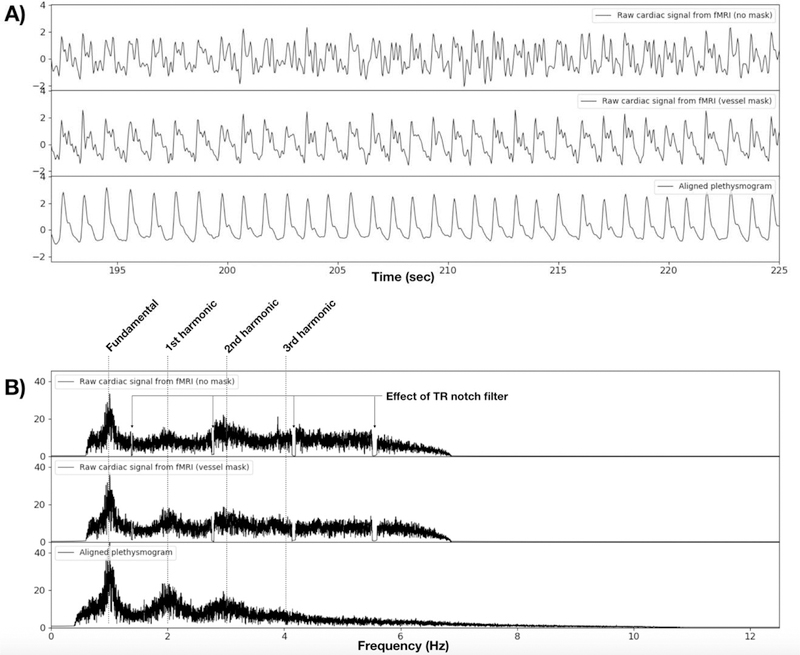
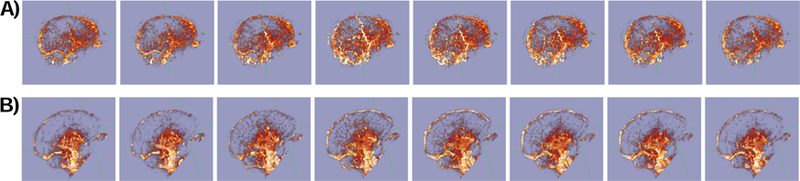
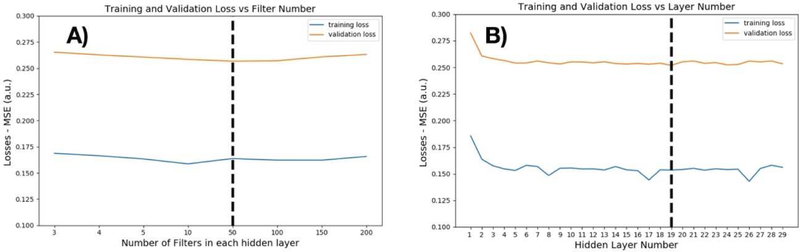
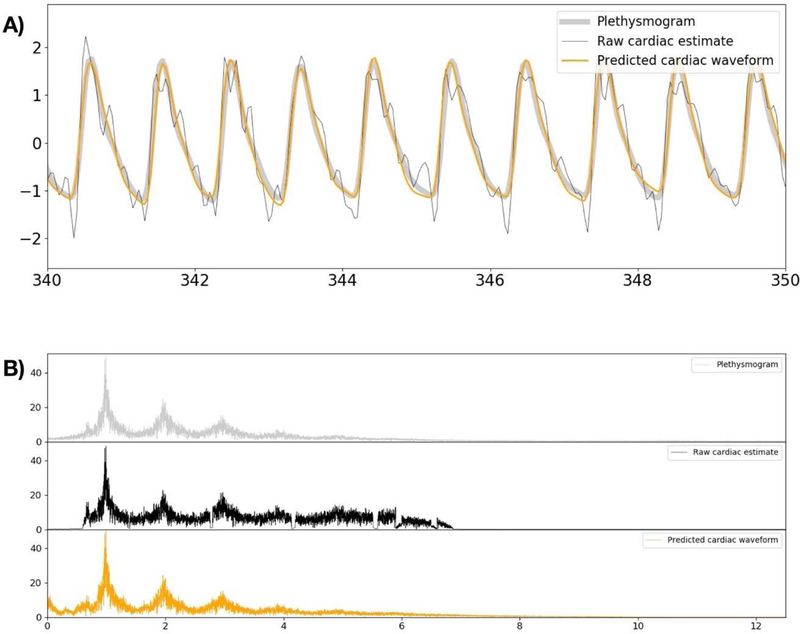
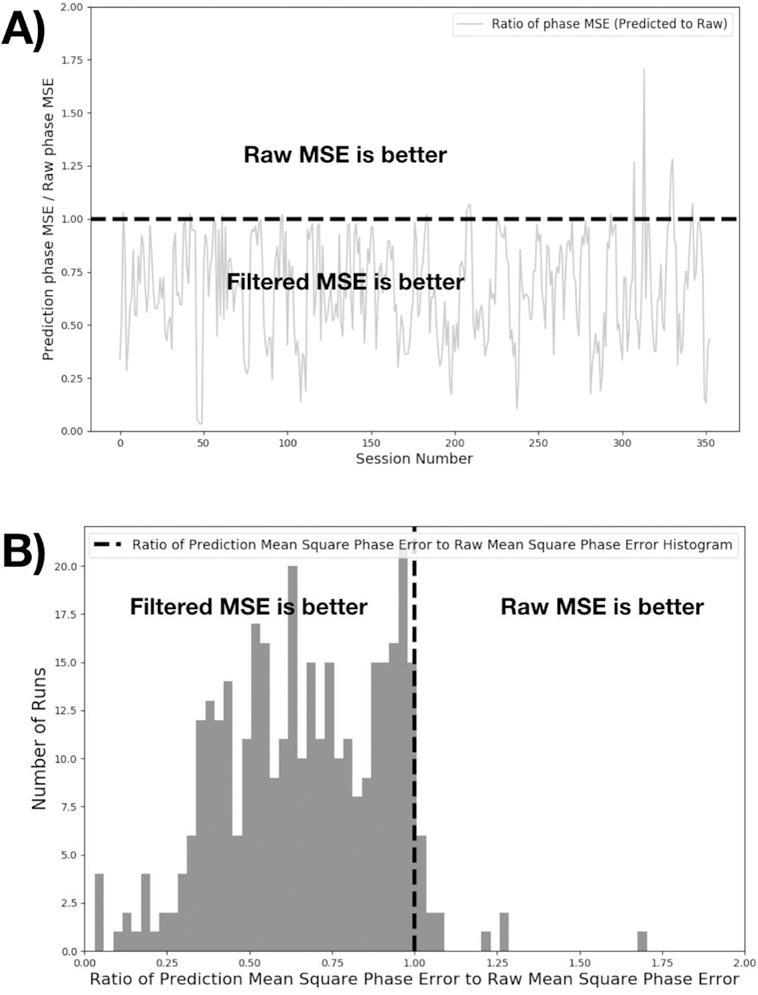
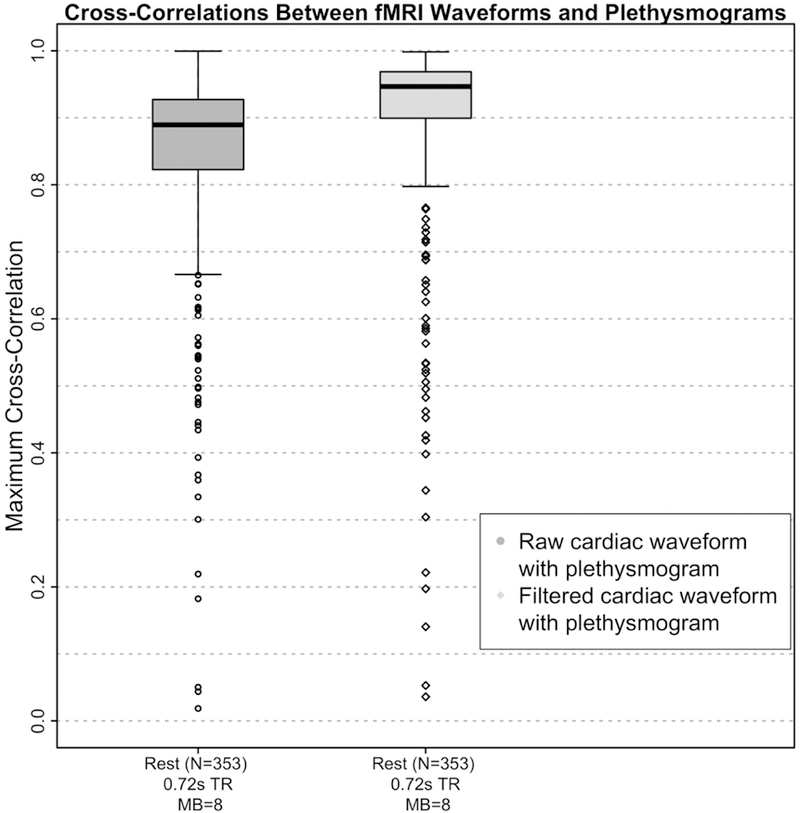
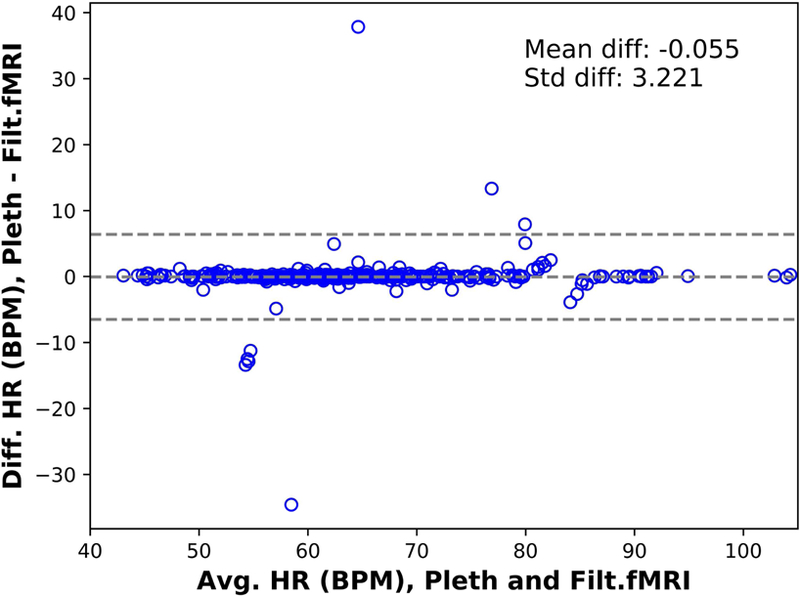
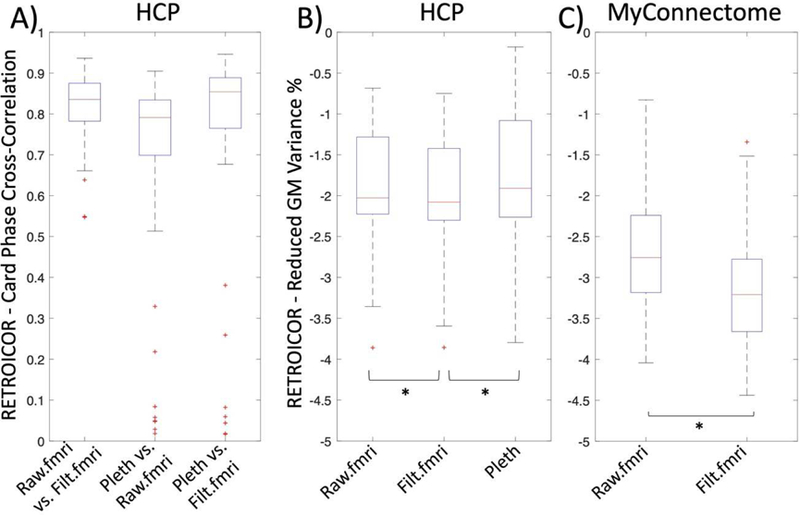
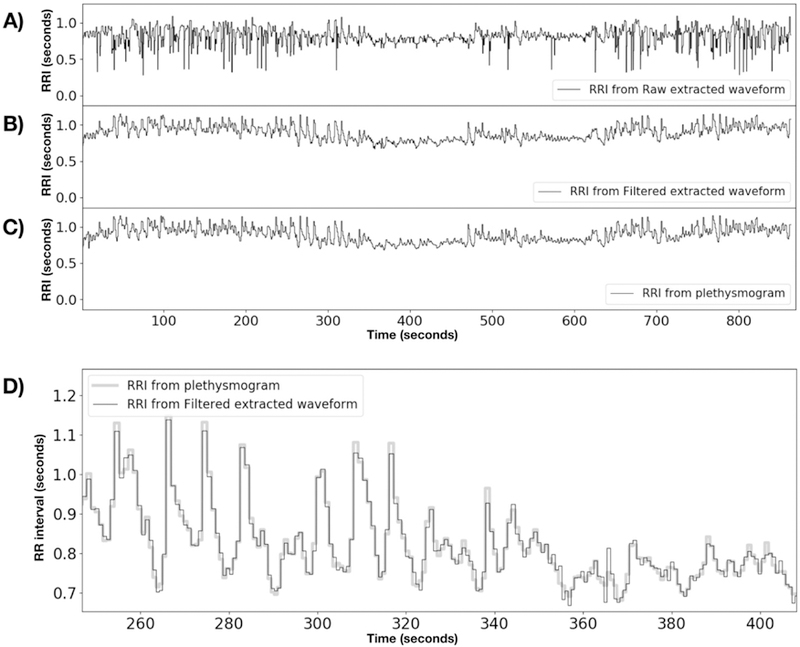
Cardiac signal contamination has long confounded the analysis of blood-oxygenation-level-dependent (BOLD) functional magnetic resonance imaging (fMRI). Cardiac pulsation results in significant BOLD signal changes, especially in and around blood vessels. Until the advent of simultaneous multislice echo-planar imaging (EPI) acquisition, the time resolution of whole brain EPI was insufficient to avoid cardiac aliasing (and acquisitions with repetition times (TRs) under 400-500 ms are still uncommon). As a result, direct detection and removal of the cardiac signal with spectral filters is generally not possible. Modelling methods have been developed to mitigate cardiac contamination, and recently developed techniques permit the visualization of cardiac signal propagation through the brain in undersampled data (e.g., TRs > 1s), which is useful in its own right for finding blood vessels. However, both of these techniques require data from which to estimate cardiac phase, which is generally not available for the data in many large databases of existing imaging data, and even now is not routinely recorded in many fMRI experiments. Here we present a method to estimate the cardiac waveform directly from a multislice fMRI dataset, without additional physiological measurements, such as plethysmograms. The pervasive spatial extent and temporal structure of the cardiac contamination signal across the brain offers an opportunity to exploit the nature of multislice imaging to extract this signal from the fMRI data itself. While any particular slice is recorded at the TR of the imaging experiment, slices are recorded much more quickly - typically from 10 to 20 Hz - sufficiently fast to fully sample the cardiac signal. Using the fairly permissive assumptions that the cardiac signal is a) pseudoperiodic b) somewhat coherent within any given slice, and c) is similarly shaped throughout the brain, we can extract a good estimate of the cardiac phase as a function of time from fMRI data alone. If we make further assumptions about the shape and consistency of cardiac waveforms, we can develop a deep learning filter to greatly improve our estimate of the cardiac waveform.
心脏信号污染长期以来一直困扰着血氧水平依赖(BOLD)功能磁共振成像(fMRI)的分析。心脏搏动会导致显著的 BOLD 信号变化,尤其是在血管内和周围。直到同时多层回波平面成像(EPI)采集技术问世之前,整个大脑 EPI 的时间分辨率不足以避免心脏伪影(重复时间(TR)低于 400-500ms 的采集仍然很少见)。因此,通常无法使用频谱滤波器直接检测和去除心脏信号。已经开发了建模方法来减轻心脏污染,最近开发的技术允许在欠采样数据中可视化心脏信号在大脑中的传播(例如,TR>1s),这本身对于发现血管就很有用。然而,这两种技术都需要估计心脏相位的数据,而许多现有的成像数据大型数据库中的数据通常没有这个相位的数据,即使在现在,许多 fMRI 实验也没有常规记录这个相位。在这里,我们提出了一种从多切片 fMRI 数据集直接估计心脏波形的方法,而无需额外的生理测量,如体积描记法。心脏污染信号在大脑中的普遍空间范围和时间结构为利用多切片成像的性质从 fMRI 数据本身中提取该信号提供了机会。虽然任何特定的切片都是在成像实验的 TR 记录的,但切片的记录速度要快得多-通常在 10 到 20Hz-足以对心脏信号进行完全采样。基于心脏信号是 a)准周期的、b)在任何给定切片内具有一定相干性、c)在整个大脑中具有相似形状的相当宽松的假设,我们可以仅从 fMRI 数据中提取出随时间变化的心脏相位的良好估计值。如果我们对心脏波形的形状和一致性做出进一步的假设,我们可以开发一种深度学习滤波器来大大提高我们对心脏波形的估计。