Mewa-Ngongang Maxwell, Plessis Heinrich W du, Ntwampe Seteno Karabo Obed, Chidi Boredi Silas, Hutchinson Ucrecia Faith, Mekuto Lukhanyo, Jolly Neil Paul
PostHarvest and Agro-Processing Technologies, ARC Infruitec-Nietvoorbij (The Fruit, Vine and Wine Institute of the Agricultural Research Council), Private Bag X5026, Stellenbosch 7599, South Africa.
Bioresource Engineering Research Group (BioERG), Department of Biotechnology, Cape Peninsula University of Technology, P.O. Box 652, Cape Town 8000, South Africa.
Foods. 2019 Oct 6;8(10):454. doi: 10.3390/foods8100454.
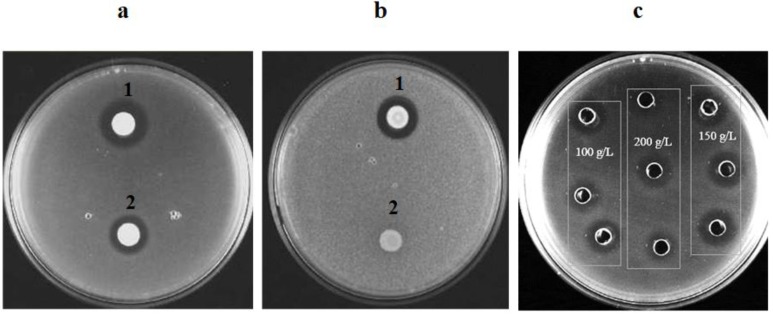
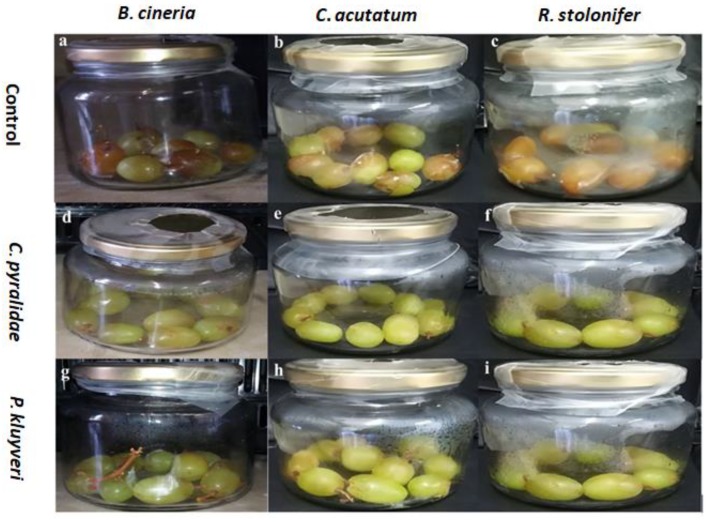
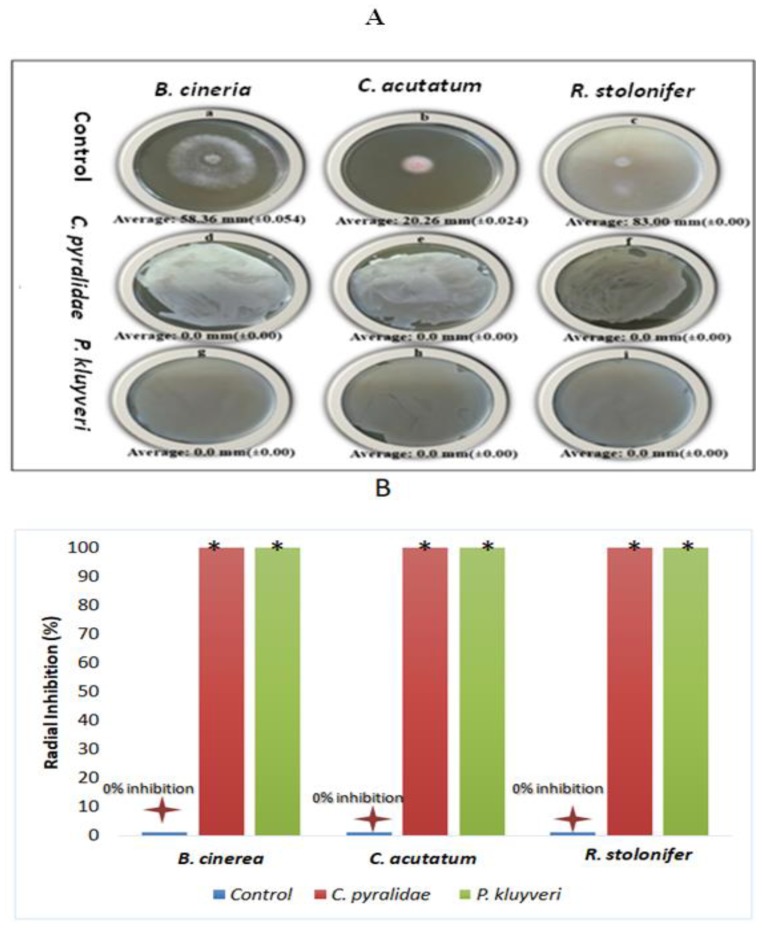
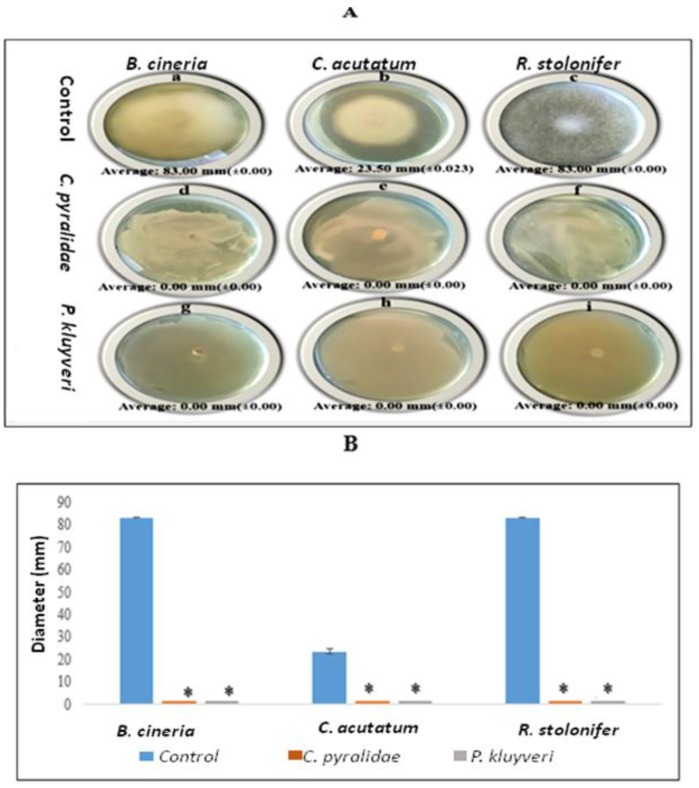
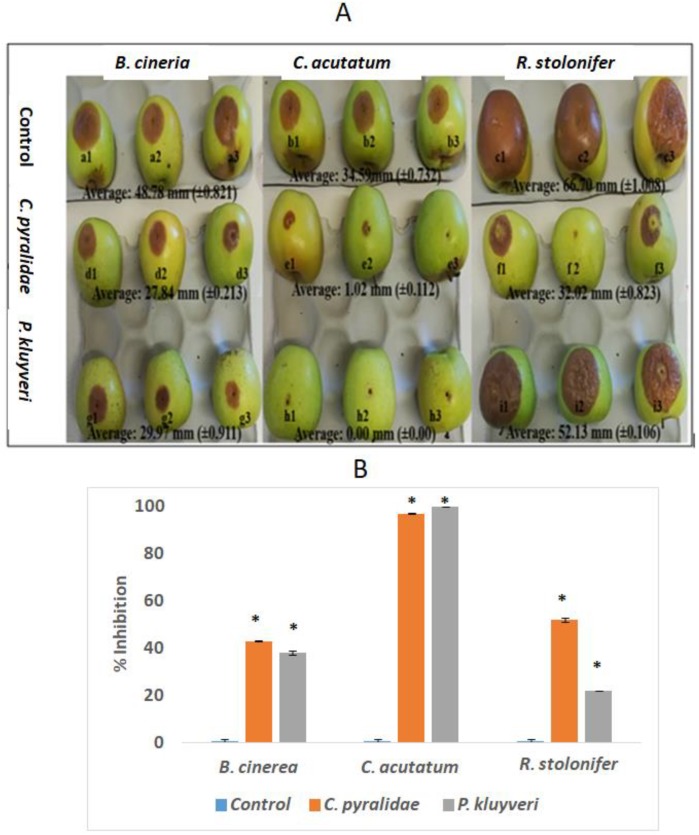
Undesired fermentation of fruit-derived beverages by fungal, yeast and bacterial spoilage organisms are among the major contributors of product losses in the food industry. As an alternative to chemical preservatives, the use of and was assessed for antimicrobial activity against several yeasts () and fungi (, and ) associated with spoilage of fruit and fruit-derived beverages. The antagonistic properties of and were evaluated on cheap solidified medium (grape pomace extract) as well as on fruits (grapes and apples). Volatile organic compounds (VOCs) from and deemed to have antimicrobial activit were identified by gas chromatography-mass spectrometry (GC-MS). A cell suspension of and showed growth inhibition activity against all spoilage microorganisms studied. Direct contact and extracellular VOCs were two of the mechanisms of inhibition. Twenty-five VOCs belonging to the categories of alcohols, organic acids and esters were identified as potential sources for the biocontrol activity observed in this study. This study reports, for the first time, the ability of to inhibit fungal growth and also for to show growth inhibition activity against spoilage organisms ( = 6) in a single study.
真菌、酵母和细菌等腐败微生物对水果衍生饮料的不良发酵是食品工业中产品损失的主要原因之一。作为化学防腐剂的替代品,评估了[具体物质1]和[具体物质2]对几种与水果及水果衍生饮料腐败相关的酵母([酵母种类1])和真菌([真菌种类1]、[真菌种类2]和[真菌种类3])的抗菌活性。在廉价的固化培养基(葡萄皮渣提取物)以及水果(葡萄和苹果)上评估了[具体物质1]和[具体物质2]的拮抗特性。通过气相色谱 - 质谱联用(GC - MS)鉴定了来自[具体物质1]和[具体物质2]的被认为具有抗菌活性的挥发性有机化合物(VOCs)。[具体物质1]和[具体物质2]的细胞悬浮液对所有研究的腐败微生物均表现出生长抑制活性。直接接触和细胞外VOCs是抑制机制中的两种。本研究鉴定出属于醇类、有机酸和酯类的25种VOCs是观察到的生物防治活性的潜在来源。本研究首次报道了[具体物质1]抑制真菌生长的能力,以及[具体物质2]在一项研究中对多种腐败微生物([微生物种类数量] = 6)表现出生长抑制活性。