Maluleke Evelyn, Jolly Neil Paul, Patterton Hugh George, Setati Mathabatha Evodia
Department of Viticulture and Oenology, South African Grape and Wine Research Institute, Stellenbosch University, Matieland, South Africa.
Post Harvest and Agro-Processing Technologies, ARC Infruitec-Nietvoorbij (The Fruit, Vine and Wine Institute of the Agricultural Research Council), Stellenbosch, South Africa.
Front Microbiol. 2022 Aug 23;13:986229. doi: 10.3389/fmicb.2022.986229. eCollection 2022.
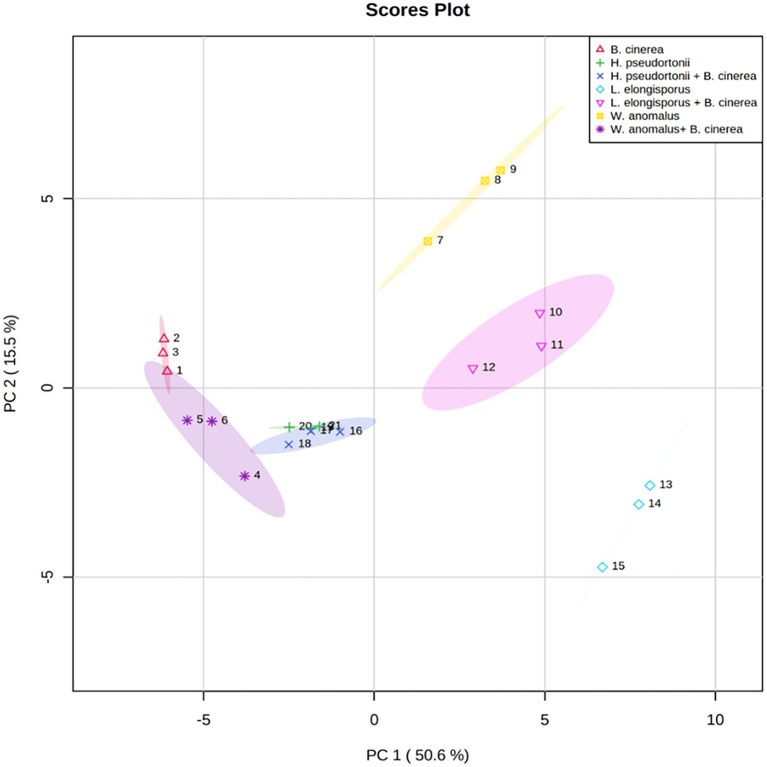
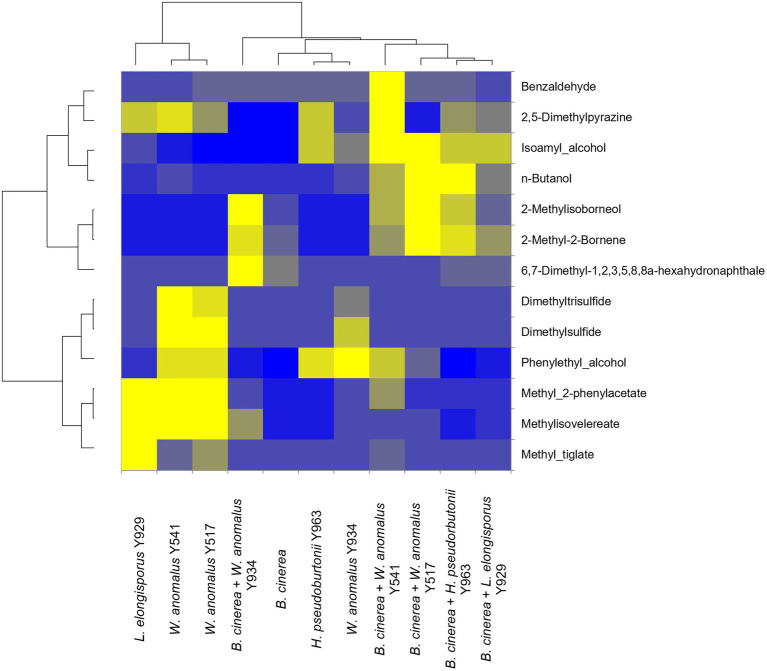
Grapes harbour a plethora of non-conventional yeast species. Over the past two decades, several of the species have been extensively characterised and their contribution to wine quality is better understood. Beyond fermentation, some of the species have been investigated for their potential as alternative biological tools to reduce grape and wine spoilage. However, such studies remain limited to a few genera. This work aimed to evaluate the antagonistic activity of grape must-derived non-conventional yeasts against and bunch-rotting moulds and to further elucidate mechanisms conferring antifungal activity. A total of 31 yeast strains representing 21 species were screened on different agar media using a dual culture technique and liquid mixed cultures, respectively. was the most potent with a minimum inhibitory concentration of 10 cells/mL against but it had a narrow activity spectrum. Twelve of the yeast strains displayed broad antagonistic activity, inhibiting three strains of (B05. 10, IWBT FF1 and IWBT FF2), a strain of and Production of chitinases and glucanases in the presence of was a common feature in most of the antagonists. Volatile and non-volatile compounds produced by antagonistic yeast strains in the presence of were analysed and identified using gas and liquid chromatography mass spectrometry, respectively. The volatile compounds identified belonged mainly to higher alcohols, esters, organosulfur compounds and monoterpenes while the non-volatile compounds were cyclic peptides and diketopiperazine. To our knowledge, this is the first report to demonstrate inhibitory effect of the non-volatile compounds produced by various yeast species.
葡萄中含有大量非传统酵母菌种。在过去二十年里,其中一些菌种已得到广泛表征,人们对它们对葡萄酒品质的贡献也有了更好的理解。除了发酵方面,一些菌种还因其作为减少葡萄和葡萄酒变质的替代生物工具的潜力而受到研究。然而,此类研究仍局限于少数几个属。这项工作旨在评估源自葡萄汁的非传统酵母对灰霉病和葡萄串腐烂霉菌的拮抗活性,并进一步阐明赋予抗真菌活性的机制。分别使用双培养技术和液体混合培养法,在不同的琼脂培养基上对代表21个物种的31株酵母菌株进行了筛选。[具体菌株名称1]对[具体霉菌名称1]的抑制效果最强,最低抑菌浓度为每毫升10个细胞,但它的活性谱较窄。12株酵母菌株表现出广泛的拮抗活性,能抑制三株[具体霉菌名称2](B05.10、IWBT FF1和IWBT FF2)、一株[具体霉菌名称3]和[具体霉菌名称4]。在[具体霉菌名称1]存在的情况下,大多数拮抗酵母产生几丁质酶和葡聚糖酶是一个共同特征。分别使用气相色谱-质谱联用仪和液相色谱-质谱联用仪对拮抗酵母菌株在[具体霉菌名称1]存在时产生的挥发性和非挥发性化合物进行了分析和鉴定。鉴定出的挥发性化合物主要属于高级醇、酯类、有机硫化合物和单萜类,而非挥发性化合物则是环肽和二酮哌嗪。据我们所知,这是第一份证明各种酵母菌种产生的非挥发性化合物具有抑制作用的报告。