Institute of Biology, University of Campinas, Campinas, SP, Brazil.
Agência Paulista de Tecnologia dos Agronegócios, Pólo Regional Centro-Sul, Piracicaba, SP, Brazil.
Sci Rep. 2019 Oct 9;9(1):14480. doi: 10.1038/s41598-019-50999-z.
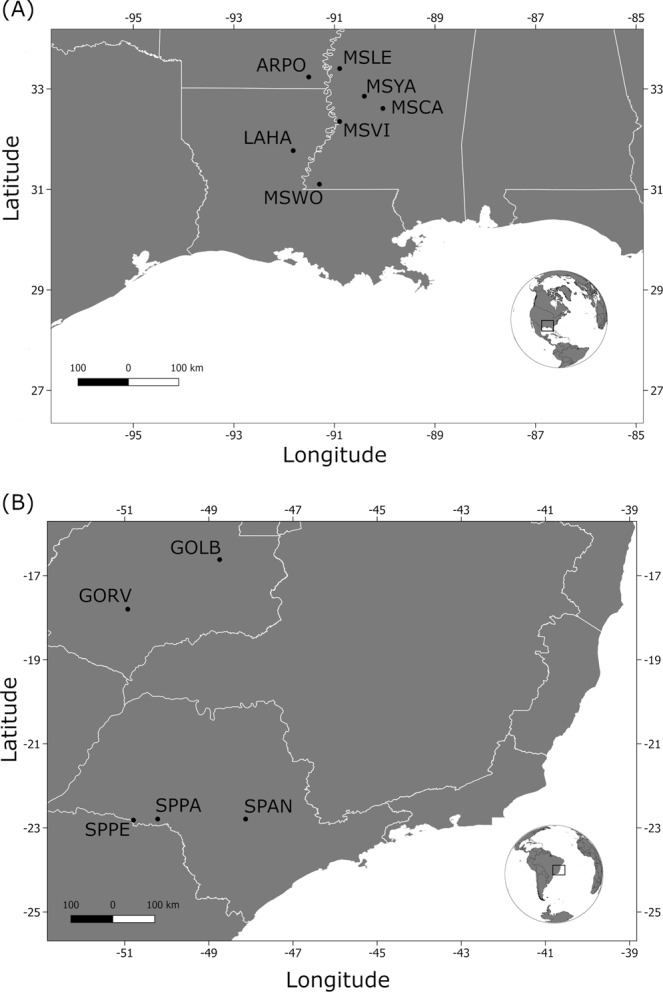
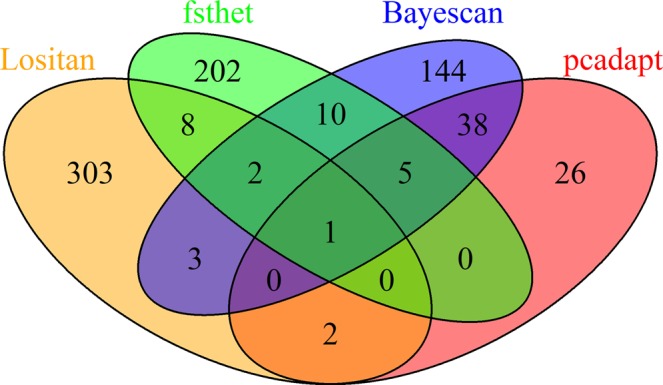
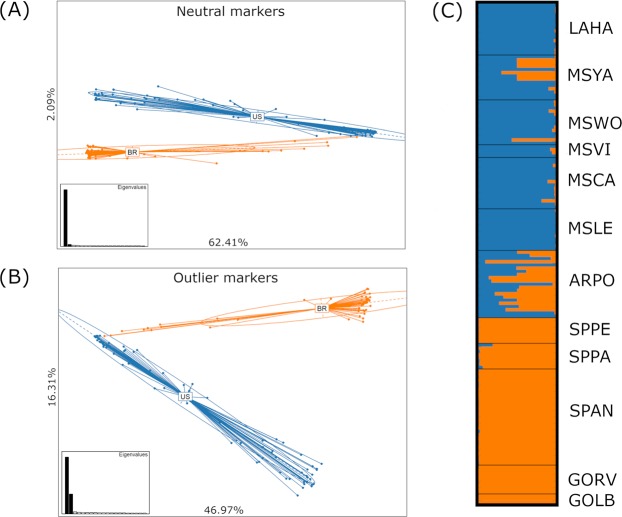
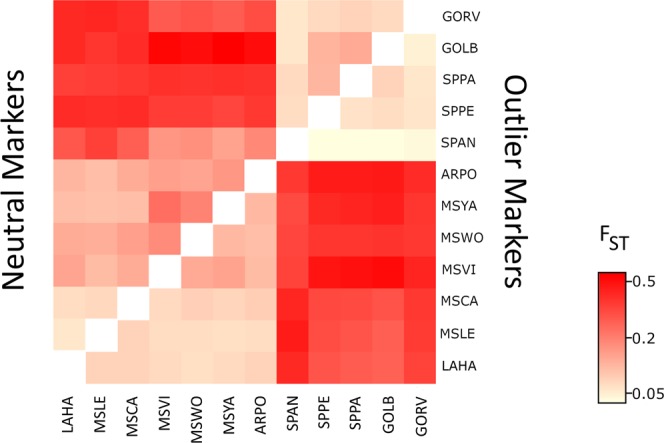
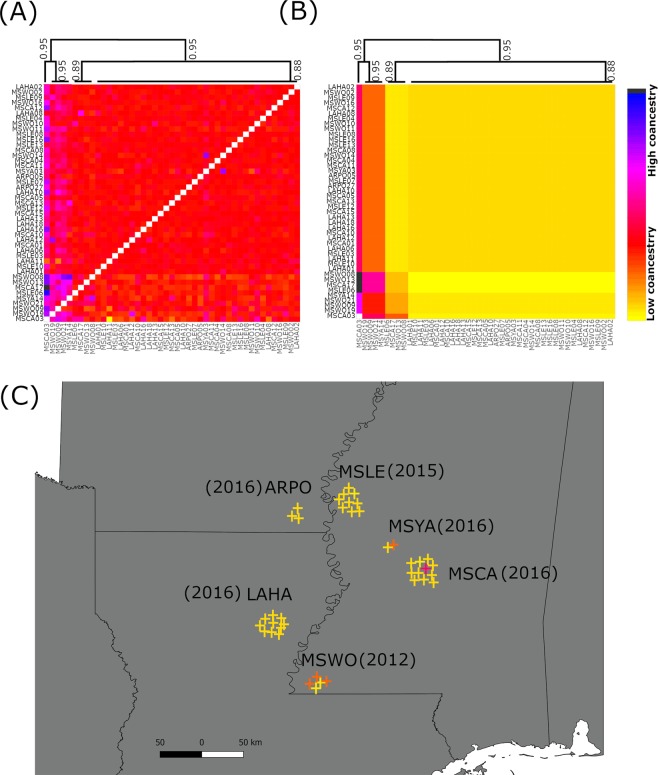
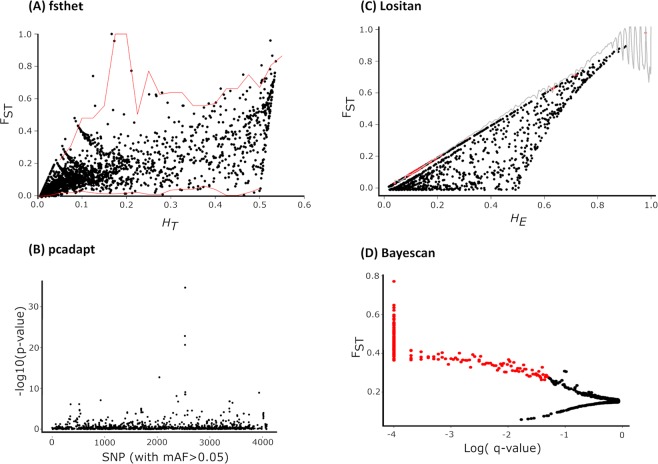
Unravelling the details of range expansion and ecological dominance shifts of insect pests has been challenging due to the lack of basic knowledge about population structure, gene flow, and most importantly, how natural selection is affecting the adaptive process. Piezodous guildinii is an emerging pest of soybean in the southern region of the United States, and increasingly important in Brazil in recent years. However, the reasons P. guildinii is gradually becoming more of a problem are questions still mostly unanswered. Here, we have genotyped P. guildinii samples and discovered 1,337 loci containing 4,083 variant sites SNPs that were used to estimate genetic structure and to identify gene candidates under natural selection. Our results revealed the existence of a significant genetic structure separating populations according to their broad geographic origin, i.e., U.S. and Brazil, supported by AMOVA (F = 0.26), STRUCTURE, PCA, and F analyses. High levels of gene flow or coancestry within groups (i.e., within countries) can be inferred from the data, and no spatial pattern was apparent at the finer scale in Brazil. Samples from different seasons show more heterogeneous compositions suggesting mixed ancestry and a more complex dynamic. Lastly, we were able to detect and successfully annotated 123 GBS loci (10.5%) under positive selection. The gene ontology (GO) analysis implicated candidate genes under selection with genome reorganization, neuropeptides, and energy mobilization. We discuss how these findings could be related to recent outbreaks and suggest how new efforts directed to better understand P. guildinii population dynamics.
由于缺乏有关种群结构、基因流动的基本知识,尤其是缺乏有关自然选择如何影响适应过程的基本知识,因此,阐明害虫的分布范围扩大和生态优势转变的细节一直具有挑战性。Piezodous guildinii 是美国南部地区大豆的一种新出现的害虫,近年来在巴西也变得越来越重要。然而,Piezodous guildinii 逐渐成为更大问题的原因仍有许多问题尚未得到解答。在这里,我们对 Piezodous guildinii 样本进行了基因分型,发现了 1337 个包含 4083 个变异位点 SNP 的基因座,用于估计遗传结构和鉴定自然选择下的候选基因。我们的研究结果表明,根据其广泛的地理起源(即美国和巴西),存在显著的遗传结构分离种群,这得到 AMOVA(F=0.26)、STRUCTURE、PCA 和 F 分析的支持。从数据中可以推断出群体内部(即国家内部)存在高水平的基因流动或亲缘关系,在巴西更精细的尺度上没有明显的空间模式。来自不同季节的样本显示出更多异质的组成,表明存在混合的祖先和更复杂的动态。最后,我们能够检测到并成功注释了 123 个 GBS 基因座(10.5%)处于正选择之下。基因本体论(GO)分析表明,候选基因与基因组重组、神经肽和能量动员有关。我们讨论了这些发现如何与最近的爆发有关,并提出了如何通过更好地了解 Piezodous guildinii 的种群动态来进行新的努力。