Moro Matheus Sartori, Wu Xing, Wei Wei, Mendes Lucas William, Allen Kerry Clint, Pinheiro José Baldin, Clough Steven J, Zucchi Maria Imaculada
Genetics and Molecular Biology - Biology Institute, State University of Campinas (UNICAMP), Campinas, São Paulo, Brazil.
Genetics and Genomics Conservation Laboratory (UNICAMP), Piracicaba, Brazil.
Front Microbiol. 2021 Oct 27;12:769965. doi: 10.3389/fmicb.2021.769965. eCollection 2021.
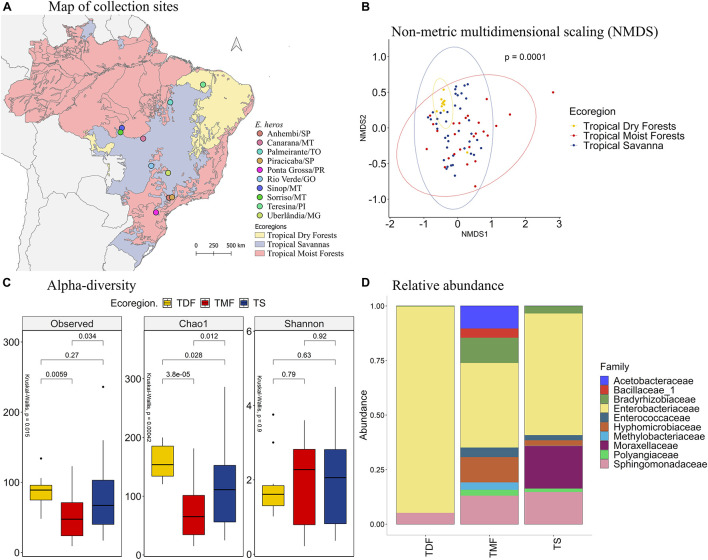
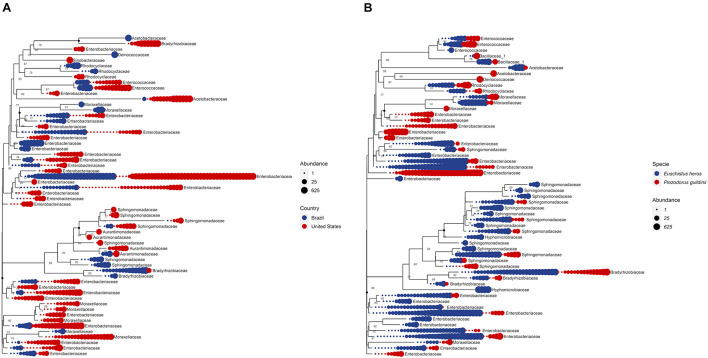
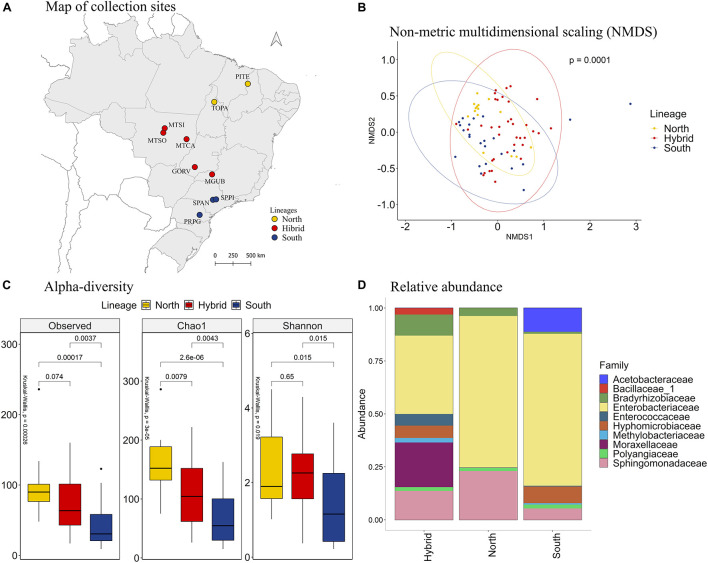
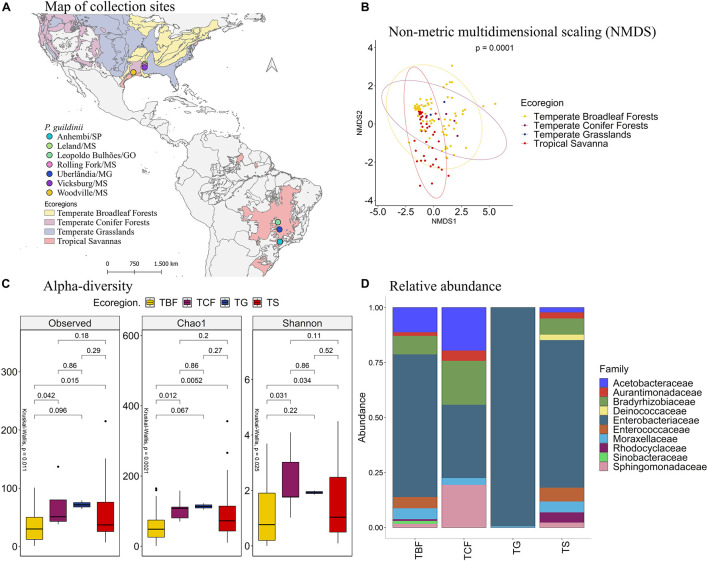
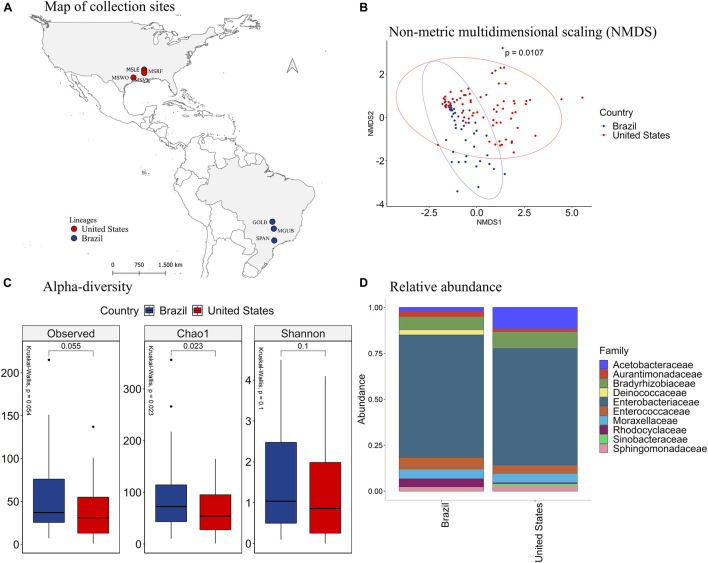
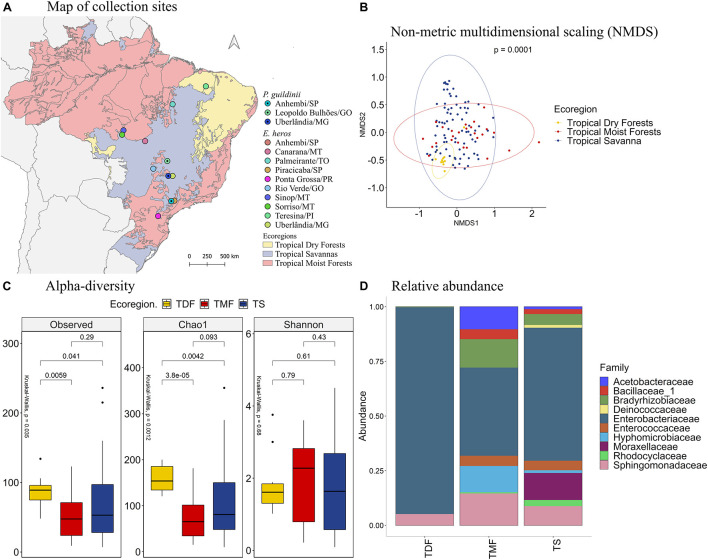
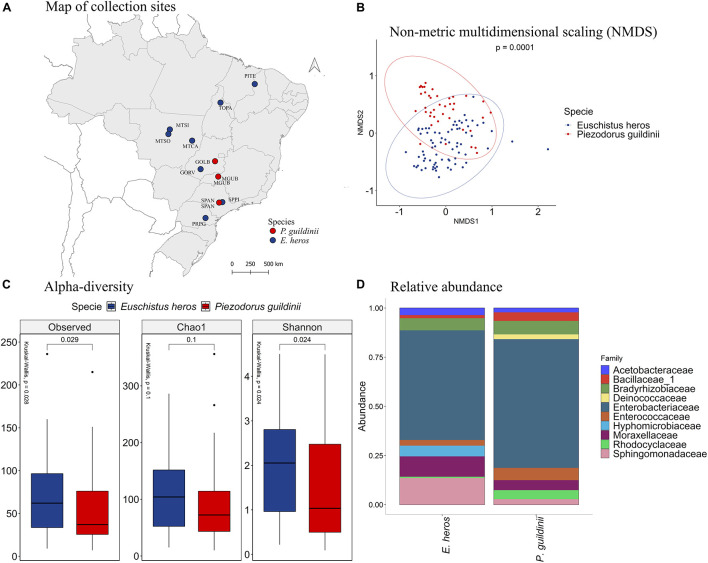
Herbivorous insects are one of the main biological threats to crops. One such group of insects, stink bugs, do not eat large amounts of tissue when feeding on soybean, but are damaging to the quality of the seed yield as they feed on green developing seeds leading to poorly marketable harvests. In addition to causing physical damage during sucking-feeding activities, the insects can also transmit microbial pathogens, leading to even greater yield loss. Conducting surveys of the insect intestinal microbiome can help identify possible pathogens, as well as detail what healthy stink bug digestive systems have in common. We used the conserved V4 region of the 16S rRNA gene to characterize the bacterial microbiome of the red-banded stink bug collected in Brazil and the United States, as well as the neotropical brown stink bug collected in Brazil. After quality filtering of the data, 192 samples were kept for analyses: 117 samples from covering three sites in Brazil and four sites in the United States, and 75 samples for covering 10 sites in Brazil. The most interesting observations were that the diversity and abundance of some bacterial families were different in the different ecoregions of Brazil and the United States. Some families, such as Acetobacteraceae, Bacillaceae, Moraxellaceae, Enterobacteriaceae, and Rhodocyclaceae, may be related to the better adaptation in some localities in providing nutrients, break down cellulose, detoxify phytochemicals, and degrade organic compounds, which makes it difficult to control these species.
植食性昆虫是农作物面临的主要生物威胁之一。其中一类昆虫,椿象,在以大豆为食时不会大量啃食组织,但会损害种子产量的质量,因为它们以发育中的绿色种子为食,导致收获的产品在市场上销路不佳。除了在吸食活动中造成物理损伤外,这些昆虫还能传播微生物病原体,导致更大的产量损失。对昆虫肠道微生物组进行调查有助于识别可能的病原体,并详细了解健康椿象消化系统的共同特征。我们使用16S rRNA基因的保守V4区域来表征在巴西和美国采集的红带椿象以及在巴西采集的新热带褐椿象的细菌微生物组。在对数据进行质量过滤后,保留了192个样本用于分析:117个样本来自巴西的三个地点和美国的四个地点,75个样本来自巴西的10个地点。最有趣的发现是,巴西和美国不同生态区域中一些细菌家族的多样性和丰度存在差异。一些家族,如醋杆菌科、芽孢杆菌科、莫拉克斯氏菌科、肠杆菌科和红环菌科,可能与在某些地区更好地适应环境有关,它们能提供营养、分解纤维素、解毒植物化学物质和降解有机化合物,这使得控制这些物种变得困难。