Lee Victoria E, Régli Noémie, McIvor Guillam E, Thornton Alex
College of Life and Environmental Sciences, University of Exeter, Penryn Campus, Penryn, Cornwall TR10 9FE, UK.
Faculté des Sciences et Techniques, Université Jean Monnet, 23 Rue du Dr Paul Michelon, 42100 Saint-Étienne, France.
R Soc Open Sci. 2019 Sep 25;6(9):191031. doi: 10.1098/rsos.191031. eCollection 2019 Sep.
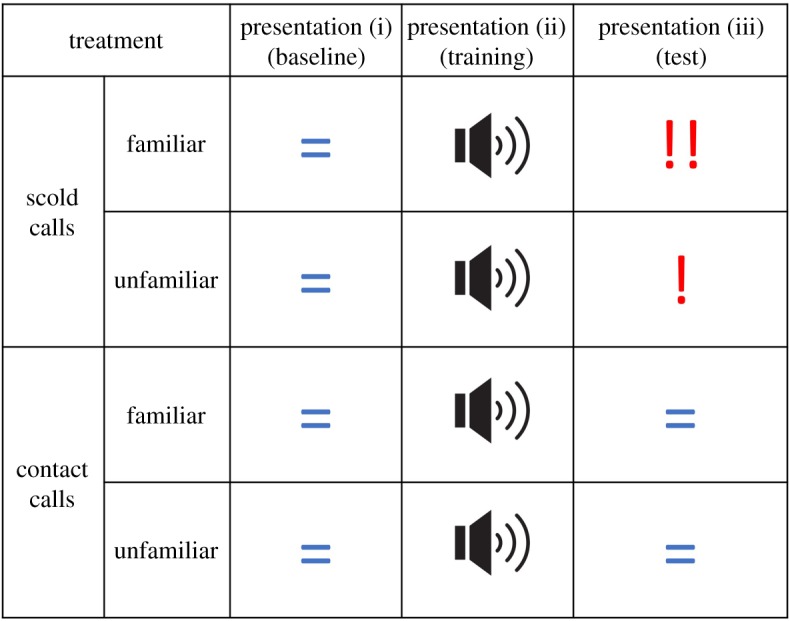
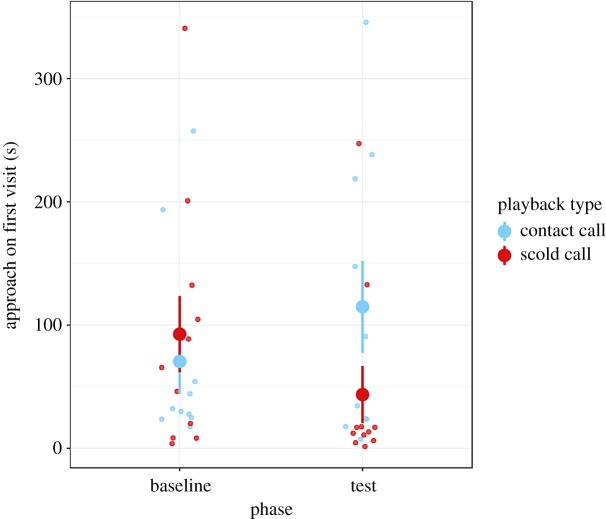
For animals that live alongside humans, people can present both an opportunity and a threat. Previous studies have shown that several species can learn to discriminate between individual people and assess risk based on prior experience. To avoid potentially costly encounters, it may also pay individuals to learn about dangerous people based on information from others. Social learning about anthropogenic threats is likely to be beneficial in habitats dominated by human activity, but experimental evidence is limited. Here, we tested whether wild jackdaws () use social learning to recognize dangerous people. Using a within-subjects design, we presented breeding jackdaws with an unfamiliar person near their nest, combined with conspecific alarm calls. Subjects that heard alarm calls showed a heightened fear response in subsequent encounters with the person compared to a control group, reducing their latency to return to the nest. This study provides important evidence that animals use social learning to assess the level of risk posed by individual humans.
对于与人类共生的动物来说,人类既带来了机遇,也构成了威胁。先前的研究表明,一些物种能够学会区分不同的个体,并根据以往的经验评估风险。为了避免可能代价高昂的遭遇,个体也可能会根据他人提供的信息去了解危险人物。关于人为威胁的社会学习在人类活动主导的栖息地可能是有益的,但实验证据有限。在这里,我们测试了野生寒鸦是否利用社会学习来识别危险人物。我们采用了受试者内设计,在繁殖期的寒鸦巢穴附近向它们展示一个陌生人,并播放同种鸟类的警报叫声。与对照组相比,听到警报叫声的受试者在随后与该人的接触中表现出更高的恐惧反应,缩短了它们返回巢穴的潜伏期。这项研究提供了重要证据,证明动物利用社会学习来评估个体人类所带来的风险水平。