Sun Muyi, Zhou Wei, Qi Xingqun, Zhang Guanhong, Girnita Leonard, Seregard Stefan, Grossniklaus Hans E, Yao Zeyi, Zhou Xiaoguang, Stålhammar Gustav
School of Automation, Beijing University of Posts and Telecommunications, Beijing 100876, China.
Engineering Research Center of Information Network, Ministry of Education, Beijing 100876, China.
Cancers (Basel). 2019 Oct 16;11(10):1579. doi: 10.3390/cancers11101579.
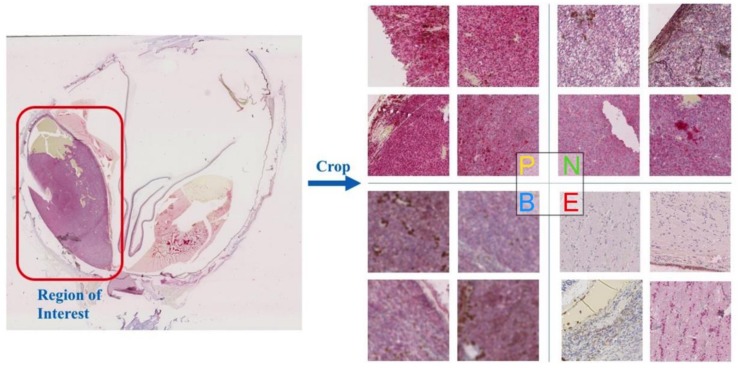
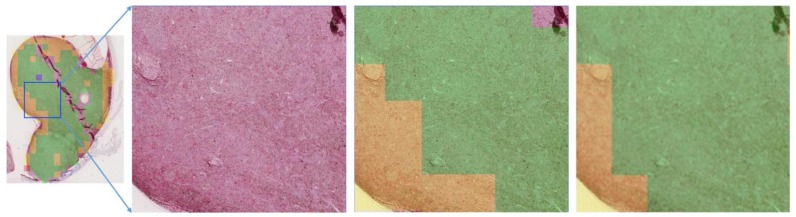
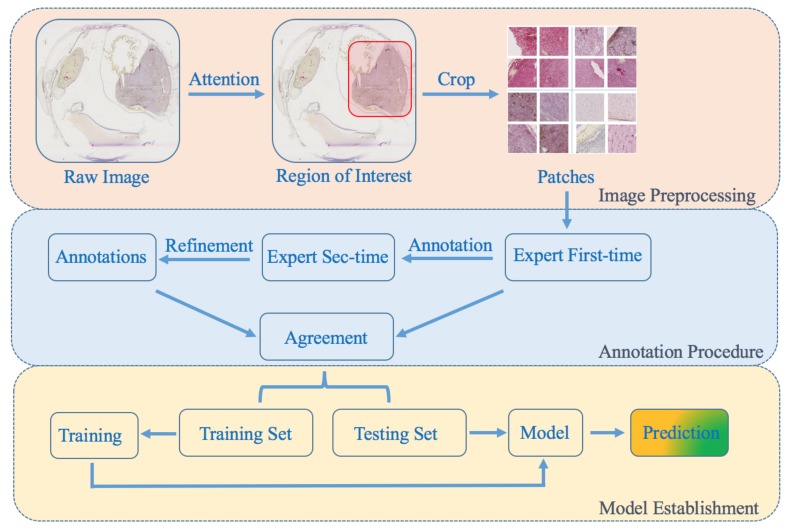
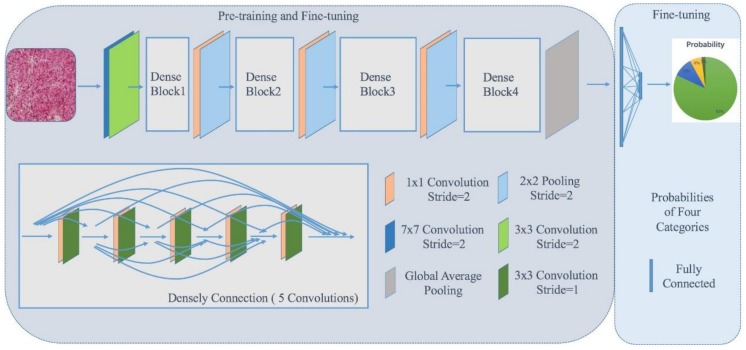
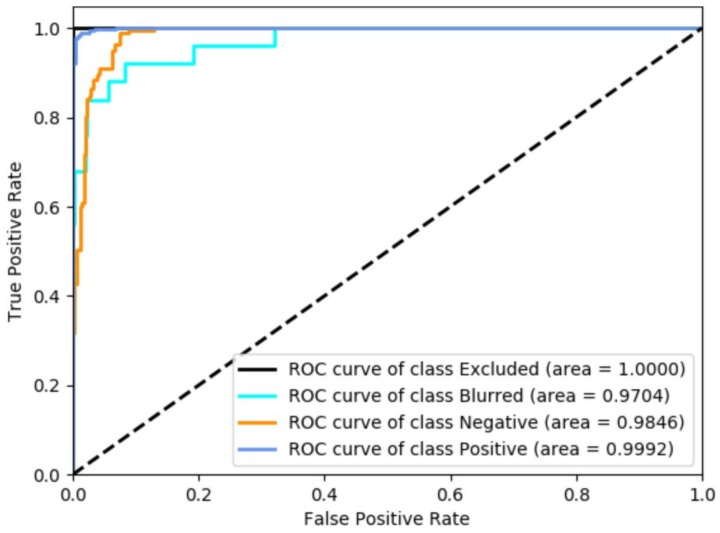
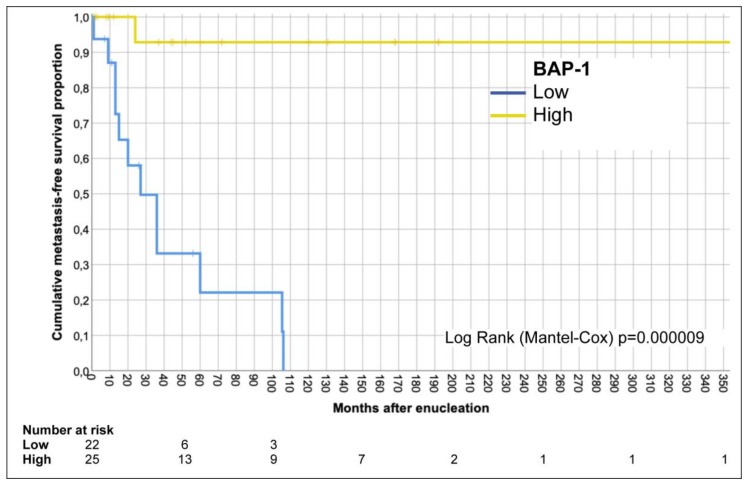
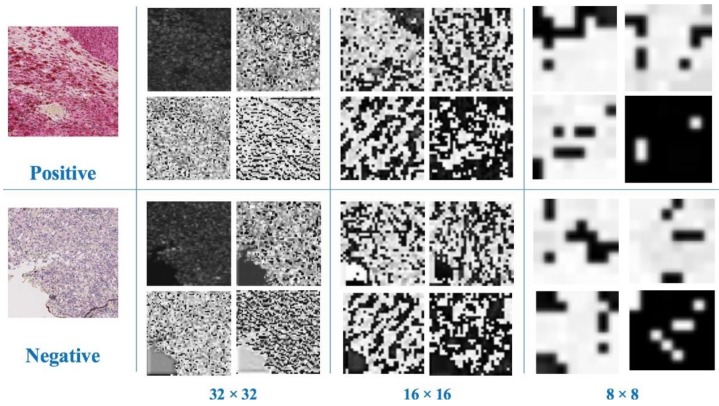
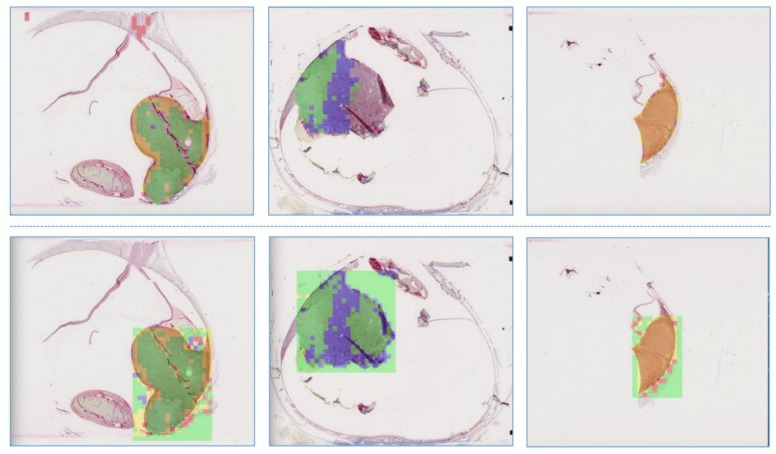
Uveal melanoma is the most common primary intraocular malignancy in adults, with nearly half of all patients eventually developing metastases, which are invariably fatal. Manual assessment of the level of expression of the tumor suppressor BRCA1-associated protein 1 (BAP1) in tumor cell nuclei can identify patients with a high risk of developing metastases, but may suffer from poor reproducibility. In this study, we verified whether artificial intelligence could predict manual assessments of BAP1 expression in 47 enucleated eyes with uveal melanoma, collected from one European and one American referral center. Digitally scanned pathology slides were divided into 8176 patches, each with a size of 256 × 256 pixels. These were in turn divided into a training cohort of 6800 patches and a validation cohort of 1376 patches. A densely-connected classification network based on deep learning was then applied to each patch. This achieved a sensitivity of 97.1%, a specificity of 98.1%, an overall diagnostic accuracy of 97.1%, and an F1-score of 97.8% for the prediction of BAP1 expression in individual high resolution patches, and slightly less with lower resolution. The area under the receiver operating characteristic (ROC) curves of the deep learning model achieved an average of 0.99. On a full tumor level, our network classified all 47 tumors identically with an ophthalmic pathologist. We conclude that this deep learning model provides an accurate and reproducible method for the prediction of BAP1 expression in uveal melanoma.
葡萄膜黑色素瘤是成人中最常见的原发性眼内恶性肿瘤,几乎一半的患者最终会发生转移,而转移总是致命的。人工评估肿瘤抑制因子BRCA1相关蛋白1(BAP1)在肿瘤细胞核中的表达水平可以识别出发生转移风险高的患者,但可能存在重复性差的问题。在本研究中,我们验证了人工智能能否预测来自一个欧洲和一个美国转诊中心收集的47只患有葡萄膜黑色素瘤的摘除眼球中BAP1的人工评估表达。数字扫描的病理切片被分成8176个大小为256×256像素的图像块。这些图像块又被依次分为一个包含6800个图像块的训练队列和一个包含1376个图像块的验证队列。然后将基于深度学习的密集连接分类网络应用于每个图像块。对于单个高分辨率图像块中BAP1表达的预测,该网络的灵敏度为97.1%,特异性为98.1%,总体诊断准确率为97.1%,F1分数为97.8%,对于较低分辨率的图像块,这些指标略低。深度学习模型的受试者操作特征(ROC)曲线下面积平均为0.99。在整个肿瘤水平上,我们的网络与眼科病理学家对所有47个肿瘤的分类完全一致。我们得出结论,这种深度学习模型为预测葡萄膜黑色素瘤中BAP1的表达提供了一种准确且可重复的方法。