Laboratory of Neural Circuit Dynamics, Brain Research Institute, University of Zurich, Zurich, Switzerland.
Neuroscience Center Zurich, University of Zurich and ETH Zurich, Zurich, Switzerland.
Nat Commun. 2019 Oct 23;10(1):4812. doi: 10.1038/s41467-019-12670-z.
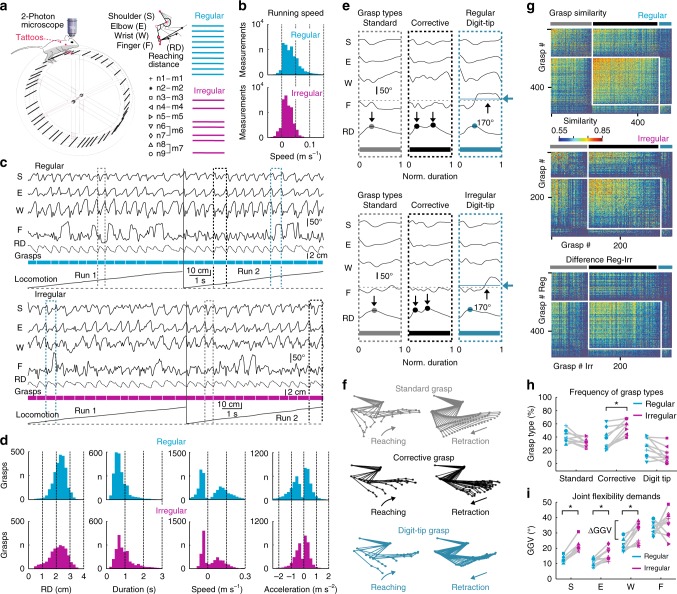
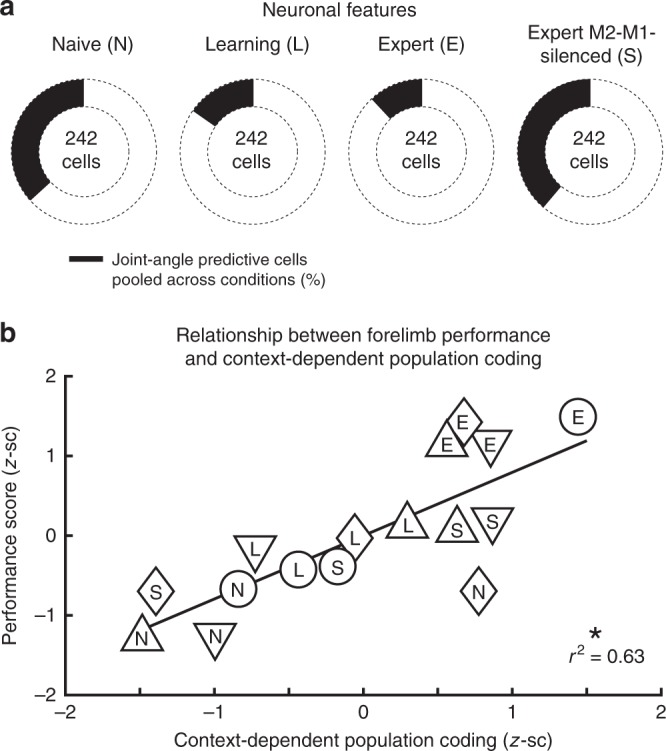
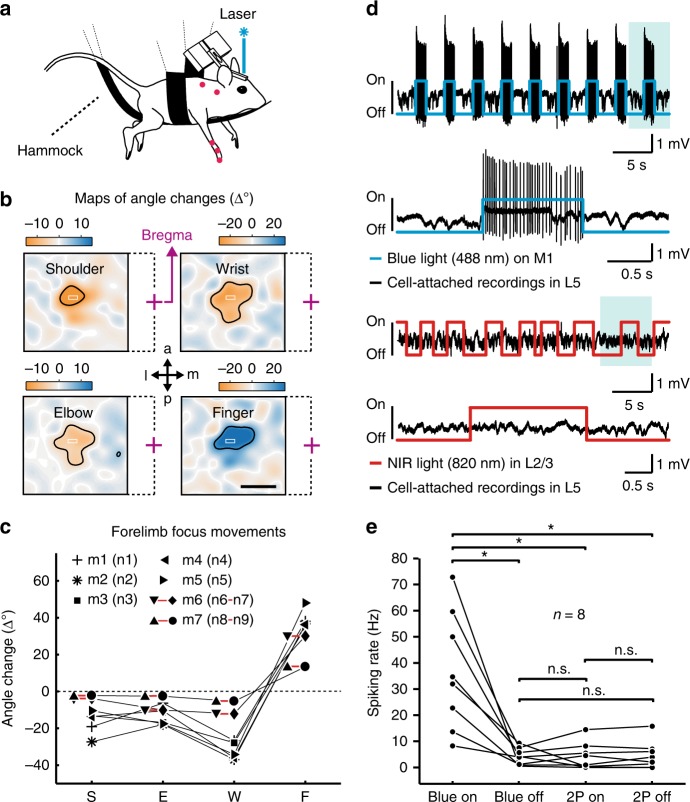
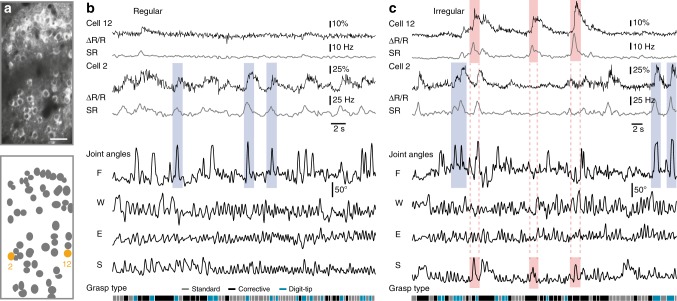
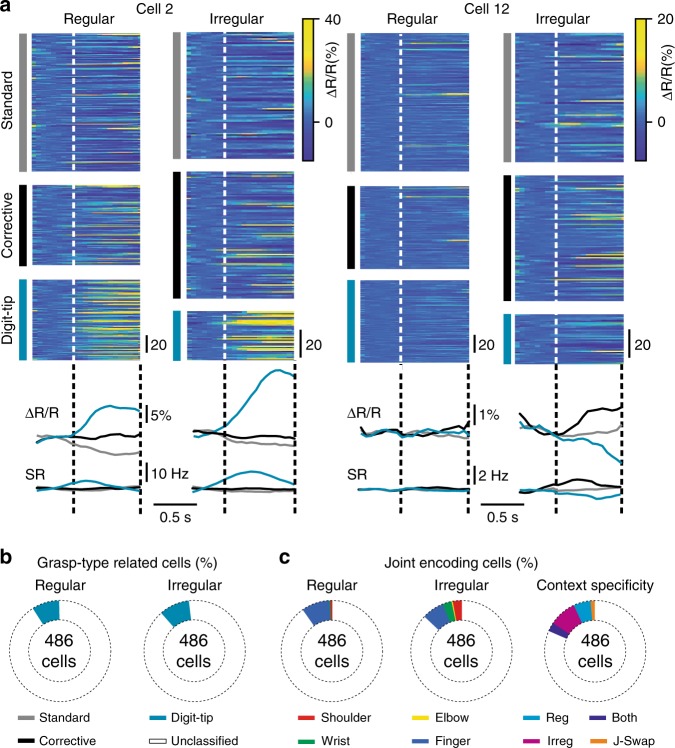
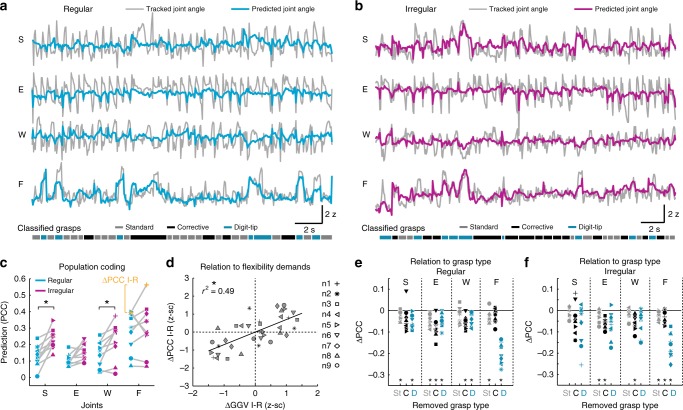
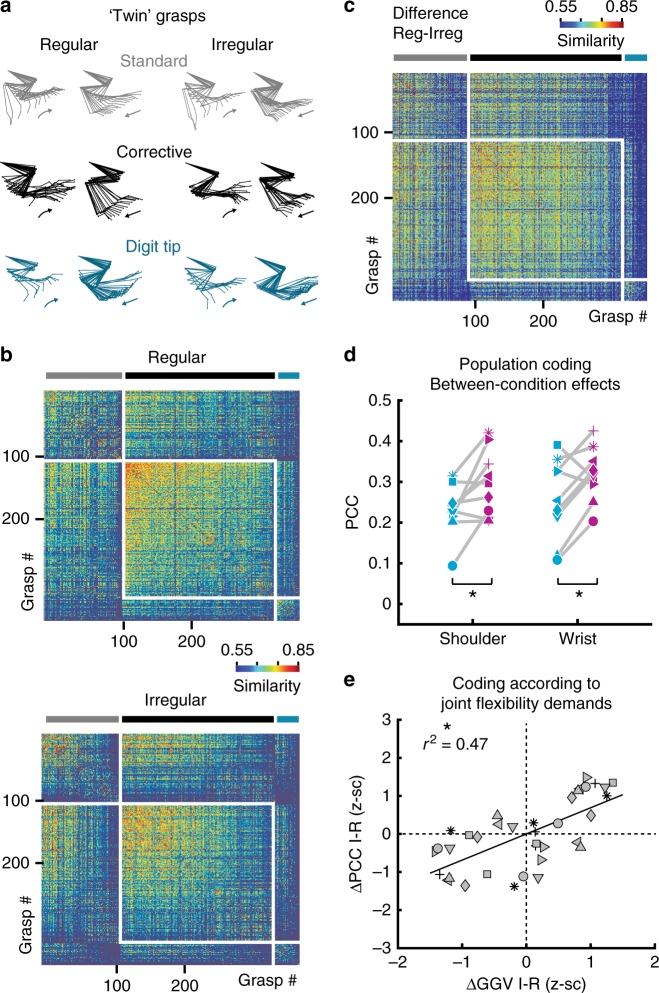
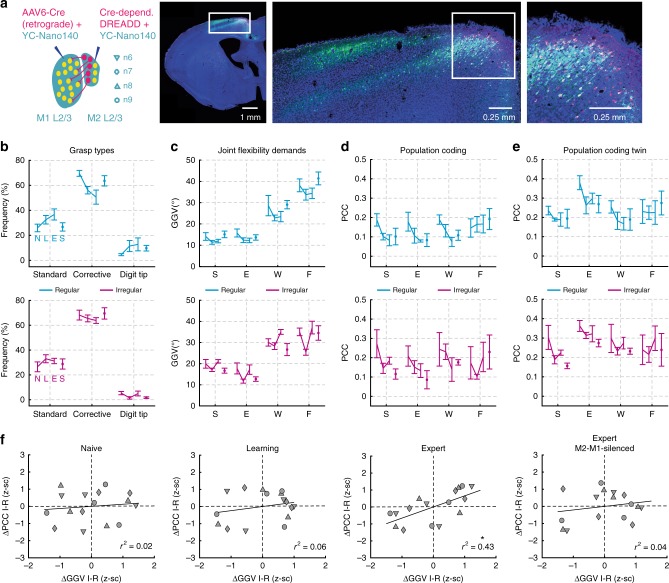
Neuronal networks of the mammalian motor cortex (M1) are important for dexterous control of limb joints. Yet it remains unclear how encoding of joint movement in M1 depends on varying environmental contexts. Using calcium imaging we measured neuronal activity in layer 2/3 of the M1 forelimb region while mice grasped regularly or irregularly spaced ladder rungs during locomotion. We found that population coding of forelimb joint movements is sparse and varies according to the flexibility demanded from individual joints in the regular and irregular context, even for equivalent grasping actions across conditions. This context-dependence of M1 encoding emerged during task learning, fostering higher precision of grasping actions, but broke apart upon silencing of projections from secondary motor cortex (M2). These findings suggest that M1 exploits information from M2 to adapt encoding of joint movements to the flexibility demands of distinct familiar contexts, thereby increasing the accuracy of motor output.
哺乳动物运动皮层(M1)的神经网络对于灵巧地控制肢体关节非常重要。然而,目前尚不清楚 M1 中关节运动的编码如何取决于不断变化的环境背景。我们使用钙成像技术,在小鼠在运动时抓握规则或不规则间隔的梯级时,测量了 M1 前肢区域的 2/3 层中的神经元活动。我们发现,前肢关节运动的群体编码是稀疏的,并且根据规则和不规则环境中单个关节的灵活性而变化,即使在两种条件下的等效抓握动作也是如此。这种 M1 编码的上下文依赖性出现在任务学习期间,促进了抓握动作更高的精度,但在抑制来自次要运动皮层(M2)的投射后就会瓦解。这些发现表明,M1 利用来自 M2 的信息来适应不同熟悉环境中关节运动的编码,从而提高运动输出的准确性。