Division of Hematology/Oncology, Northwestern University, Chicago, Illinois.
IUBMB Life. 2020 Jan;72(1):106-118. doi: 10.1002/iub.2177. Epub 2019 Oct 25.
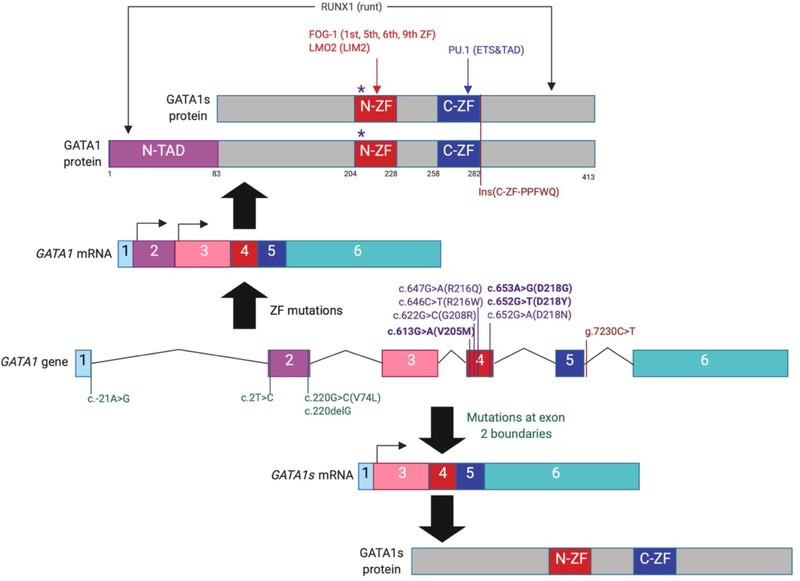
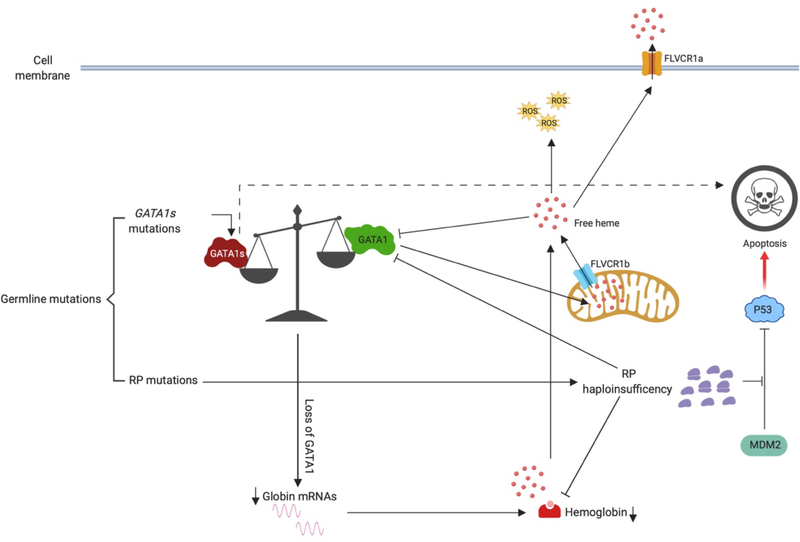
GATA1 is an essential regulator of erythroid cell gene expression and maturation. In its absence, erythroid progenitors are arrested in differentiation and undergo apoptosis. Much has been learned about GATA1 function through animal models, which include genetic knockouts as well as ones with decreased levels of expression. However, even greater insights have come from the finding that a number of rare red cell disorders, including Diamond-Blackfan anemia, are associated with GATA1 mutations. These mutations affect the amino-terminal zinc finger (N-ZF) and the amino-terminus of the protein, and in both cases can alter the DNA-binding activity, which is primarily conferred by the third functional domain, the carboxyl-terminal zinc finger (C-ZF). Here we discuss the role of GATA1 in erythropoiesis with an emphasis on the mutations found in human patients with red cell disorders.
GATA1 是红细胞细胞基因表达和成熟的必需调节因子。在其缺失的情况下,红细胞祖细胞在分化过程中被阻止并发生凋亡。通过包括基因敲除在内的动物模型,已经了解了 GATA1 的功能,这些模型还具有表达水平降低的情况。然而,通过发现一些罕见的红细胞疾病,包括 Diamond-Blackfan 贫血,与 GATA1 突变有关,我们获得了更深入的了解。这些突变影响氨基末端锌指(N-ZF)和蛋白质的氨基末端,在这两种情况下都可以改变 DNA 结合活性,这主要由第三个功能域,羧基末端锌指(C-ZF)赋予。在这里,我们重点讨论了 GATA1 在红细胞生成中的作用,以及在患有红细胞疾病的人类患者中发现的突变。