Department of Pathophysiology and Transplantation, University of Milan, 20090 Segrate (MI), Italy.
Doctorate School of Molecular and Translational Medicine, University of Milan, 20122 Milan, Italy.
Cells. 2019 Oct 24;8(11):1315. doi: 10.3390/cells8111315.
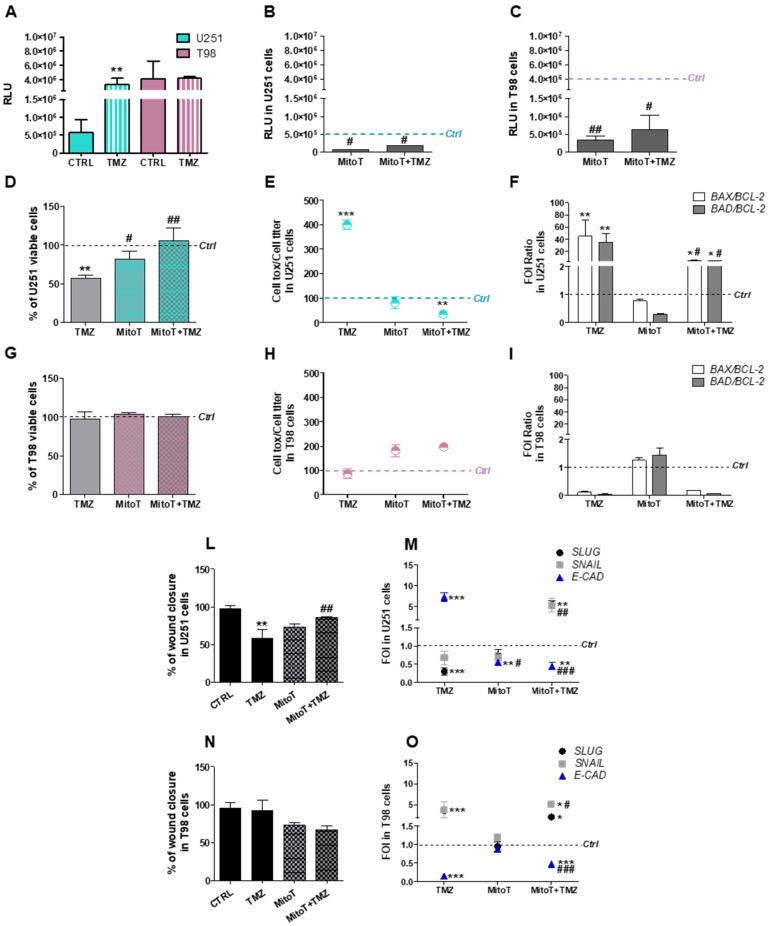
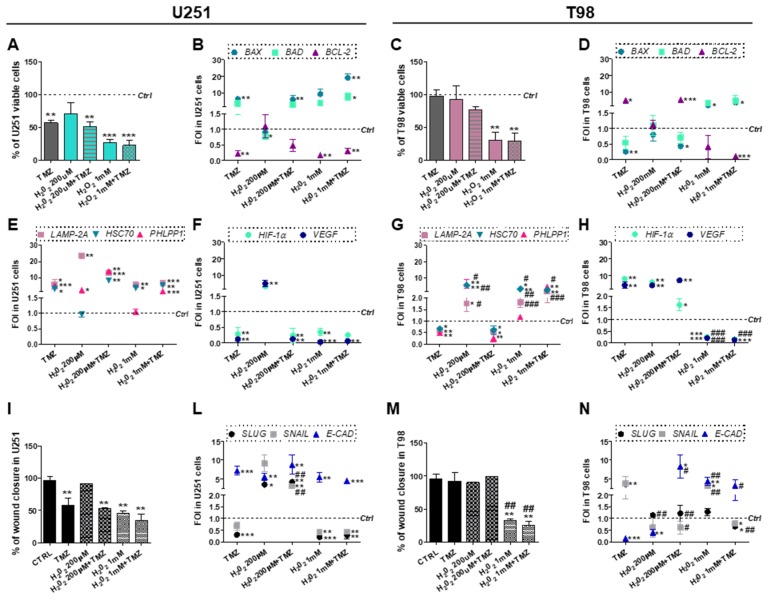
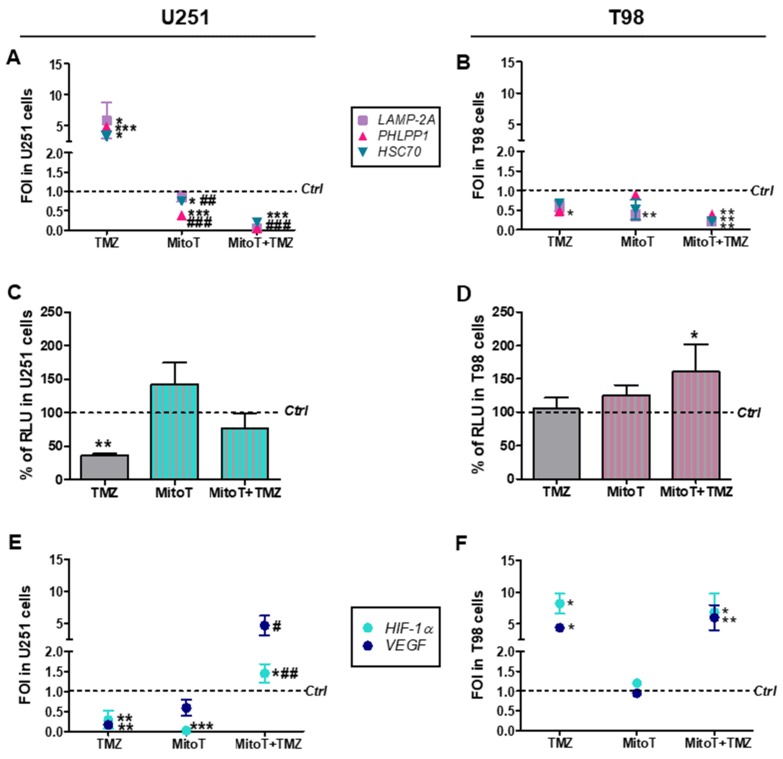
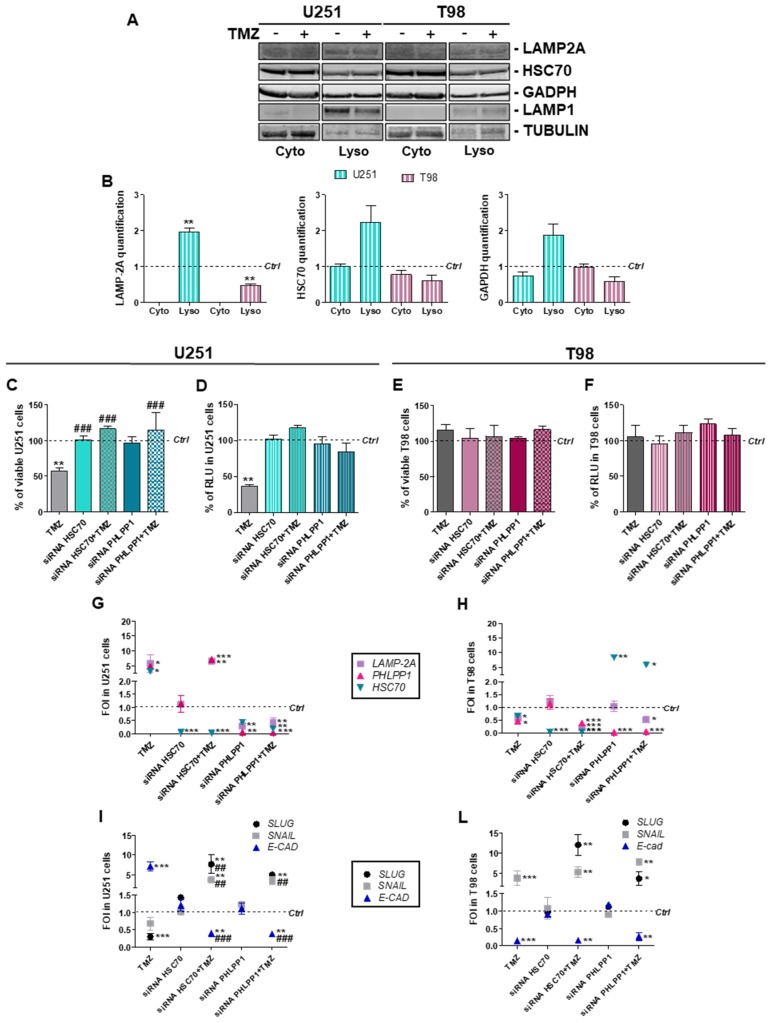
Glioblastoma (GBM) is the most common astrocytic-derived brain tumor in adults, characterized by a poor prognosis mainly due to the resistance to the available therapy. The study of mitochondria-derived oxidative stress, and of the biological events that orbit around it, might help in the comprehension of the molecular mechanisms at the base of GBM responsiveness to Temozolomide (TMZ). Sensitive and resistant GBM cells were used to test the role of mitochondrial ROS release in TMZ-resistance. Chaperone-Mediated Autophagy (CMA) activation in relation to reactive oxygen species (ROS) release has been measured by monitoring the expression of specific genes. Treatments with HO were used to test their potential in reverting resistance. Fluctuations of cytoplasmic ROS levels were accountable for CMA induction and cytotoxic effects observed in TMZ sensitive cells after treatment. On the other hand, in resistant cells, TMZ failed in producing an increase in cytoplasmic ROS levels and CMA activation, preventing GBM cell toxicity. By increasing oxidative stress, CMA activation was recovered, as also cell cytotoxicity, especially in combination with TMZ treatment. Herein, for the first time, it is shown the relation between mitochondrial ROS release, CMA activation and TMZ-responsiveness in GBM.
胶质母细胞瘤(GBM)是成人中最常见的星形细胞来源的脑肿瘤,其预后较差,主要是由于对现有治疗方法的耐药性。研究线粒体来源的氧化应激以及围绕其发生的生物学事件,可能有助于理解胶质母细胞瘤对替莫唑胺(TMZ)反应的分子机制。使用敏感和耐药的 GBM 细胞来测试线粒体 ROS 释放在 TMZ 耐药中的作用。通过监测特定基因的表达来测量与活性氧(ROS)释放有关的伴侣介导的自噬(CMA)激活。使用 HO 处理来测试它们逆转耐药性的潜力。细胞质 ROS 水平的波动可解释 TMZ 敏感细胞在治疗后 CMA 诱导和细胞毒性作用观察到的原因。另一方面,在耐药细胞中,TMZ 未能增加细胞质 ROS 水平和 CMA 激活,从而阻止 GBM 细胞毒性。通过增加氧化应激,CMA 激活得到恢复,细胞毒性也得到恢复,尤其是与 TMZ 治疗联合使用时。本文首次证明了线粒体 ROS 释放、CMA 激活与 GBM 中 TMZ 反应之间的关系。