Department of Bioengineering, School of Engineering and Applied Sciences , University of Pennsylvania , Philadelphia , Pennsylvania 19104 , United States.
School of Agricultural Equipment Engineering , Jiangsu University , Zhenjiang , Jiangsu 212013 , China.
Bioconjug Chem. 2019 Nov 20;30(11):2974-2981. doi: 10.1021/acs.bioconjchem.9b00676. Epub 2019 Nov 8.
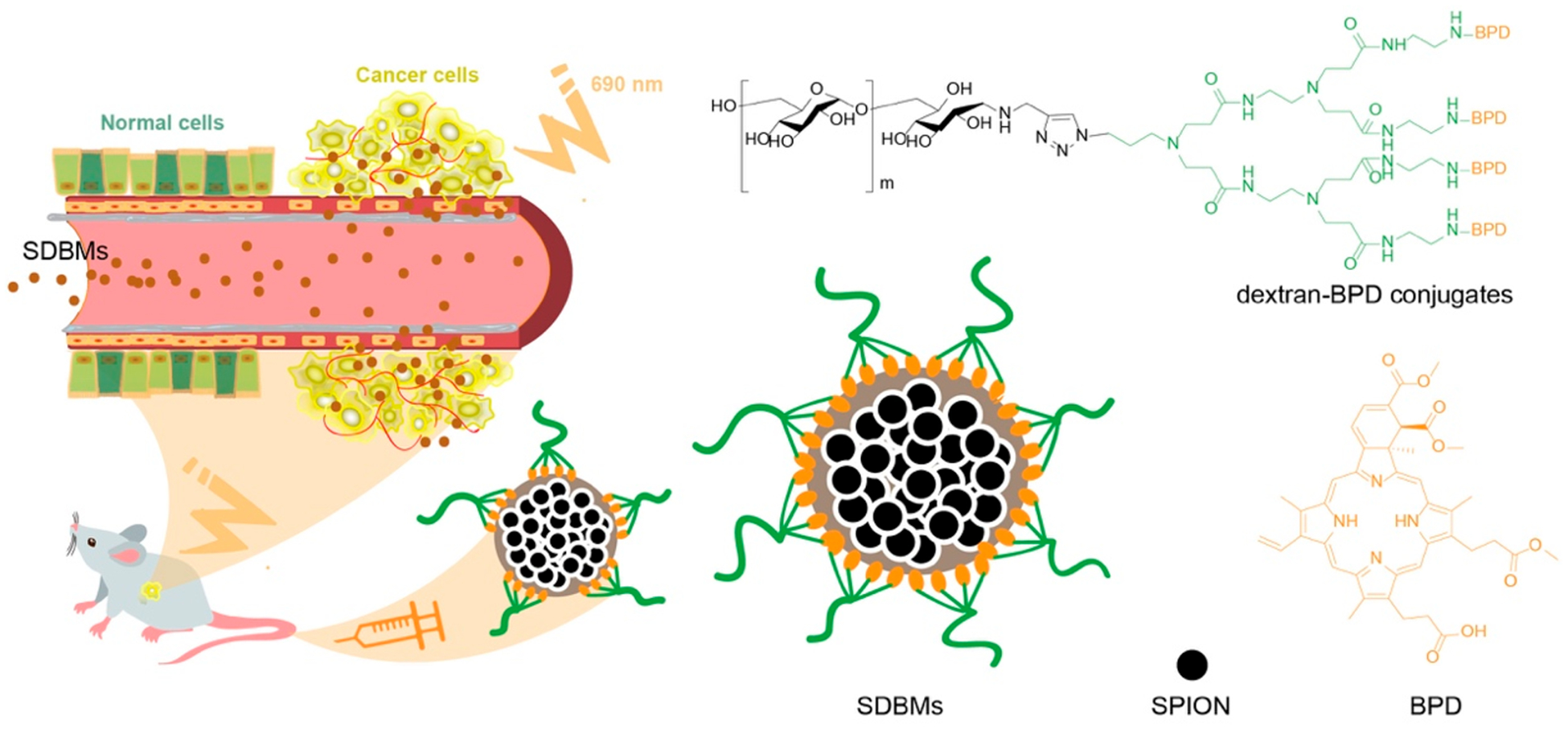
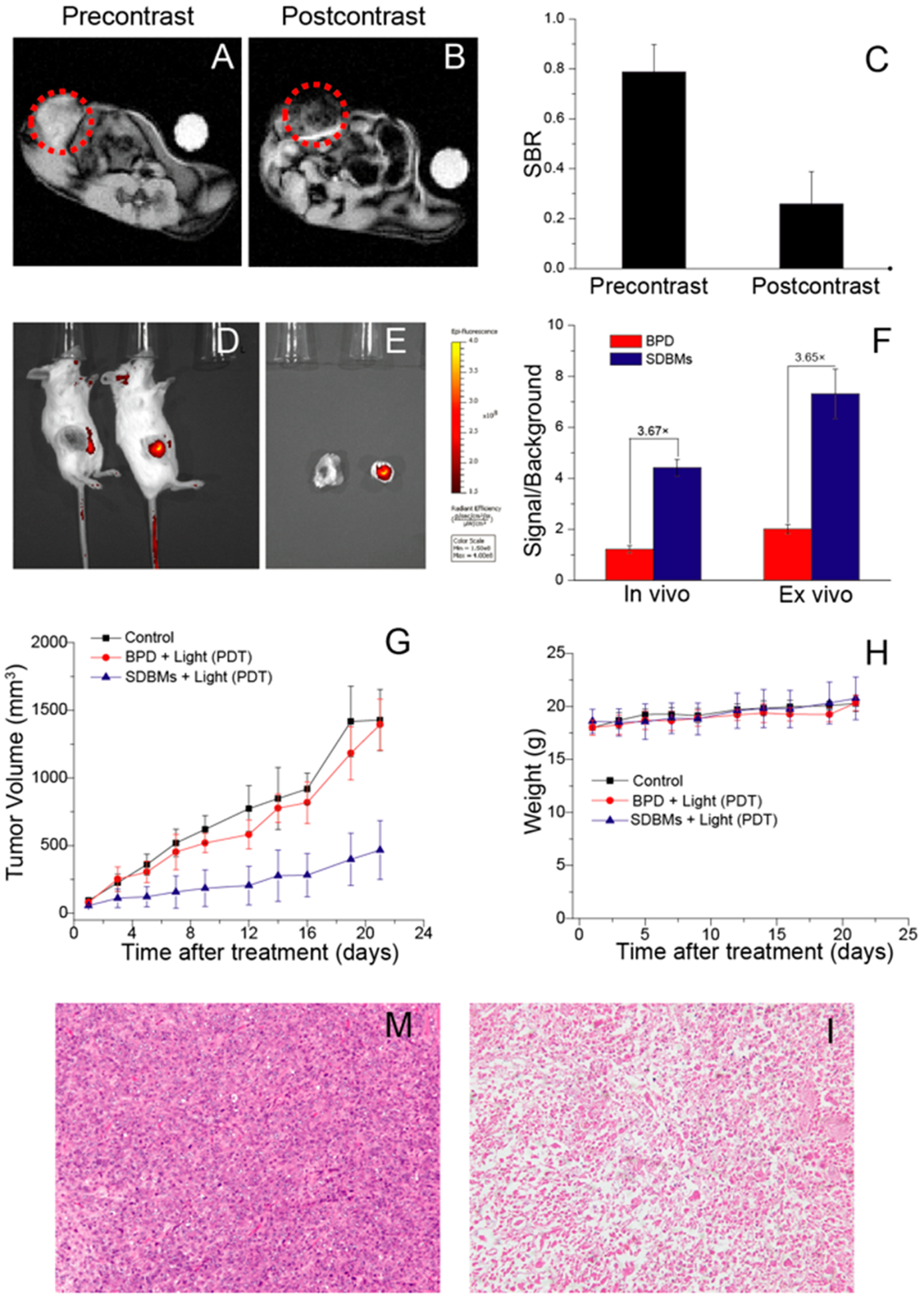
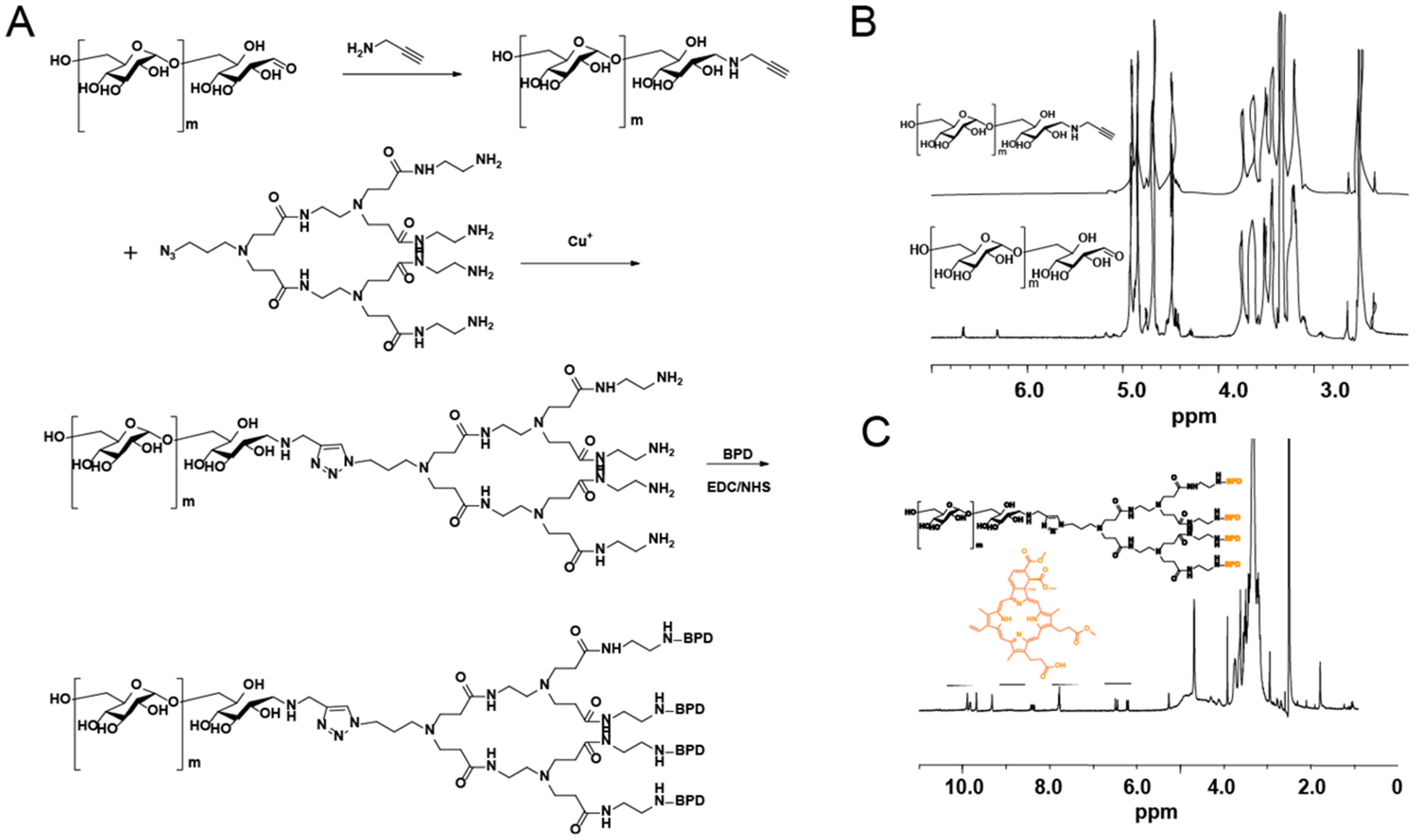
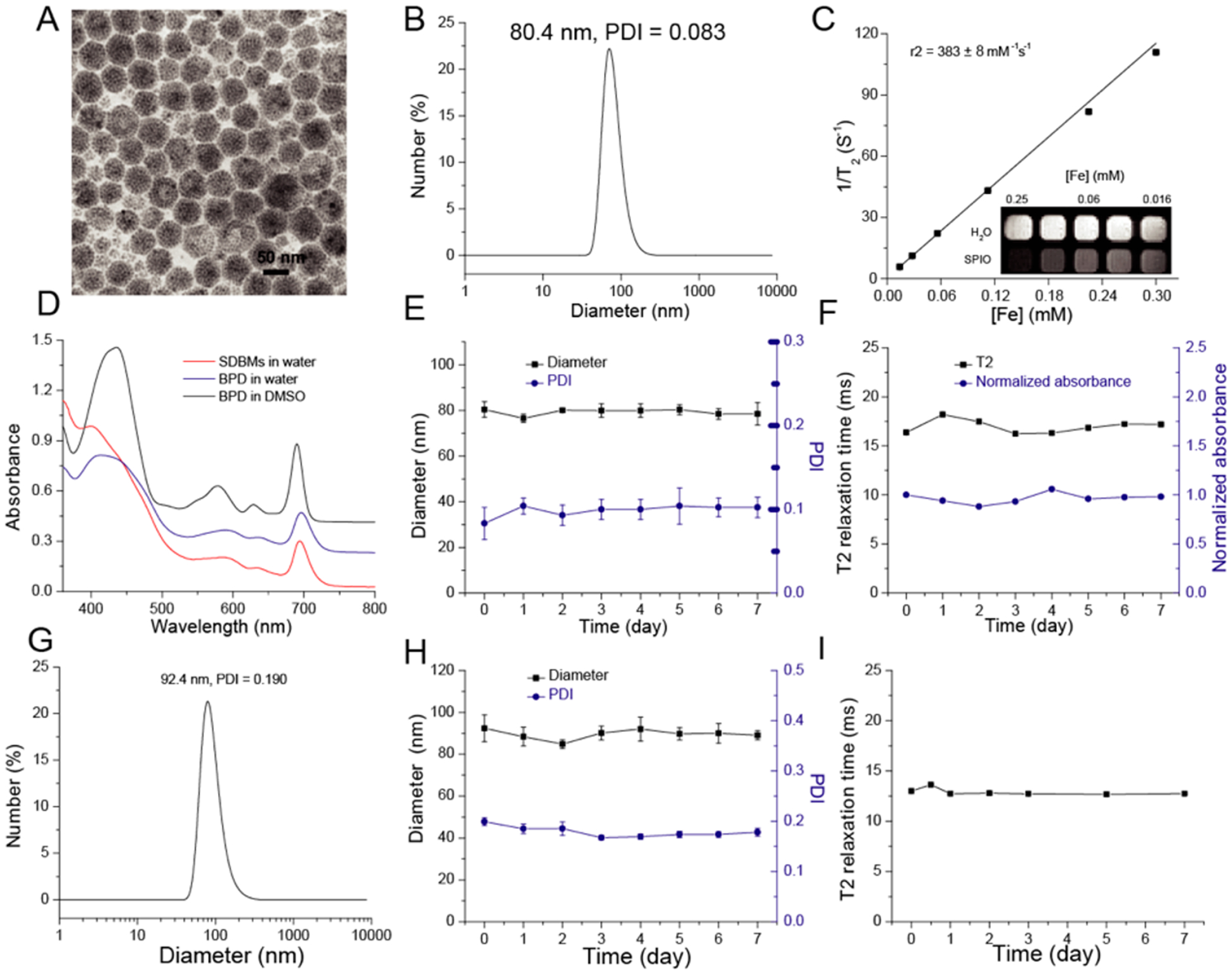
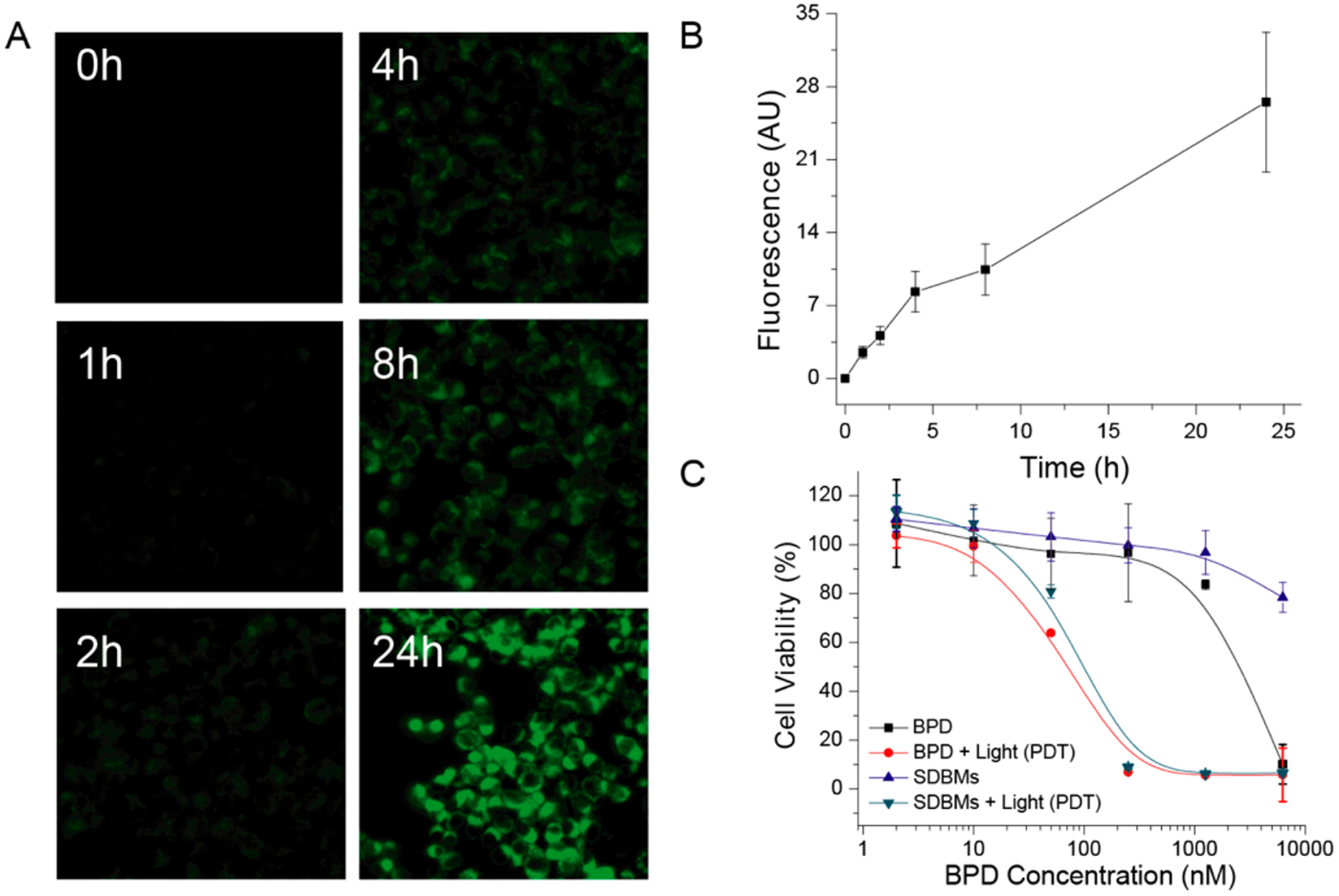
Photodynamic therapy (PDT) has attracted extensive attention in recent years as a noninvasive and locally targeted cancer treatment approach. Nanoparticles have been used to improve the solubility and pharmacokinetics of the photosensitizers required for PDT; however, nanoparticles also suffer from many shortcomings including uncontrolled drug release and low tumor accumulation. Herein, we describe a novel biodegradable nanoplatform for the delivery of the clinically used PDT photosensitizer benzoporphyrin derivative monoacid ring A (BPD-MA) to tumors. Specifically, the hydrophobic photosensitizer BPD was covalently conjugated to the amine groups of a dextran--oligo (amidoamine) (dOA) dendron copolymer, forming amphiphilic dextran-BPD conjugates that can self-assemble into nanometer-sized micelles in water. To impart additional imaging capabilities to these micelles, superparamagnetic iron oxide nanoparticles (SPIONs) were encapsulated within the hydrophobic core to serve as a magnetic resonance imaging (MRI) contrast agent. The use of a photosensitizer as a hydrophobic building block enabled facile and reproducible synthesis and high drug loading capacity (∼30%, w/w). Furthermore, covalent conjugation of BPD to dextran prevents the premature release of drug during systemic circulation. In vivo studies show that the intravenous administration of dextran-BPD coated SPION nanoparticles results in significant MR contrast enhancement within tumors 24 h postinjection and PDT led to a significant reduction in the tumor growth rate.
光动力疗法(PDT)作为一种非侵入性和局部靶向的癌症治疗方法,近年来受到了广泛关注。纳米颗粒已被用于提高 PDT 所需的光敏剂的溶解度和药代动力学;然而,纳米颗粒也存在许多缺点,包括药物释放失控和肿瘤积累低。在此,我们描述了一种用于递送临床使用的 PDT 光敏剂苯并卟啉衍生物单酸环 A(BPD-MA)到肿瘤的新型可生物降解纳米平台。具体而言,将疏水性光敏剂 BPD 共价连接到葡聚糖-低聚(酰胺基胺)(dOA)树枝状共聚物的胺基上,形成两亲性葡聚糖-BPD 缀合物,可在水中自组装成纳米尺寸的胶束。为了赋予这些胶束额外的成像能力,将超顺磁性氧化铁纳米颗粒(SPIONs)包裹在疏水性核心内作为磁共振成像(MRI)造影剂。将光敏剂用作疏水性构建块使得合成既简单又可重现,并且载药量高(约 30%,w/w)。此外,BPD 与葡聚糖的共价连接可防止药物在全身循环过程中过早释放。体内研究表明,静脉注射葡聚糖-BPD 涂层 SPION 纳米粒子可在注射后 24 小时内导致肿瘤内的 MR 对比增强,并且 PDT 导致肿瘤生长速度显著降低。