Department of Epidemiology, School of Public Health, China Medical University, Shenyang, 110122, China.
Department of Mathematics, School of Fundamental Sciences, China Medical University, Shenyang, China.
BMC Psychiatry. 2019 Oct 30;19(1):330. doi: 10.1186/s12888-019-2321-2.
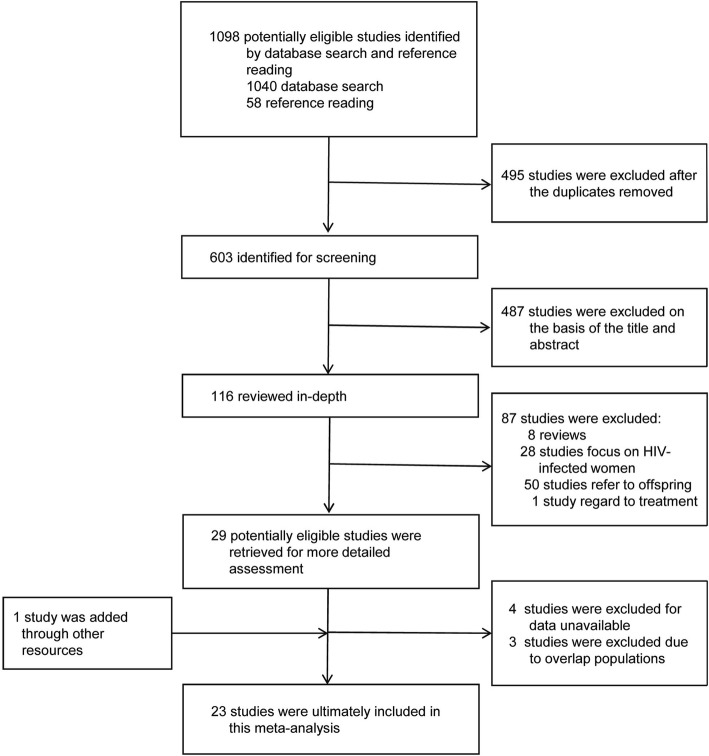
Increasing attention has been paid to differences in the prevalence of perinatal depression by HIV status, although inconsistent results have been reported. The aim of this systematic review and meta-analysis was to assess the relationship between perinatal depression and HIV infection. A comprehensive meta-analysis of comparative studies comparing the prevalence of antenatal or postnatal depression between HIV-infected women and HIV-negative controls was conducted.
Studies were identified through PubMed/Medline, Scopus, Web of Science, Cochrane Library, Embase and PsycINFO, and the reading of complementary references in August 2019. Subgroup analyses were performed for anticipated explanation of heterogeneity using methodological quality and pre-defined study characteristics, including study design, geographical location and depression screening tools for depression. The overall odds ratio (OR) and mean prevalence of each group were calculated.
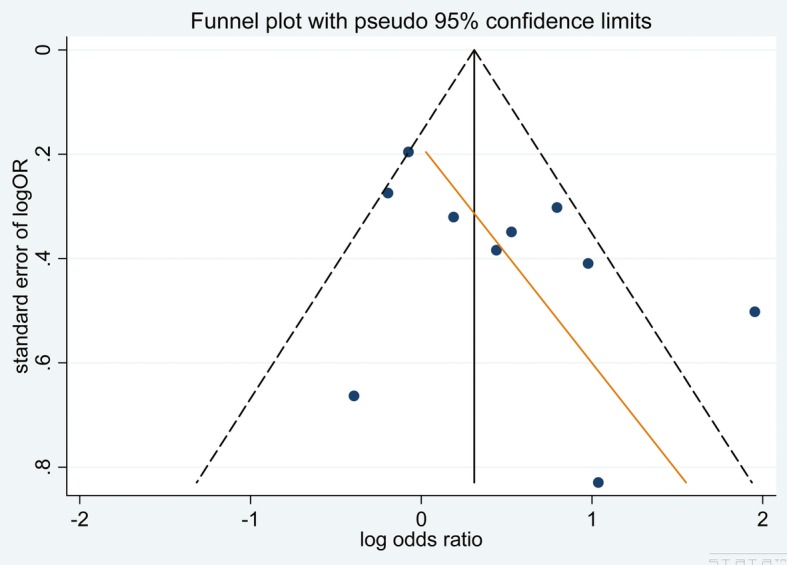
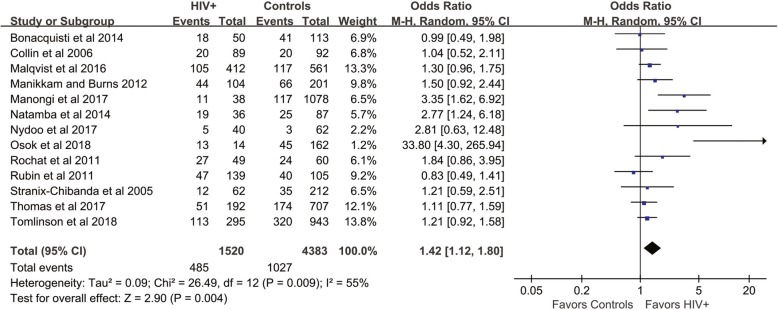
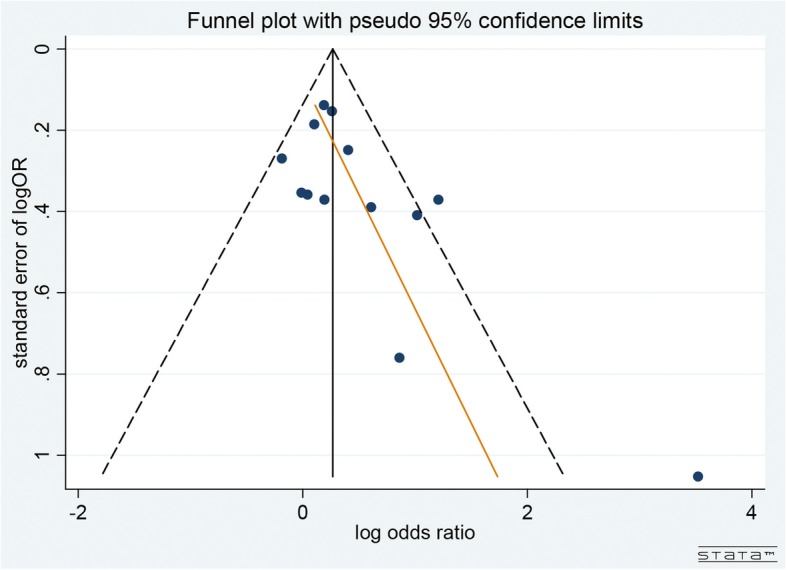
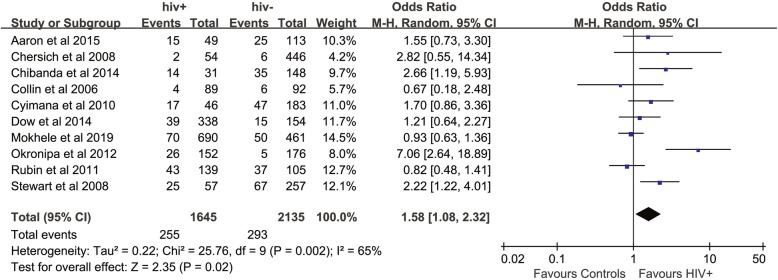
Twenty-three studies (from 21 publications), thirteen regarding antenatal depression and ten regarding postnatal depression were included, comprising 3165 subjects with HIV infection and 6518 controls. The mean prevalence of antenatal depressive symptoms in thirteen included studies was 36% (95% CI: 27, 45%) in the HIV-positive group and 26% (95% CI: 20, 32%) in the control group. The mean prevalence of postnatal depressive symptoms in ten included studies was 21% (95% CI: 14, 27%) in the HIV-positive group and 16% (95% CI: 10, 22%) in the control group. Women living with HIV have higher odds of antenatal (OR: 1.42; 95% CI: 1.12, 1.80) and postnatal depressive symptoms (OR: 1.58; 95% CI: 1.08, 2.32) compared with controls. Publication bias and moderate heterogeneity existed in the overall meta-analysis, and heterogeneity was partly explained by the subgroup analyses.
Women with HIV infection exhibit a significantly higher OR of antenatal and postnatal depressive symptoms compared with controls. For the health of both mother and child, clinicians should be aware of the significance of depression screening before and after delivery in this particular population and take effective measures to address depression among these women.
越来越多的人关注到 HIV 感染状况不同与围产期抑郁发生率的差异,但目前的研究结果并不一致。本系统综述和荟萃分析的目的是评估围产期抑郁与 HIV 感染之间的关系。我们对比较 HIV 感染女性和 HIV 阴性对照人群中产前或产后抑郁发生率的研究进行了全面的荟萃分析。
我们通过 PubMed/Medline、Scopus、Web of Science、Cochrane Library、Embase 和 PsycINFO 进行了文献检索,并于 2019 年 8 月查阅了补充参考文献。我们使用方法学质量和预定义的研究特征(研究设计、地理位置和抑郁筛查工具)进行亚组分析,以解释异质性。计算每组的总优势比(OR)和平均患病率。
共纳入 23 项研究(来自 21 篇文献),其中 13 项为产前抑郁,10 项为产后抑郁,包括 3165 名 HIV 感染者和 6518 名对照。在纳入的 13 项研究中,有 13 项研究报道了产前抑郁症状的平均患病率,其中 HIV 阳性组为 36%(95%CI:27,45%),对照组为 26%(95%CI:20,32%)。在纳入的 10 项研究中,有 10 项研究报道了产后抑郁症状的平均患病率,其中 HIV 阳性组为 21%(95%CI:14,27%),对照组为 16%(95%CI:10,22%)。与对照组相比,HIV 阳性女性发生产前(OR:1.42;95%CI:1.12,1.80)和产后(OR:1.58;95%CI:1.08,2.32)抑郁症状的可能性更高。总体荟萃分析存在发表偏倚和中度异质性,亚组分析部分解释了异质性。
与对照组相比,HIV 感染女性产前和产后抑郁的 OR 显著更高。为了母亲和孩子的健康,临床医生应该意识到在这一特定人群中,在分娩前后进行抑郁筛查的重要性,并采取有效措施解决这些女性的抑郁问题。