Oluseyi Osunmakinde Cecilia, Selvarajan Ramganesh, Mamba Bhekie B, Msagati Titus A M
Nanotechnology and Water Sustainability Research Unit, College of Science Engineering and Technology, University of South Africa, Florida Science Campus, Florida 1710, South Africa.
College of Agriculture and Environmental Sciences, Department of Environmental Sciences, University of South Africa, Florida Science Campus, Florida 1710, South Africa.
Microorganisms. 2019 Oct 29;7(11):506. doi: 10.3390/microorganisms7110506.
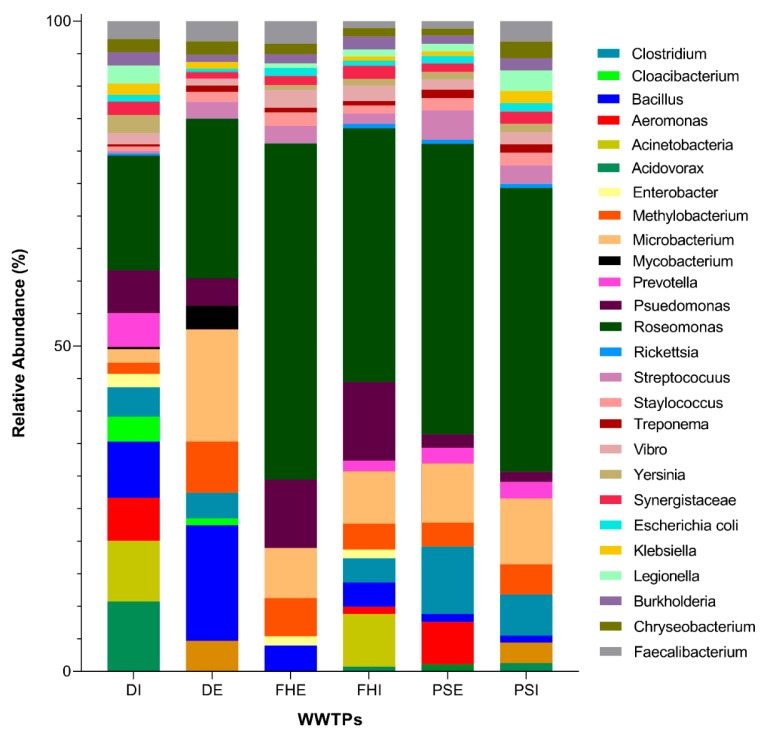
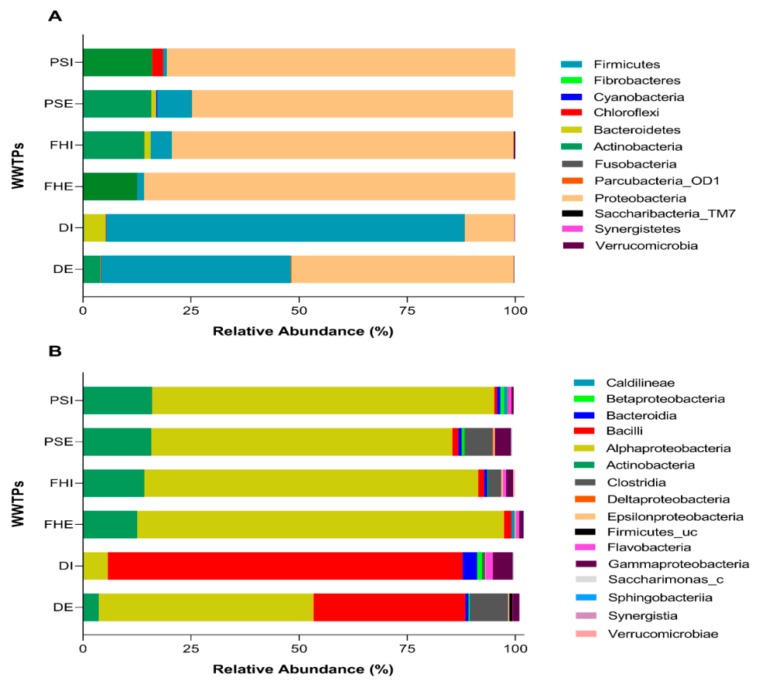
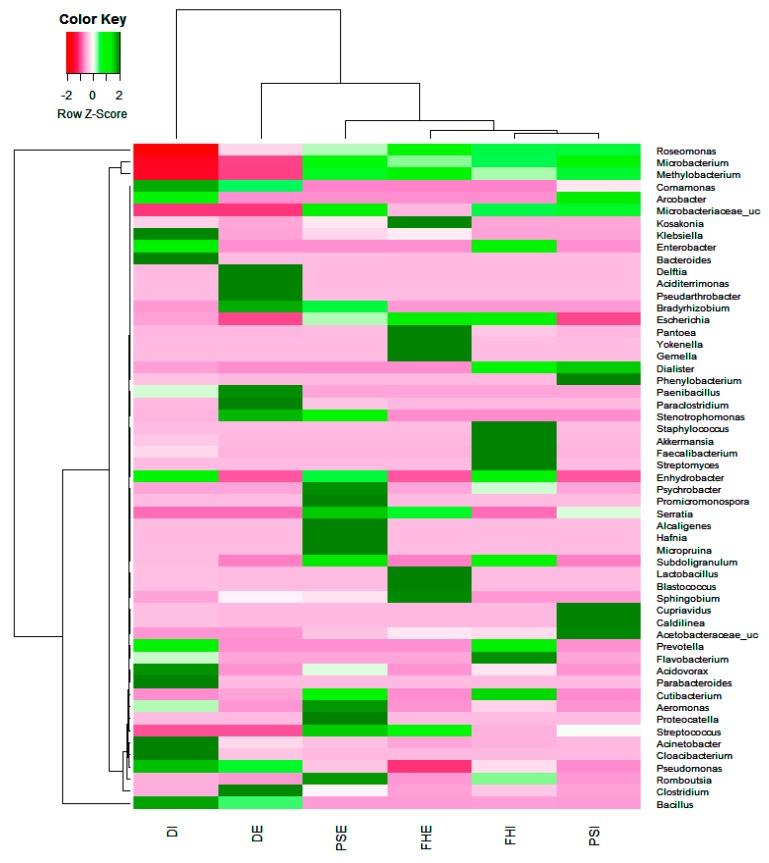
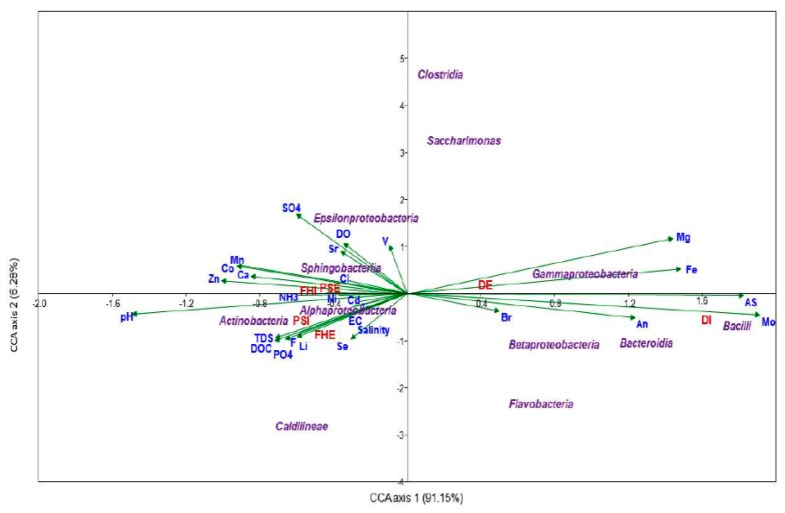
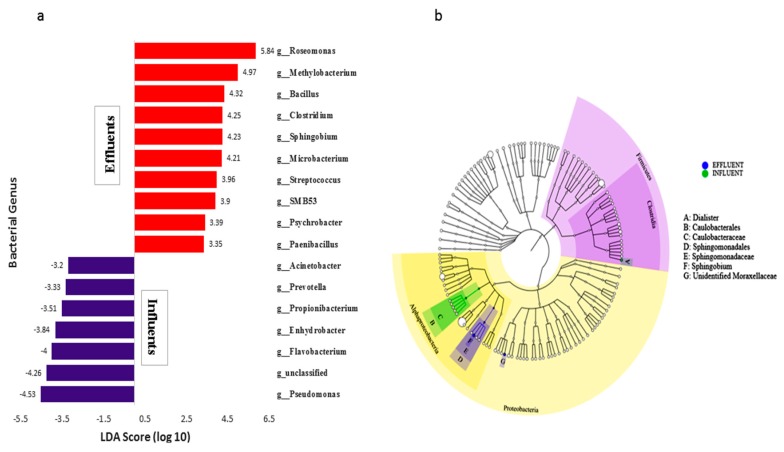
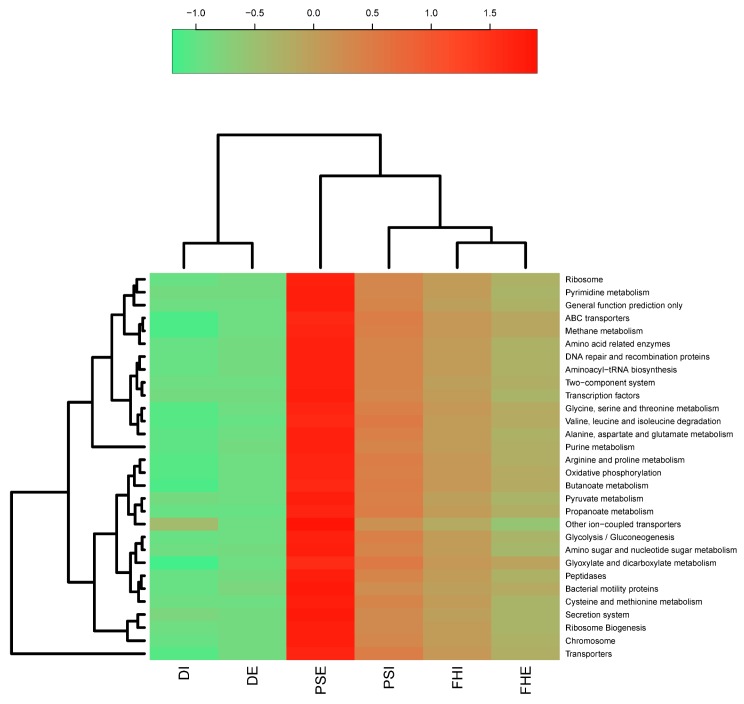
Next-generation sequencing provides new insights into the diversity and structure of bacterial communities, as well as the fate of pathogens in wastewater treatment systems. In this study, the bacterial community structure and the presence of pathogenic bacteria in three wastewater treatment plants across Gauteng province in South Africa were studied. The physicochemical results indicated that the quality of wastewater varies considerably from one plant to the others. , and were the dominant phyla across the three wastewater treatment plants, while , , , and were the dominant classes. The dominant bacterial functions were highly associated with carbohydrate, energy, and amino acid metabolism. In addition, potential pathogenic bacterial members identified from the influent/effluent samples included , , , , , , and . The results of linear discriminant analysis (LDA) effect size analysis also confirmed that these bacterial pathogens were significantly abundant in the wastewater treatment systems. Further, the results of this study highlighted that the presence of bacterial pathogens in treated effluent pose a potential contamination risk, transmitted through soil, agriculture, water, or sediments. There is thus a need for continuous monitoring of potential pathogens in wastewater treatment plants (WWTPs) in order to minimize public health risk.
下一代测序为细菌群落的多样性和结构以及废水处理系统中病原体的命运提供了新的见解。在本研究中,对南非豪登省三个污水处理厂的细菌群落结构和病原菌的存在情况进行了研究。物理化学结果表明,不同污水处理厂的废水质量差异很大。 、 和 是三个污水处理厂中的优势菌门,而 、 、 和 是优势菌纲。主要的细菌功能与碳水化合物、能量和氨基酸代谢高度相关。此外,从进水/出水样本中鉴定出的潜在病原菌包括 、 、 、 、 、 和 。线性判别分析(LDA)效应大小分析结果也证实,这些细菌病原体在废水处理系统中显著丰富。此外,本研究结果强调,处理后出水中细菌病原体的存在会带来潜在的污染风险,可通过土壤、农业、水或沉积物传播。因此,有必要持续监测污水处理厂中的潜在病原体,以尽量降低公共健康风险。