Department of Biology and Biological Engineering, Chalmers University of Technology, Kemivägen 10, SE41296, Gothenburg, Sweden.
Novo Nordisk Foundation Center for Biosustainability, Chalmers University of Technology, SE41296, Gothenburg, Sweden.
Nat Commun. 2019 Oct 31;10(1):4976. doi: 10.1038/s41467-019-12961-5.
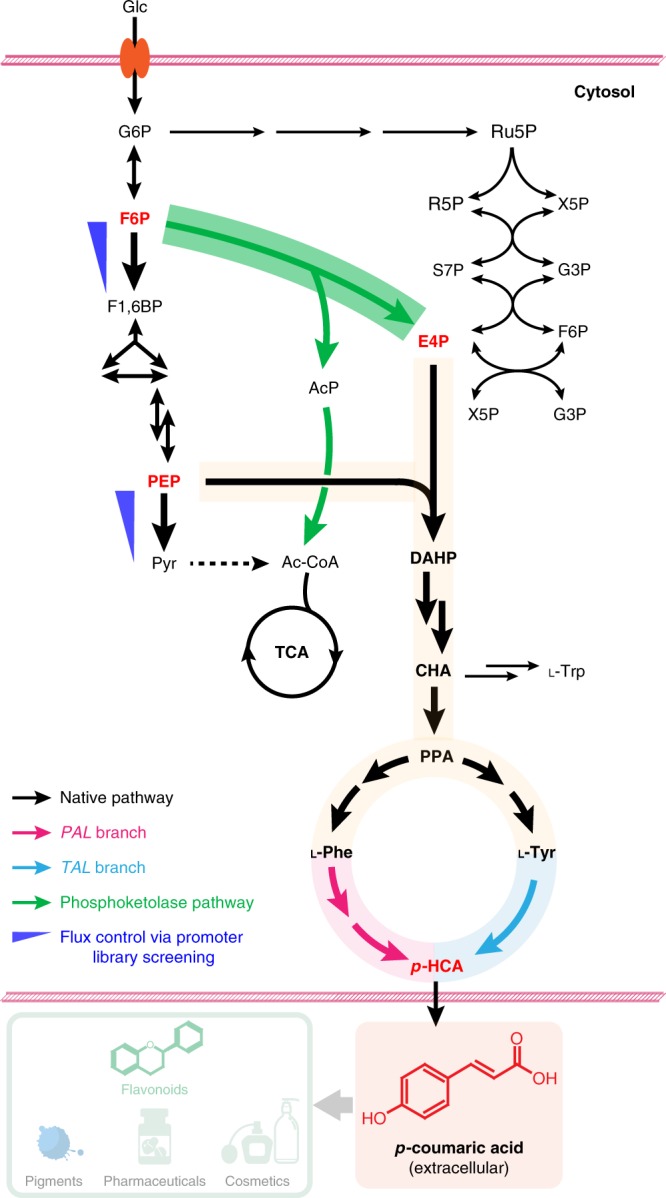
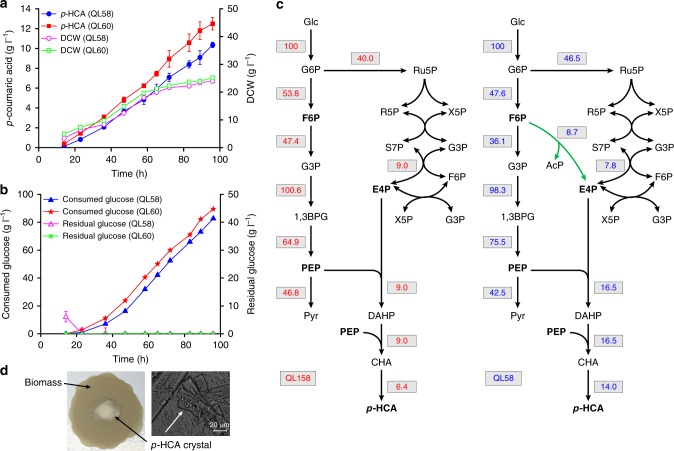
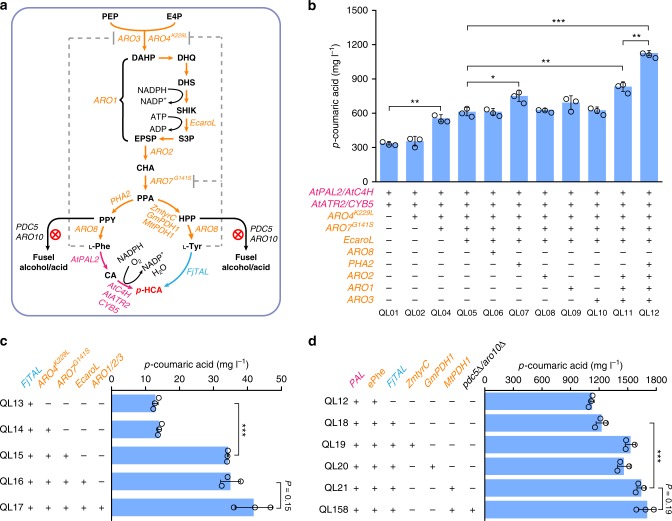
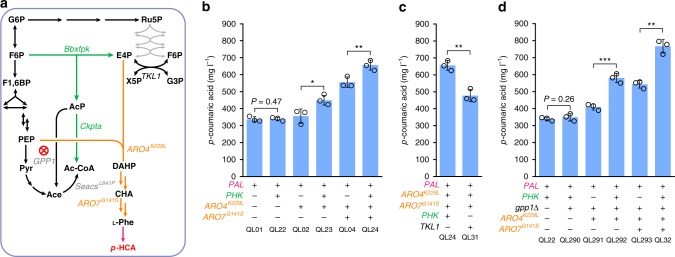
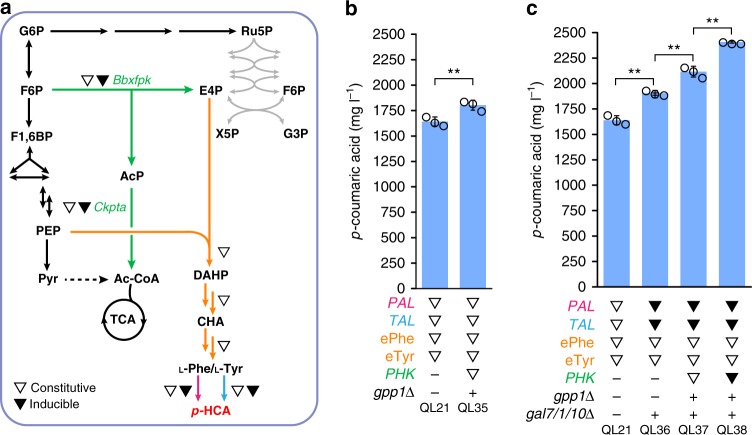
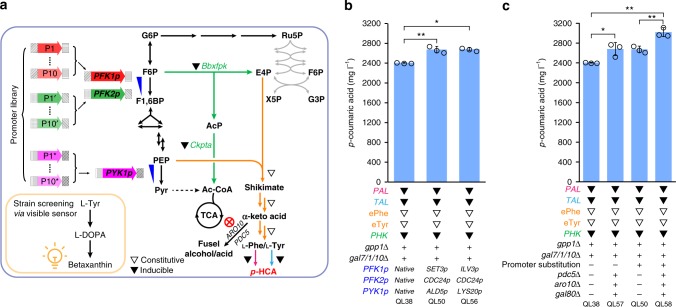
The production of bioactive plant compounds using microbial hosts is considered a safe, cost-competitive and scalable approach to their production. However, microbial production of some compounds like aromatic amino acid (AAA)-derived chemicals, remains an outstanding metabolic engineering challenge. Here we present the construction of a Saccharomyces cerevisiae platform strain able to produce high levels of p-coumaric acid, an AAA-derived precursor for many commercially valuable chemicals. This is achieved through engineering the AAA biosynthesis pathway, introducing a phosphoketalose-based pathway to divert glycolytic flux towards erythrose 4-phosphate formation, and optimizing carbon distribution between glycolysis and the AAA biosynthesis pathway by replacing the promoters of several important genes at key nodes between these two pathways. This results in a maximum p-coumaric acid titer of 12.5 g L and a maximum yield on glucose of 154.9 mg g.
利用微生物宿主生产生物活性植物化合物被认为是一种安全、具有成本竞争力和可扩展的生产方法。然而,微生物生产某些化合物,如芳香族氨基酸(AAA)衍生化学品,仍然是一个突出的代谢工程挑战。在这里,我们构建了一个能够生产高浓度对香豆酸的酿酒酵母平台菌株,对香豆酸是许多有商业价值的化学品的 AAA 衍生前体。这是通过工程 AAA 生物合成途径实现的,引入了基于磷酸酮糖的途径,将糖酵解通量转移到赤藓糖 4-磷酸的形成中,并通过替换这两个途径之间的关键节点处的几个重要基因的启动子来优化糖酵解和 AAA 生物合成途径之间的碳分布。这导致对香豆酸的最高产量达到 12.5g/L,葡萄糖的最高产率达到 154.9mg/g。