Luo Luyun, Wang Pei, Zhai Zhongying, Su Pin, Tan Xinqiu, Zhang Deyong, Zhang Zhuo, Liu Yong
College of Bioscience & Biotechnology, Hunan Agricultural University, Changsha, China.
Hunan Plant Protection Institute, Hunan Academy of Agricultural Science, Changsha, China.
AMB Express. 2019 Oct 31;9(1):173. doi: 10.1186/s13568-019-0897-z.
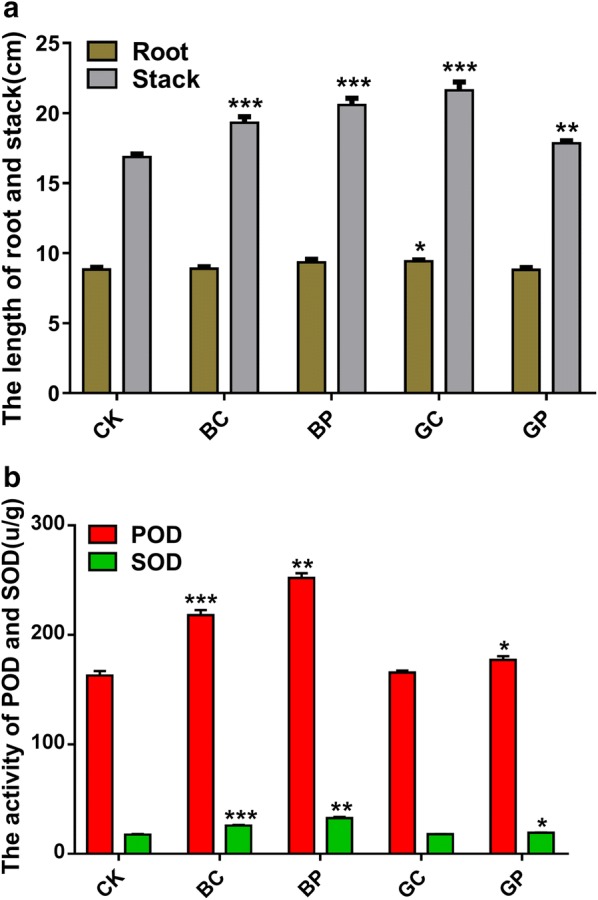
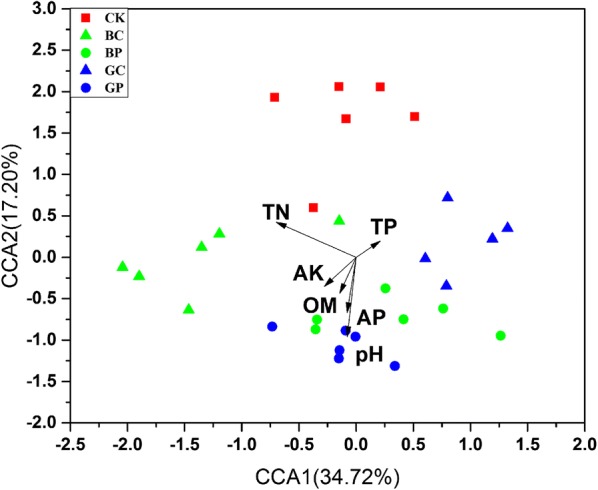
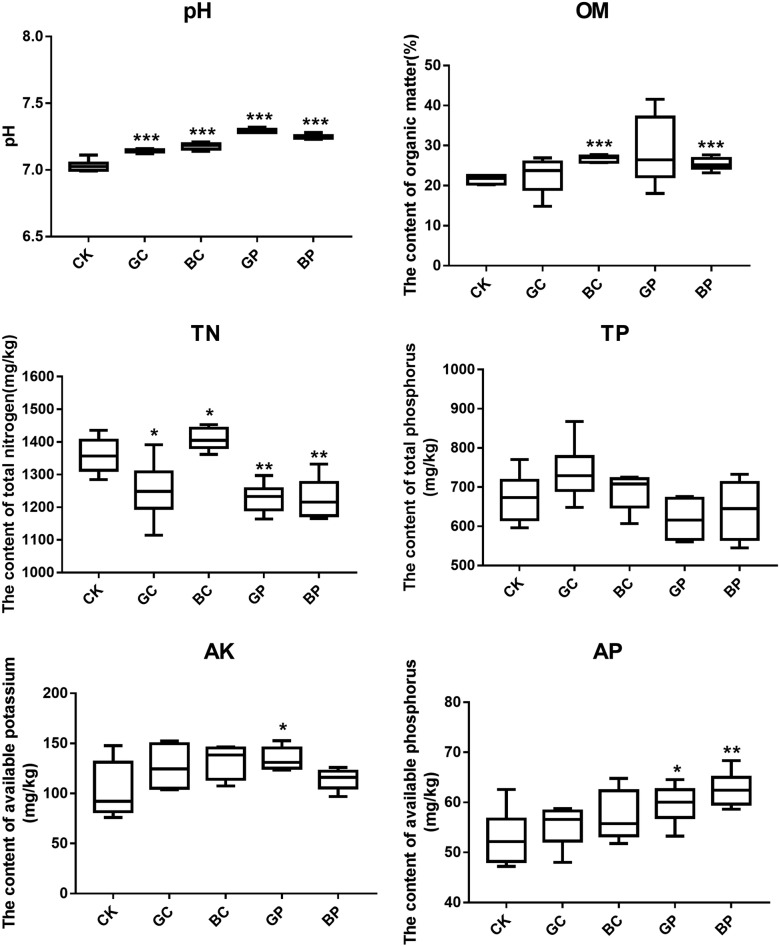
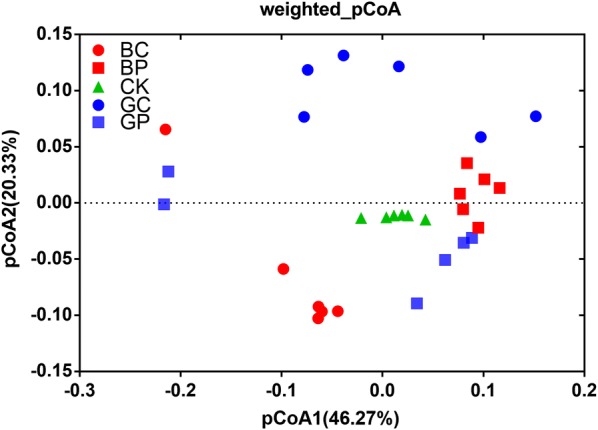
In recent years, the photosynthetic bacteria have been used widely in agriculture, but the effects of different agricultural applications on crop rhizosphere microorganism and crops are lack. In this study, we provide new insights into the structure and composition of the rice root-associated microbiomes as well as the effect on crop of the Rhodopseudomonas palustris(R. palustris) PSB06 and CGA009 at the rice seedling stage with seed immersion and root irrigation. Compare with CK group, the length of stem, the peroxidase (POD), and superoxide dismutase (SOD) activities in PSB06 treatment group was significantly higher, while the length of stem in CGA009 treatment group was significantly higher. The POD and SOD activities in CGA009 treatment groups only were higher slightly than the CK group. In the study, the dominant phyla were Proteobacteria (51.95-61.66%), Bacteroidetes (5.40-9.39%), Acidobacteria (4.50-10.52%), Actinobacteria (5.06-8.14%), Planctomycetes (2.90-4.48%), Chloroflexi (2.23-5.06%) and Firmicutes (2.38-7.30%), accounted for 87% bacterial sequences. The principal coordinate analysis (pCoA) and mantel results showed the two application actions of R. palustris CGA009 and PSB06 had significant effects on rice rhizosphere bacterial communities (p < 0.05). The PSB06 can significantly promote the rice growth and enhance stress resistance of rice at the seedling stage, while the R. palustris CGA009 has no significant effect on rice. Dissimilarity test and canonical correspondence analysis (CCA) results showed that the TN and pH were the key factors affecting rice rhizosphere bacterial community in the seedling stage. This study will provide some guidance advices for the study of the microecological regulation of photosynthetic bacteria on crops.
近年来,光合细菌在农业中得到了广泛应用,但不同农业应用对作物根际微生物和作物的影响尚缺乏研究。在本研究中,我们通过浸种和灌根的方式,对水稻幼苗期与根相关的微生物群落结构和组成,以及沼泽红假单胞菌(R. palustris)PSB06和CGA009对作物的影响提供了新的见解。与CK组相比,PSB06处理组的茎长、过氧化物酶(POD)和超氧化物歧化酶(SOD)活性显著更高,而CGA009处理组的茎长显著更高。CGA009处理组的POD和SOD活性仅略高于CK组。在该研究中,优势菌门为变形菌门(51.95 - 61.66%)、拟杆菌门(5.40 - 9.39%)、酸杆菌门(4.50 - 10.52%)、放线菌门(5.06 - 8.14%)、浮霉菌门(2.90 - 4.48%)、绿弯菌门(2.23 - 5.06%)和厚壁菌门(2.38 - 7.30%),占细菌序列的87%。主坐标分析(pCoA)和mantel结果表明,沼泽红假单胞菌CGA009和PSB06的两种施用方式对水稻根际细菌群落有显著影响(p < 0.05)。PSB06能显著促进水稻生长并增强水稻幼苗期的抗逆性,而沼泽红假单胞菌CGA009对水稻无显著影响。差异检验和典范对应分析(CCA)结果表明,TN和pH是影响水稻幼苗期根际细菌群落的关键因素。本研究将为光合细菌对作物的微生态调控研究提供一些指导建议。