Section of Pathology, Division of Biomedical Sciences, Department of Morphological Biology, Fukuoka Dental College, Fukuoka, Japan.
Division of Oral and Medical Management, Department of Oral and Maxillofacial Surgery, Fukuoka Dental College, Fukuoka, Japan.
Cancer Med. 2019 Dec;8(18):7822-7832. doi: 10.1002/cam4.2667. Epub 2019 Nov 1.
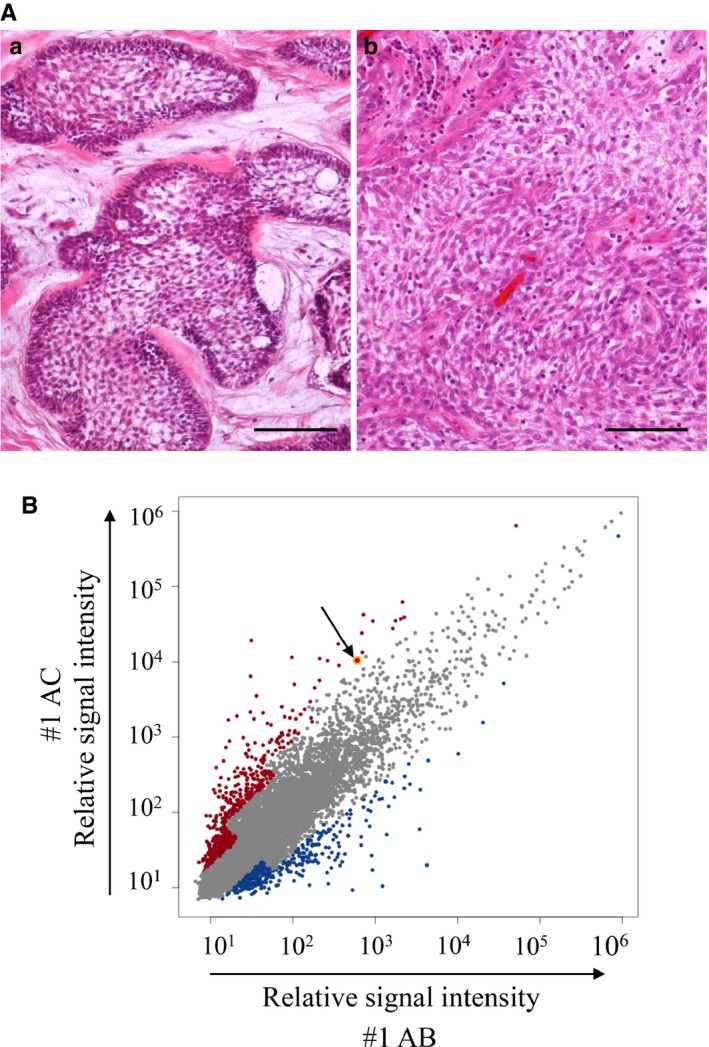
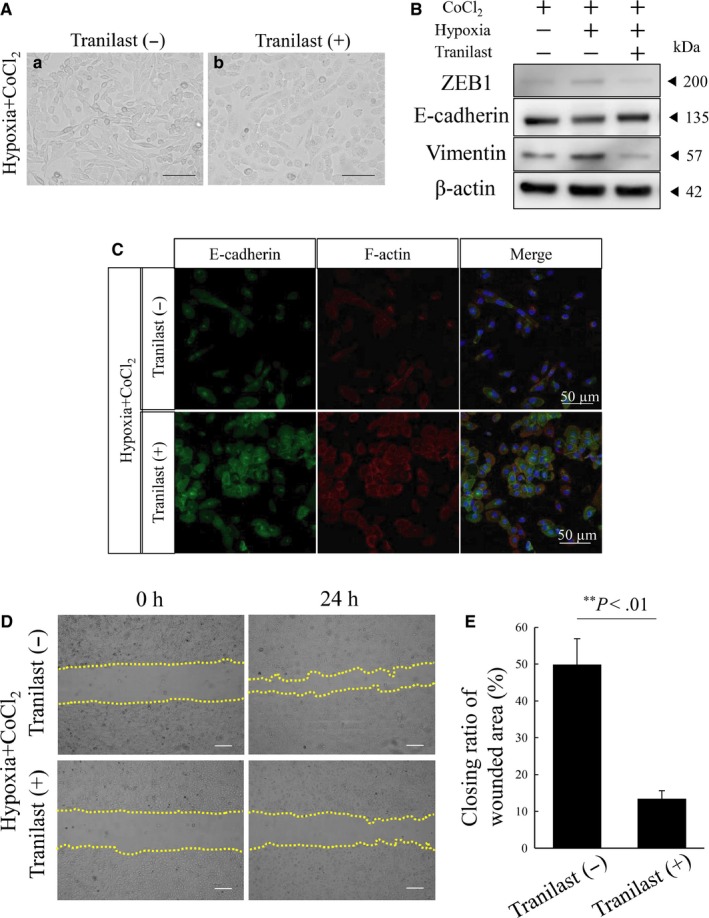
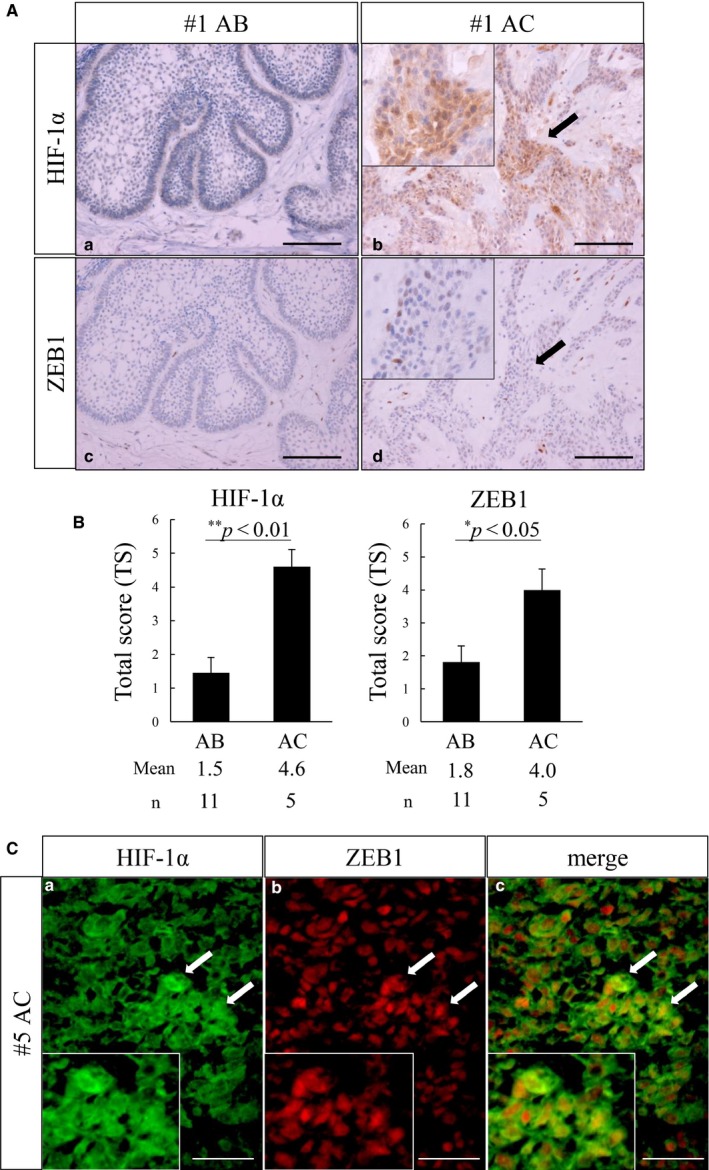
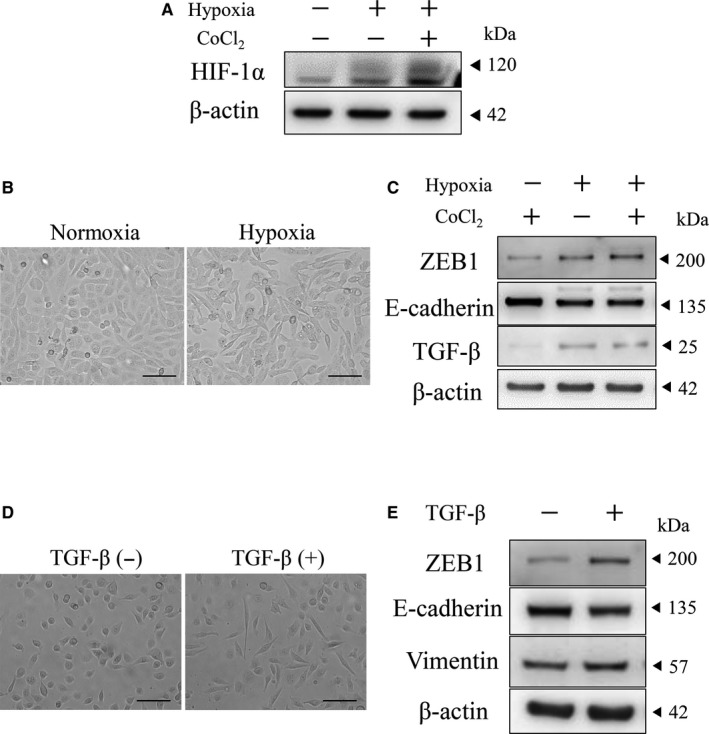
Ameloblastic carcinoma (AC) is defined as a rare primary epithelial odontogenic malignant neoplasm and the malignant counterpart of benign epithelial odontogenic tumor of ameloblastoma (AB) by the WHO classification. AC develops pulmonary metastasis in about one third of the patients and reveals a poor prognosis. However, the mechanisms of AC oncogenesis remain unclear. In this report, we aimed to clarify the mechanisms of malignant transformation of AB or AC carcinogenesis. The relatively important genes in the malignant transformation of AB were screened by DNA microarray analysis, and the expression and localization of related proteins were examined by immunohistochemistry using samples of AB and secondary AC. Two genes of hypoxia-inducible factor 1 alpha subunit (HIF1A) and zinc finger E-box-binding homeobox 1 (ZEB1) were significantly and relatively upregulated in AC than in AB. Both genes were closely related in hypoxia and epithelial-mesenchymal transition (EMT). In addition, expressions of HIF-1α and ZEB1 proteins were significantly stronger in AC than in AB. In the cell assays using ameloblastoma cell line, AM-1, hypoxia condition upregulated the expression of transforming growth factor-β (TGF-β) and induced EMT. Furthermore, the hypoxia-induced morphological change and cell migration ability were inhibited by an antiallergic medicine tranilast. Finally, we concluded that hypoxia-induced HIF-1α and ZEB1 were critical for the malignant transformation of AB via TGF-β-dependent EMT. Then, both HIF-1α and ZEB1 could be potential biomarkers to predict the malignant transformation of AB.
成釉细胞瘤恶变(AC)是一种罕见的原发性上皮性牙源性恶性肿瘤,是世界卫生组织(WHO)分类中良性牙源性肿瘤成釉细胞瘤(AB)的恶性对应物。AC 约有三分之一的患者发生肺转移,预后不良。然而,AC 发生的机制仍不清楚。本研究旨在阐明 AB 恶变或 AC 发生的恶性转化机制。通过 DNA 微阵列分析筛选 AB 恶变中相对重要的基因,并通过免疫组织化学检测 AB 和继发 AC 样本中相关蛋白的表达和定位。缺氧诱导因子 1α 亚基(HIF1A)和锌指 E 盒结合同源盒 1(ZEB1)这两个基因在 AC 中的表达水平明显且相对高于 AB。这两个基因在缺氧和上皮-间充质转化(EMT)中密切相关。此外,HIF-1α 和 ZEB1 蛋白在 AC 中的表达明显强于 AB。在使用成釉细胞瘤细胞系 AM-1 的细胞实验中,缺氧条件上调了转化生长因子-β(TGF-β)的表达,并诱导 EMT。此外,抗变态反应药物曲尼司特抑制了缺氧诱导的形态变化和细胞迁移能力。最后,我们得出结论,缺氧诱导的 HIF-1α 和 ZEB1 通过 TGF-β 依赖性 EMT 对 AB 的恶性转化至关重要。因此,HIF-1α 和 ZEB1 都可能是预测 AB 恶性转化的潜在生物标志物。