Department of Pediatrics, University of Michigan, USA.
Department of Animal Science, Texas A&M University, USA.
Mol Cell Endocrinol. 2020 Jan 15;500:110632. doi: 10.1016/j.mce.2019.110632. Epub 2019 Nov 2.
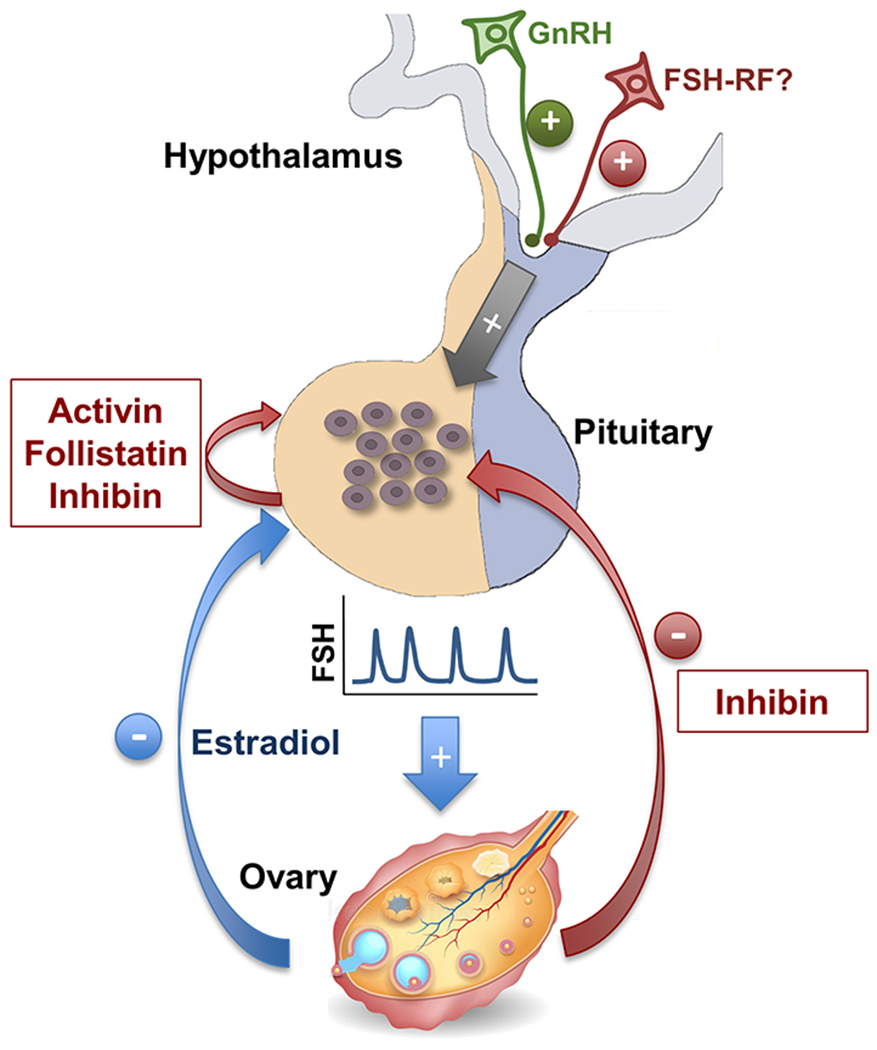
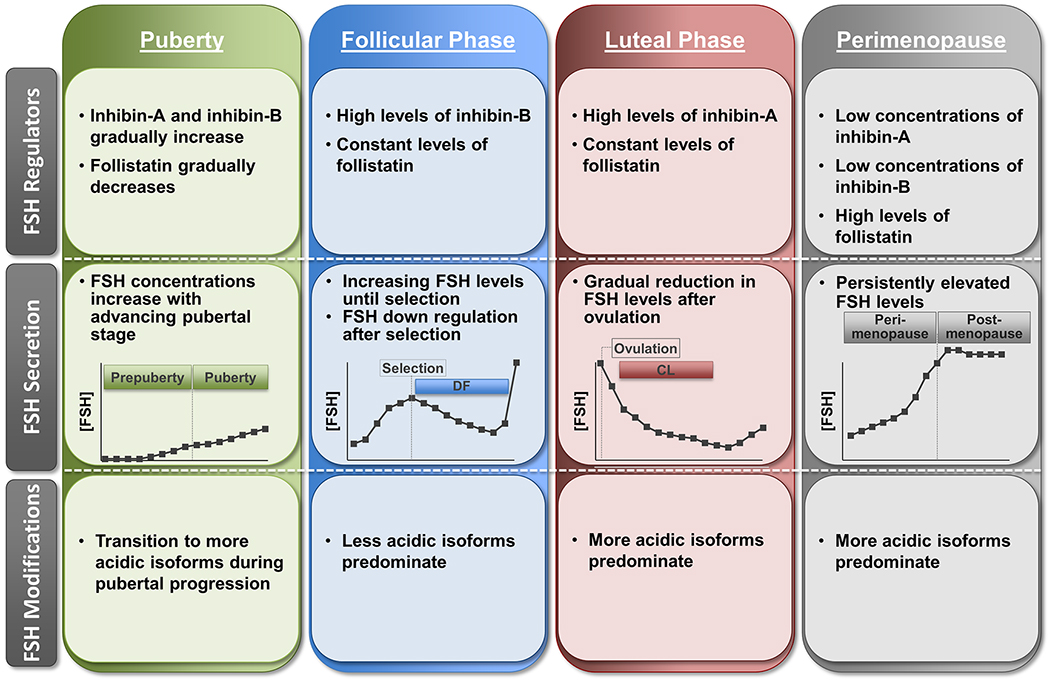
Follicle-stimulating hormone (FSH) is a glycoprotein hormone produced by gonadotropes in the anterior pituitary that plays a central role in controlling ovarian folliculogenesis and steroidogenesis in females. Moreover, recent studies strongly suggest that FSH exerts extragonadal actions, particularly regulating bone mass and adiposity. Despite its crucial role, the mechanisms regulating FSH secretion are not completely understood. It is evident that hypothalamic, ovarian, and pituitary factors are involved in the neuroendocrine, paracrine, and autocrine regulation of FSH production. Large animal models, such as the female sheep, represent valuable research models to investigate specific aspects of FSH secretory processes. This review: (i) summarizes the role of FSH controlling reproduction and other biological processes; (ii) discusses the hypothalamic, gonadal, and pituitary regulation of FSH secretion; (iii) considers the biological relevance of the different FSH isoforms; and (iv) summarizes the distinct patterns of FSH secretion under different physiological conditions.
卵泡刺激素(FSH)是一种糖蛋白激素,由垂体前叶的促性腺激素细胞产生,在女性的卵巢卵泡发生和类固醇生成中起着核心作用。此外,最近的研究强烈表明,FSH 发挥了性腺外作用,特别是调节骨量和脂肪量。尽管它具有至关重要的作用,但调节 FSH 分泌的机制尚不完全清楚。显然,下丘脑、卵巢和垂体因素参与了 FSH 产生的神经内分泌、旁分泌和自分泌调节。绵羊等大型动物模型是研究 FSH 分泌过程特定方面的有价值的研究模型。本综述:(i)总结了 FSH 控制生殖和其他生物过程的作用;(ii)讨论了 FSH 分泌的下丘脑、性腺和垂体调节;(iii)考虑了不同 FSH 同工型的生物学相关性;(iv)总结了不同生理条件下 FSH 分泌的不同模式。