Research Institute of Atherosclerotic Disease, Xi'an Jiaotong University Cardiovascular Research Center, Xi'an, 710061, China.
Department of Vascular Surgery, Stanford University School of Medicine, Stanford, 94305, CA, USA.
Acta Pharmacol Sin. 2020 Apr;41(4):546-553. doi: 10.1038/s41401-019-0315-8. Epub 2019 Nov 4.
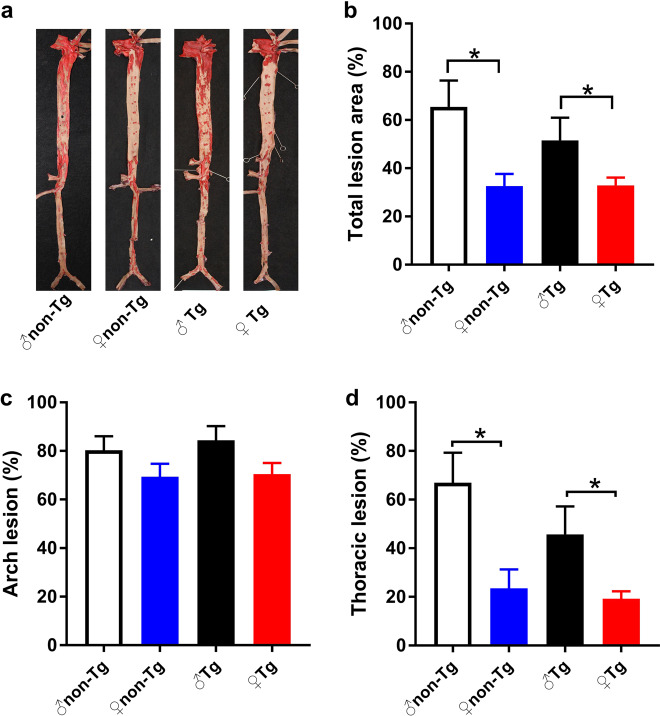
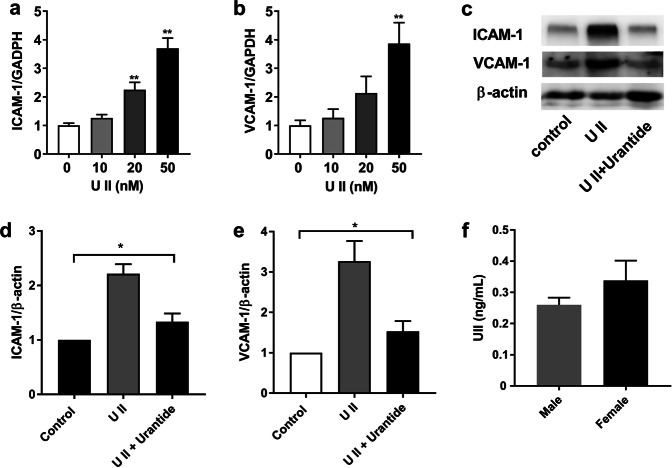
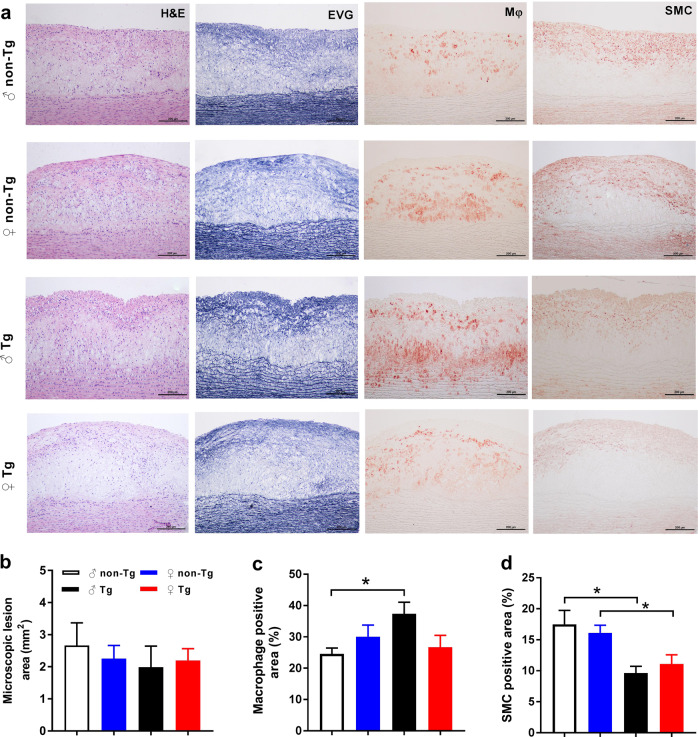
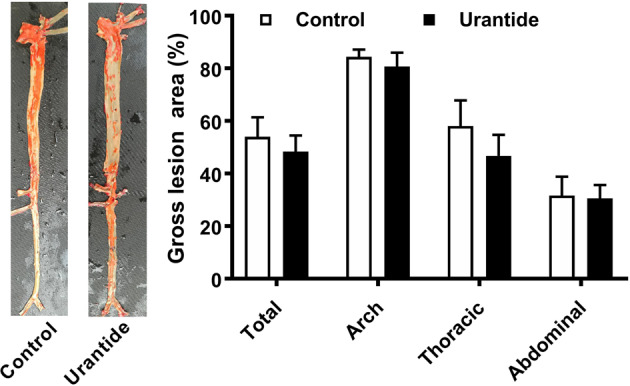
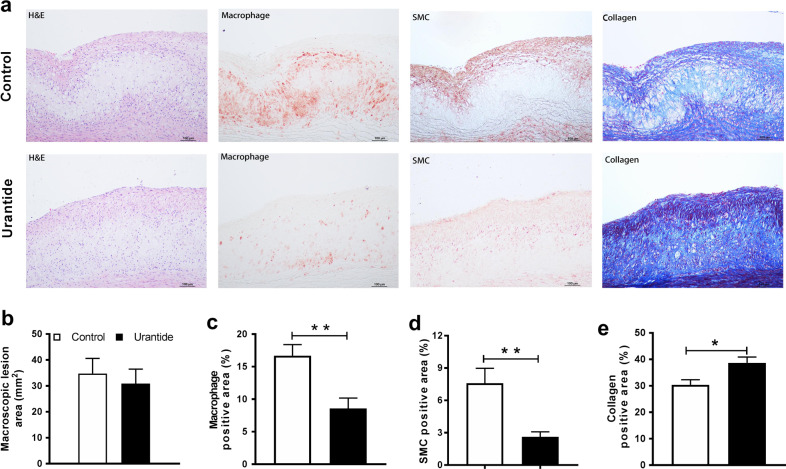
Increasing levels of plasma urotensin II (UII) are positively associated with atherosclerosis. In this study we investigated the role of macrophage-secreted UII in atherosclerosis progression, and evaluated the therapeutic value of urantide, a potent competitive UII receptor antagonist, in atherosclerosis treatment. Macrophage-specific human UII-transgenic rabbits and their nontransgenic littermates were fed a high cholesterol diet for 16 weeks to induce atherosclerosis. Immunohistochemical staining of the cellular components (macrophages and smooth muscle cells) of aortic atherosclerotic lesions revealed a significant increase (52%) in the macrophage-positive area in only male transgenic rabbits compared with that in the nontransgenic littermates. However, both male and female transgenic rabbits showed a significant decrease (45% in males and 31% in females) in the smooth muscle cell-positive area compared with that of their control littermates. The effects of macrophage-secreted UII on the plaque cellular components were independent of plasma lipid level. Meanwhile the wild-type rabbits were continuously subcutaneously infused with urantide (5.4 µg· kg· h) using osmotic mini-pumps. Infusion of urantide exerted effects opposite to those caused by UII, as it significantly decreased the macrophage-positive area in male wild-type rabbits compared with that of control rabbits. In cultured human umbilical vein endothelial cells, treatment with UII dose-dependently increased the expression of the adhesion molecules VCAM-1 and ICAM-1, and this effect was partially reversed by urantide. The current study provides direct evidence that macrophage-secreted UII plays a key role in atherogenesis. Targeting UII with urantide may promote plaque stability by decreasing macrophage-derived foam cell formation, which is an indicator of unstable plaque.
血浆尾加压素 II(UII)水平升高与动脉粥样硬化呈正相关。本研究旨在探讨巨噬细胞分泌的 UII 在动脉粥样硬化进展中的作用,并评估强效 UII 受体拮抗剂乌瑞替肽在动脉粥样硬化治疗中的应用价值。采用高胆固醇饮食喂养巨噬细胞特异性人 UII 转基因兔及其非转基因同窝仔兔 16 周,以诱导动脉粥样硬化。主动脉粥样硬化病变细胞成分(巨噬细胞和平滑肌细胞)的免疫组织化学染色显示,与非转基因同窝仔兔相比,雄性转基因兔的巨噬细胞阳性面积显著增加(52%)。然而,雄性和雌性转基因兔的平滑肌细胞阳性面积均显著减少(雄性减少 45%,雌性减少 31%)。巨噬细胞分泌的 UII 对斑块细胞成分的影响与血浆脂质水平无关。与此同时,野生型兔持续经皮下渗透泵输注乌瑞替肽(5.4μg·kg·h)。乌瑞替肽的输注作用与 UII 的作用相反,与对照组相比,雄性野生型兔的巨噬细胞阳性面积明显减少。在培养的人脐静脉内皮细胞中,UII 处理呈剂量依赖性增加黏附分子 VCAM-1 和 ICAM-1 的表达,而乌瑞替肽可部分逆转这一作用。本研究提供了直接证据,表明巨噬细胞分泌的 UII 在动脉粥样硬化形成中起关键作用。用乌瑞替肽靶向 UII 可能通过减少巨噬细胞源性泡沫细胞形成来促进斑块稳定,而泡沫细胞形成是不稳定斑块的一个指标。