Lind Anne-Li, Just David, Mikus Maria, Fredolini Claudia, Ioannou Marina, Gerdle Björn, Ghafouri Bijar, Bäckryd Emmanuel, Tanum Lars, Gordh Torsten, Månberg Anna
Department of Surgical Sciences, Uppsala University, Uppsala, Sweden.
Division of Affinity Proteomics, SciLifeLab, Deptartment of Protein Science, KTH Royal Institute of Technology, Stockholm, Sweden.
J Pain Res. 2019 Oct 15;12:2875-2889. doi: 10.2147/JPR.S215348. eCollection 2019.
Neuropathic pain and fibromyalgia are two common and poorly understood chronic pain conditions that lack satisfactory treatments, cause substantial suffering and societal costs. Today, there are no biological markers on which to base chronic pain diagnoses, treatment choices or to understand the pathophysiology of pain for the individual patient. This study aimed to investigate cerebrospinal fluid (CSF) protein profiles potentially associated with fibromyalgia and neuropathic pain.
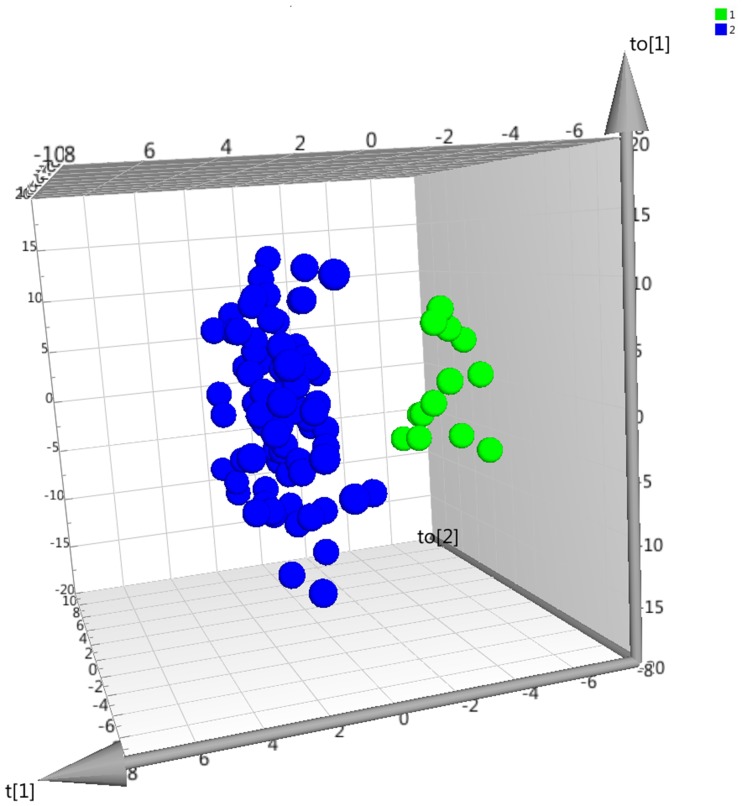
CSF samples were collected from 25 patients with neuropathic pain (two independent sets, n=14 patients for discovery, and n=11 for verification), 40 patients with fibromyalgia and 134 controls without neurological disease from two different populations. CSF protein profiling of 55 proteins was performed using antibody suspension bead array technology.
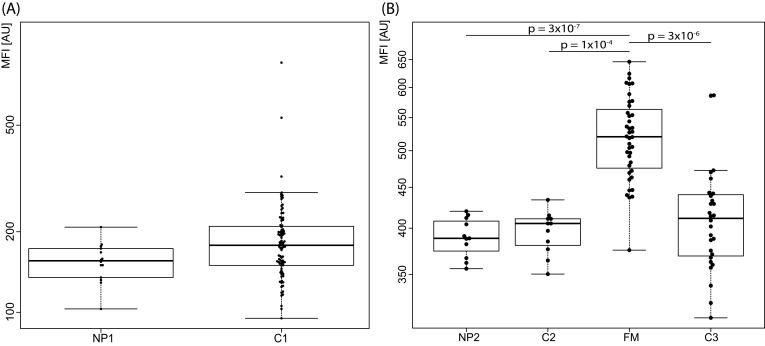
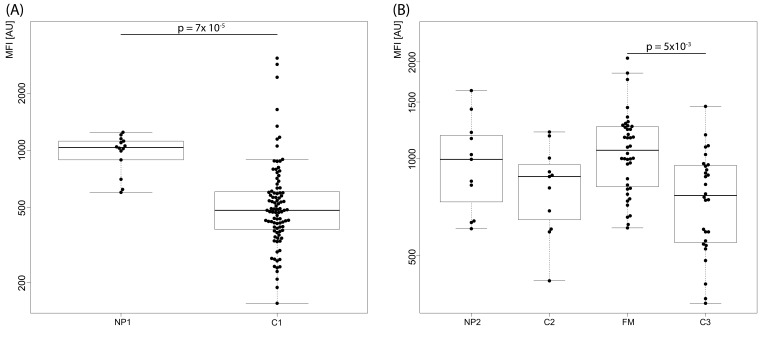
We found increased levels of apolipoprotein C1 (APOC1) in CSF of neuropathic pain patients compared to controls and there was a trend for increased levels also in fibromyalgia patients. In addition, levels of ectonucleotide pyrophosphatase family member 2 (ENPP2, also referred to as autotaxin) were increased in the CSF of fibromyalgia patients compared to all other groups including patients with neuropathic pain.
The increased levels of APOC1 and ENPP2 found in neuropathic pain and fibromyalgia patients may shed light on the underlying mechanisms of these conditions. Further investigation is required to elucidate their role in maintaining pain and other main symptoms of these disorders.
神经性疼痛和纤维肌痛是两种常见但了解不足的慢性疼痛病症,缺乏令人满意的治疗方法,会导致巨大痛苦和社会成本。目前,尚无用于慢性疼痛诊断、治疗选择或了解个体患者疼痛病理生理学的生物标志物。本研究旨在调查可能与纤维肌痛和神经性疼痛相关的脑脊液(CSF)蛋白质谱。
从25例神经性疼痛患者(两个独立组,发现组n = 14例患者,验证组n = 11例患者)、40例纤维肌痛患者和来自两个不同人群的134例无神经系统疾病的对照者中收集脑脊液样本。使用抗体悬浮微珠阵列技术对55种蛋白质进行脑脊液蛋白质谱分析。
我们发现,与对照组相比,神经性疼痛患者脑脊液中载脂蛋白C1(APOC1)水平升高,纤维肌痛患者中该水平也有升高趋势。此外,与包括神经性疼痛患者在内的所有其他组相比,纤维肌痛患者脑脊液中外核苷酸焦磷酸酶家族成员2(ENPP2,也称为自分泌运动因子)水平升高。
在神经性疼痛和纤维肌痛患者中发现的APOC1和ENPP2水平升高可能有助于揭示这些病症的潜在机制。需要进一步研究以阐明它们在维持这些疾病的疼痛和其他主要症状中的作用。