Chou Pin-Li, Fu Jui-Ying, Cheng Chia-Hui, Chu Yen, Wu Ching-Feng, Ko Po-Jen, Liu Yun-Hen, Wu Ching-Yang
Chang Gung University, Taiwan.
Division of Thoracic and Cardiovascular Surgery, Department of Surgery, Chang Gung Memorial Hospital, Linkou, Taiwan.
Medicine (Baltimore). 2019 Nov;98(44):e17757. doi: 10.1097/MD.0000000000017757.
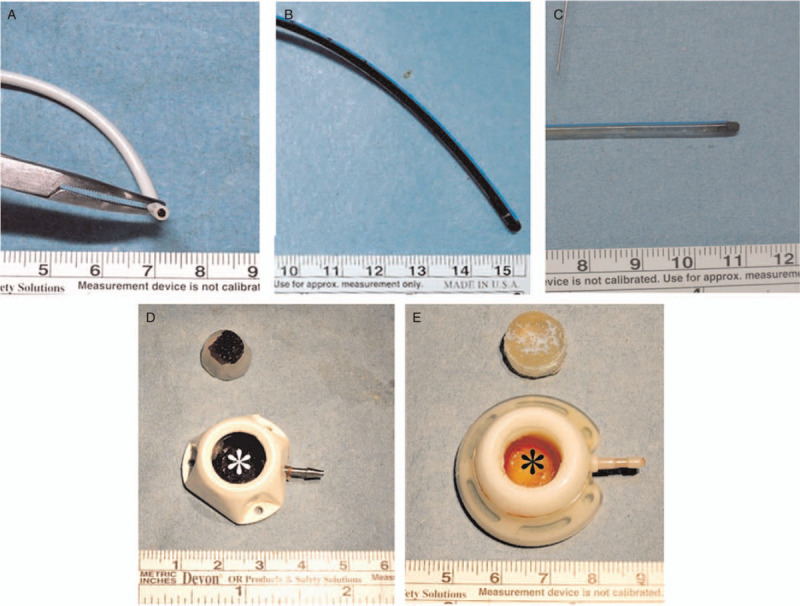
Nursing staff play a crucial role in maintaining a functional port. Nursing guidelines recommend standard maintenance with 10 ml irrigation without consideration for variations among patients and individual nursing staff. The aim of this study is to identify the efficacy of the current maintenance strategy and analyze the correlation between complications and actual port presentations, based on disassembled intravenous ports after removal from patients. We attempt to organize the information and propose a definite maintenance strategy.After treatment completion, or due to complications, 434 implanted intravenous ports were removed from patients. All ports were deconstructed to observe their actual presentations and were then analyzed in conjunction with medical records. The correlation between complications and actual presentations was analyzed.From March 2012 to December 2017, 434 implanted intravenous ports were removed from oncology patients after completion of treatment or catheter related complications. From the view of maintenance related presentations, injection chamber blood clot was highly correlated with chemotherapy completion (P < .001) and malfunction (P = .005), while tip blood clot (P = .043) was related with chemotherapy completion and catheter fibrin (P = .015) was related to malfunction. From the view of structure related presentations, broken catheter integrity was correlated to chemotherapy completion (P = .007), fracture (P < .001), and malfunction (P = .008). Compression groove was related to chemotherapy completion (P = .03) and broken catheter at protruding stud was related to fracture (P = .04), while diaphragm rupture was correlated to chemotherapy completion (P = .048) and malfunction. (P < .001).Current port maintenance is insufficient for ideal port maintenance, whereby maintenance-related presentations, including tip clot, catheter fibrin, and injection chamber blood clot were identified. We propose a recommended maintenance strategy based on our findings. Structure-related presentations, including broken catheter integrity, broken catheter at protruding stud and diaphragm rupture were seen in patients with longer implantation period. Removal of the implanted port may be considered after 5 years if no disease relapse is noted.
护理人员在维持功能性端口方面发挥着关键作用。护理指南建议采用10毫升冲洗液进行标准维护,而不考虑患者和个体护理人员之间的差异。本研究的目的是基于从患者身上移除的拆解后的静脉端口,确定当前维护策略的有效性,并分析并发症与实际端口表现之间的相关性。我们试图整理这些信息并提出明确的维护策略。治疗完成后,或因并发症,从患者身上移除了434个植入的静脉端口。所有端口均被拆解以观察其实际表现,然后结合病历进行分析。分析了并发症与实际表现之间的相关性。2012年3月至2017年12月,在治疗完成或发生导管相关并发症后,从肿瘤患者身上移除了434个植入的静脉端口。从维护相关表现来看,注射腔血栓与化疗完成情况(P<0.001)和功能障碍(P=0.005)高度相关,而尖端血栓(P=0.043)与化疗完成情况相关,导管纤维蛋白(P=0.015)与功能障碍相关。从结构相关表现来看,导管完整性破损与化疗完成情况(P=0.007)、断裂(P<0.001)和功能障碍(P=0.008)相关。压缩槽与化疗完成情况(P=0.03)相关,突出螺柱处的导管破损与断裂(P=0.04)相关,而隔膜破裂与化疗完成情况(P=0.048)和功能障碍(P<0.001)相关。当前的端口维护不足以实现理想的端口维护,由此确定了与维护相关的表现,包括尖端血栓、导管纤维蛋白和注射腔血栓。我们根据研究结果提出了推荐的维护策略。在植入时间较长的患者中观察到了与结构相关的表现,包括导管完整性破损、突出螺柱处的导管破损和隔膜破裂。如果未发现疾病复发,可考虑在5年后移除植入的端口。