Ph.D. Program for Biotechnology Industry, College of Biopharmaceutical and Food Sciences, China Medical University, Taichung 40402, Taiwan.
Department of Pharmacy, Chiayi Chang Gung Memorial Hospital, Chiayi 61363, Taiwan.
Nutrients. 2019 Nov 4;11(11):2655. doi: 10.3390/nu11112655.
To investigate the hepatoprotective mechanisms of taxifolin in mice with acute liver injury induced by CCl.
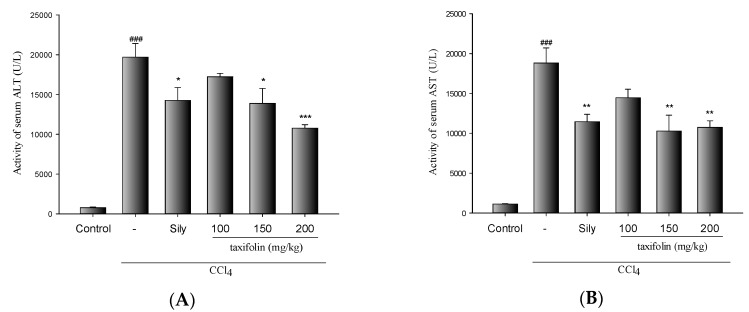
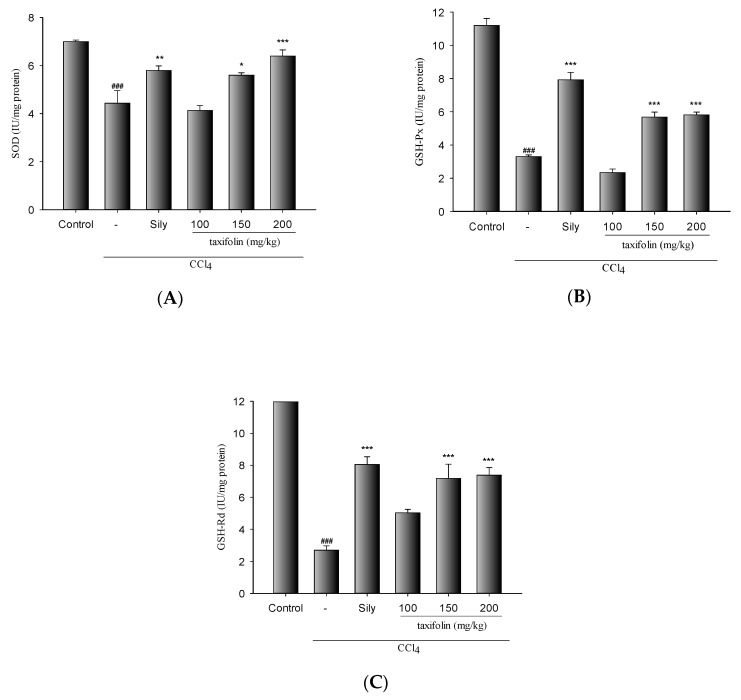
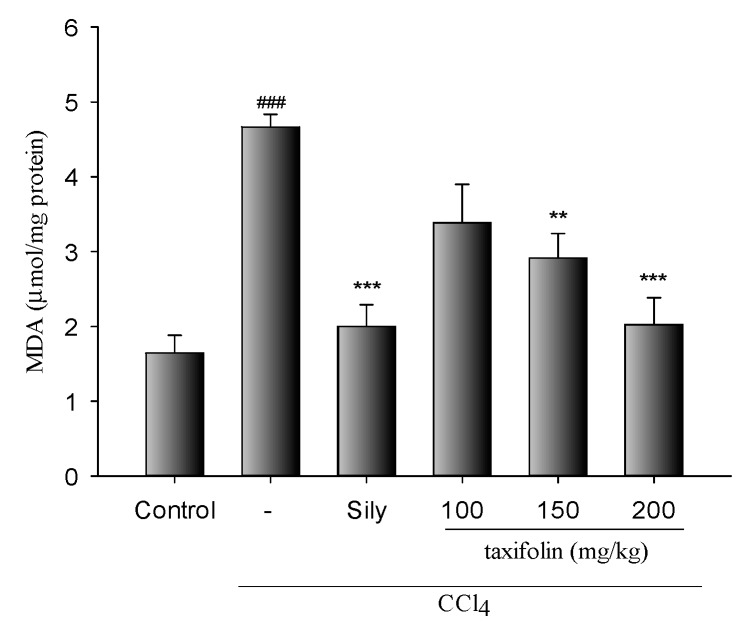
ICR (Institute of Cancer research) mice were orally pretreated using taxifolin for 7 consecutive days and were then given single intraperitoneal (i.p.) injections of 0.2% CCl (10 mL/kg body weight, i.p.). Liver injury was then determined using assays of serum alanine aminotransferase (sALT) and serum aspartate aminotransferase (sAST). Further, to investigate the hepatoprotective mechanisms of taxifolin, we determined malondialdehyde (MDA) levels and superoxide dismutase (SOD), glutathione peroxidase (GPx), and glutathione reductase (GRd) activities.
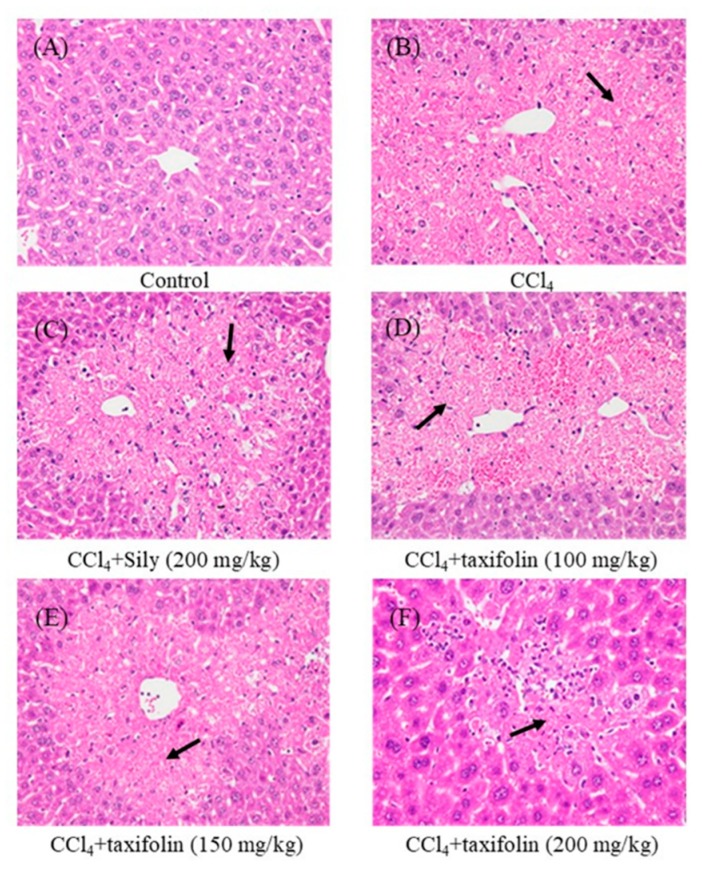
CCl-induced liver injury led to significant increases in sALT and sAST activities, and these increases were limited by taxifolin and silymarin (Sily) pretreatments. Histological analyses also indicated that taxifolin and Sily decreased the range of liver lesions in CCl-treated mice and vacuole formation, neutrophil infiltration, and necrosis were visibly reduced. In addition, SOD, GPx, and GRd activities were increased and MDA levels were decreased after taxifolin and Sily treatments.
The hepatoprotective mechanisms of taxifolin and Sily are related to decreases in MDA levels presumably due to increased antioxidant enzyme activities. These outcomes suggest that taxifolin mitigates acute liver injury resulted from CCl in mice, demonstrating the hepatoprotective effects of taxifolin.
研究柯萨奇病毒(CCl)诱导的急性肝损伤小鼠Taxifolin 的肝保护机制。
ICR(癌症研究所)小鼠连续 7 天口服 Taxifolin 预处理,然后单次腹腔内(i.p.)注射 0.2% CCl(10 mL/kg 体重,i.p.)。使用血清丙氨酸氨基转移酶(sALT)和血清天冬氨酸氨基转移酶(sAST)测定来确定肝损伤。此外,为了研究 Taxifolin 的肝保护机制,我们测定了丙二醛(MDA)水平以及超氧化物歧化酶(SOD)、谷胱甘肽过氧化物酶(GPx)和谷胱甘肽还原酶(GRd)的活性。
CCl 诱导的肝损伤导致 sALT 和 sAST 活性显著增加,而 Taxifolin 和水飞蓟素(Sily)预处理可限制这些增加。组织学分析还表明,Taxifolin 和 Sily 降低了 CCl 处理小鼠的肝损伤范围,并减少了空泡形成、中性粒细胞浸润和坏死。此外,Taxifolin 和 Sily 处理后 SOD、GPx 和 GRd 活性增加,MDA 水平降低。
Taxifolin 和 Sily 的肝保护机制与 MDA 水平的降低有关,可能是由于抗氧化酶活性的增加。这些结果表明,Taxifolin 减轻了 CCl 诱导的小鼠急性肝损伤,显示了 Taxifolin 的肝保护作用。