Zhang Liuyan, Zhu Ping, Tong Yao, Wang Yuzhuo, Ma Haifen, Xia Xuefei, Zhou Yu, Zhang Xingguo, Gao Feng, Shu Peng
Department of Obstetrics, Beilun People's Hospital, Ningbo, People's Republic of China.
Department of Gynecology, CangZhou People's Hospital, CangZhou, People's Republic of China.
Onco Targets Ther. 2019 Aug 28;12:7005-7014. doi: 10.2147/OTT.S200191. eCollection 2019.
Ovarian cancer has the highest death rate of all fatal gynecological cancers. Increasing evidence has depicted the correlation between serous ovarian carcinoma prognosis and immune signature. Therefore, the aim of this study is to develop a robust prognostic immune-related gene pairs (IRGPs) signature for estimating overall survival (OS) of HGSOC.
Gene expression profiling and clinical information of serous ovarian carcinoma patients were derived from three public data sets, divided into training and validation cohorts. Immune genes significantly associated with prognosis were selected.
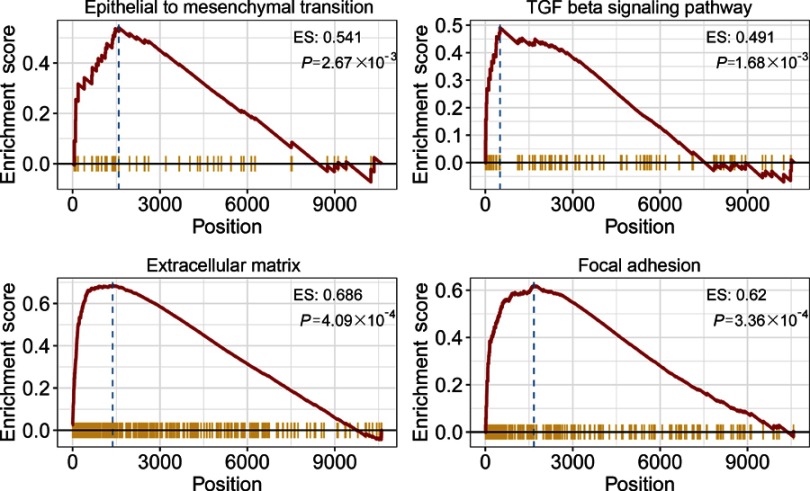
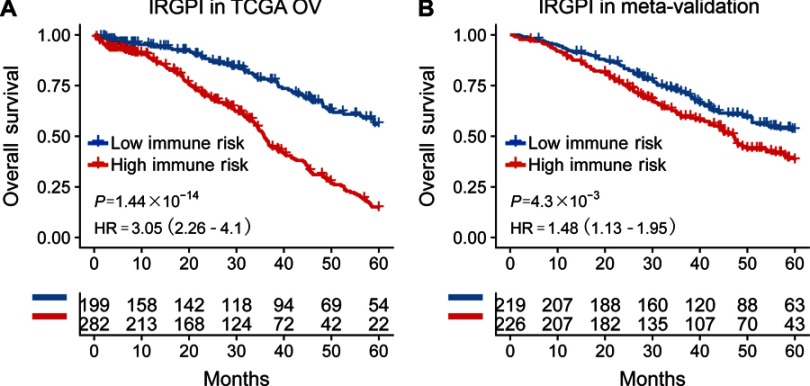
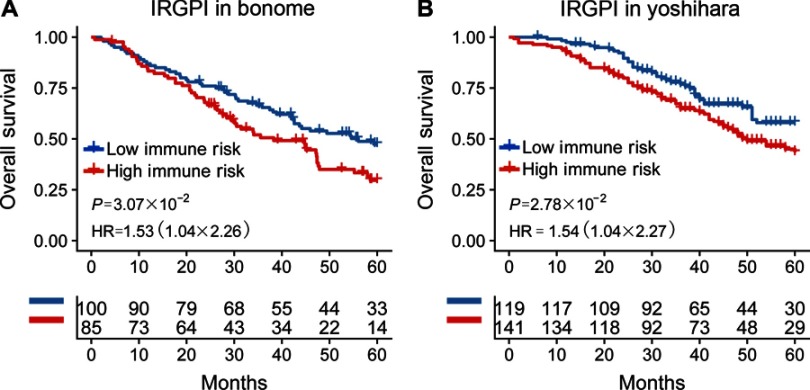
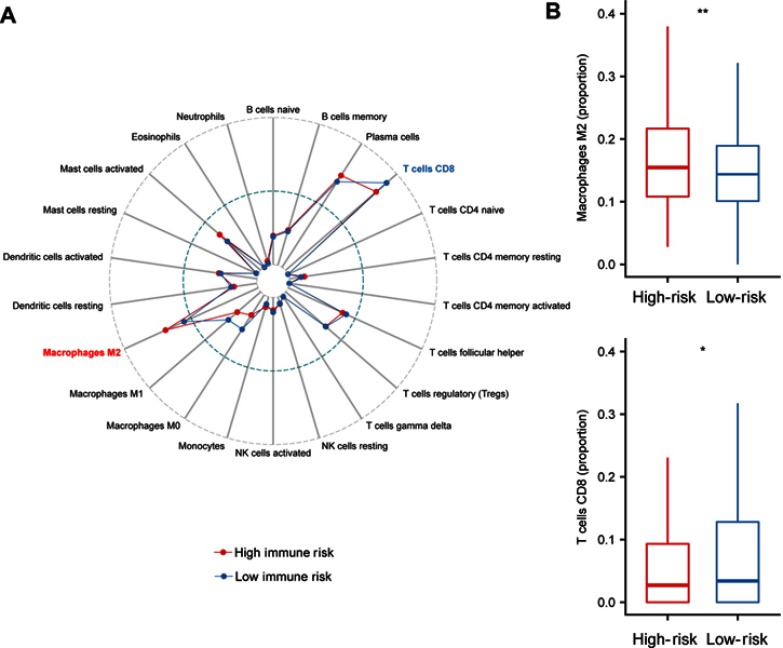
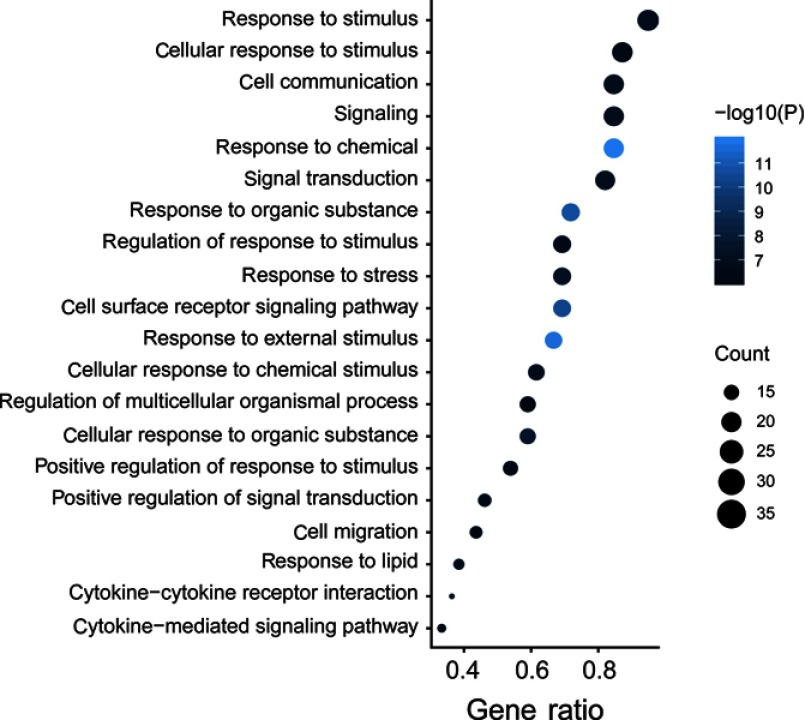
Among 1,534 immune genes, a 20 IRGPs signature was built which was significantly associated with OS in the training cohort (=1.44×10; hazard ratio [HR] =3.05 [2.26, 4.10]). In the validation datasets, the IRGPs signature significantly divided patients into high- vs low- risk groups considering their prognosis (=4.30×10; HR =1.48 [1.13, 1.95]) and was prognostic in multivariate analysis. Functional analysis showed that several biological processes, including EMT and TGF-β related pathways, enriched in the high-risk group. Macrophages M2 was significantly higher in the high-risk group compared with the low-risk group.
We successfully constructed a robust IRGPs signature with prognostic values for serous ovarian carcinoma, providing new insights into post-operational treatment strategies.
卵巢癌是所有致命妇科癌症中死亡率最高的。越来越多的证据表明浆液性卵巢癌预后与免疫特征之间存在关联。因此,本研究的目的是开发一种强大的预后免疫相关基因对(IRGPs)特征,用于评估高级别浆液性卵巢癌(HGSOC)的总生存期(OS)。
浆液性卵巢癌患者的基因表达谱和临床信息来自三个公共数据集,分为训练队列和验证队列。选择与预后显著相关的免疫基因。
在1534个免疫基因中,构建了一个包含20个IRGPs的特征,该特征在训练队列中与OS显著相关(=1.44×10;危险比[HR]=3.05[2.26,4.10])。在验证数据集中,考虑到患者的预后,IRGPs特征显著将患者分为高风险组和低风险组(=4.30×10;HR=1.48[1.13,1.95]),并且在多变量分析中具有预后意义。功能分析表明,包括上皮-间质转化(EMT)和转化生长因子-β(TGF-β)相关途径在内的几个生物学过程在高风险组中富集。高风险组中的M2巨噬细胞明显高于低风险组。
我们成功构建了一个对浆液性卵巢癌具有预后价值的强大IRGPs特征,为术后治疗策略提供了新的见解。