Institute of Chemistry and Biochemistry, Freie Universität Berlin, Takustrasse 6, 14195, Berlin, Germany.
Bioanalytical Mass Spectrometry Group, Max Planck Institute for Biophysical Chemistry, Am Fassberg 11, 37077, Goettingen, Germany.
Nat Commun. 2019 Nov 7;10(1):5054. doi: 10.1038/s41467-019-13080-x.
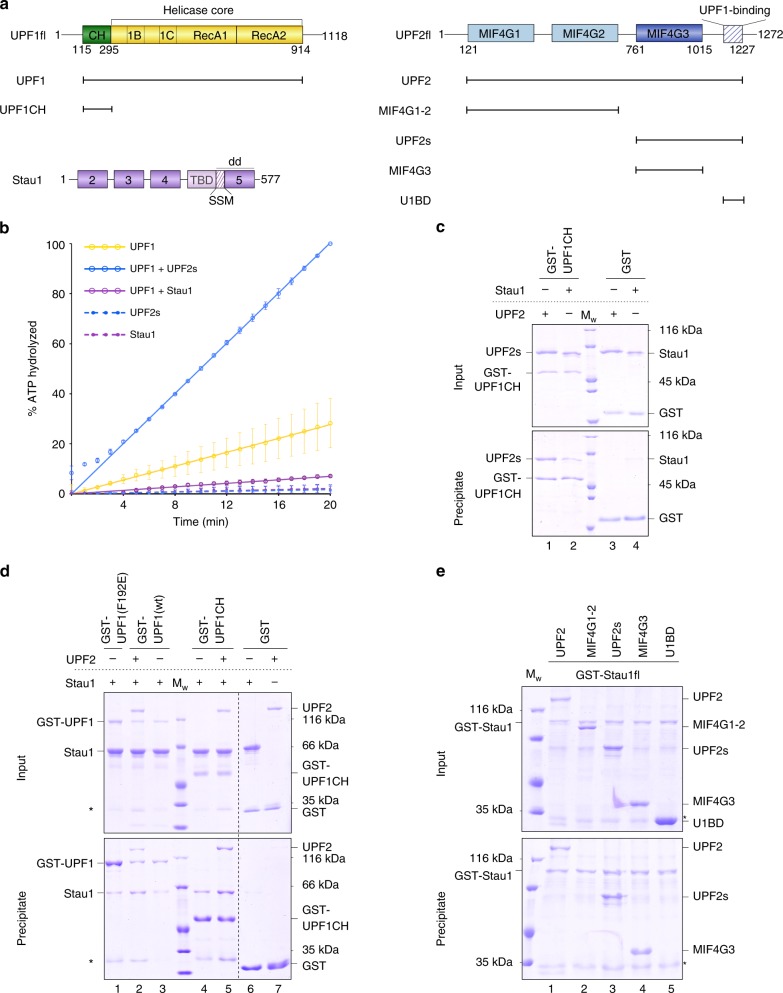
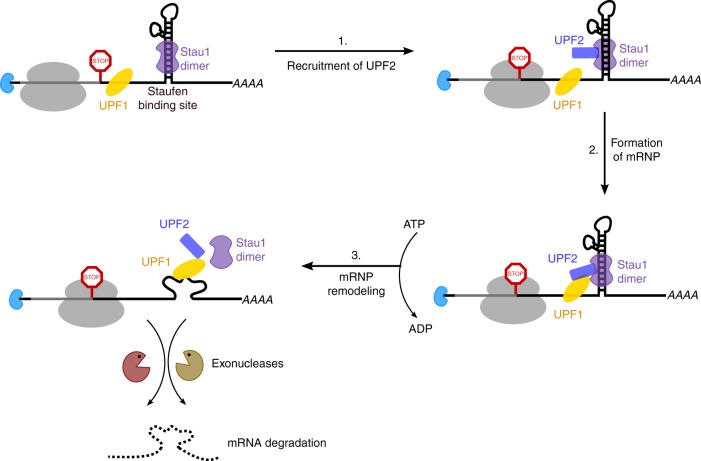
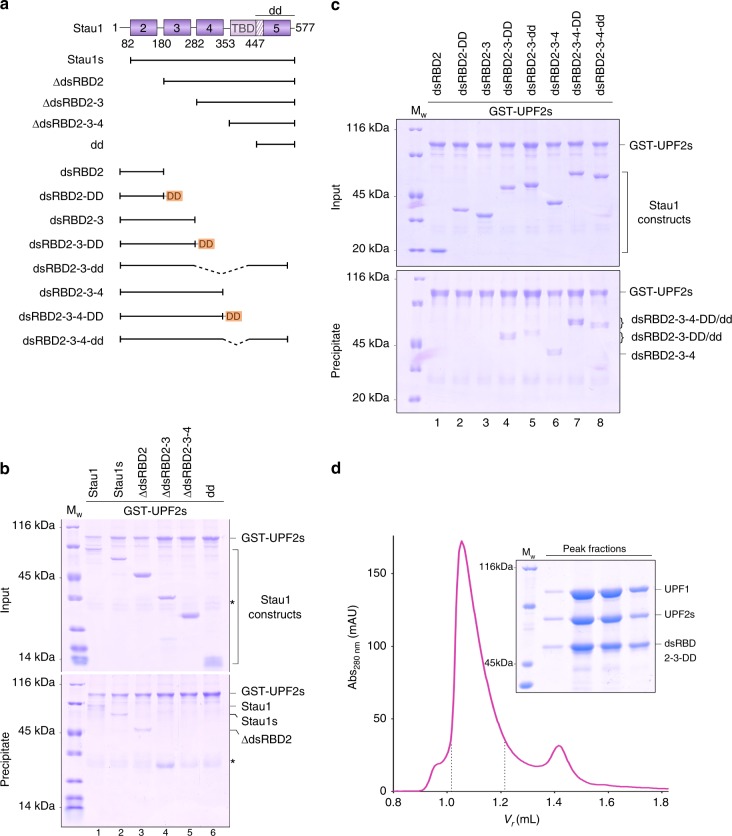
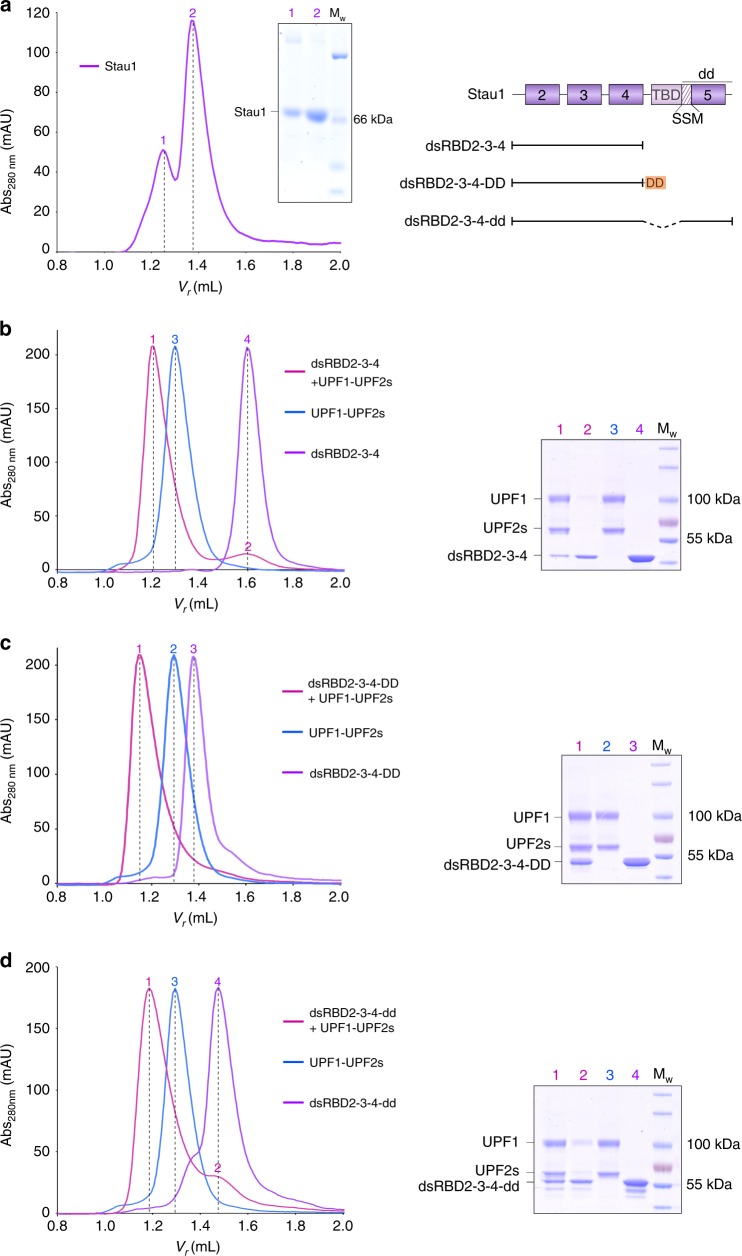
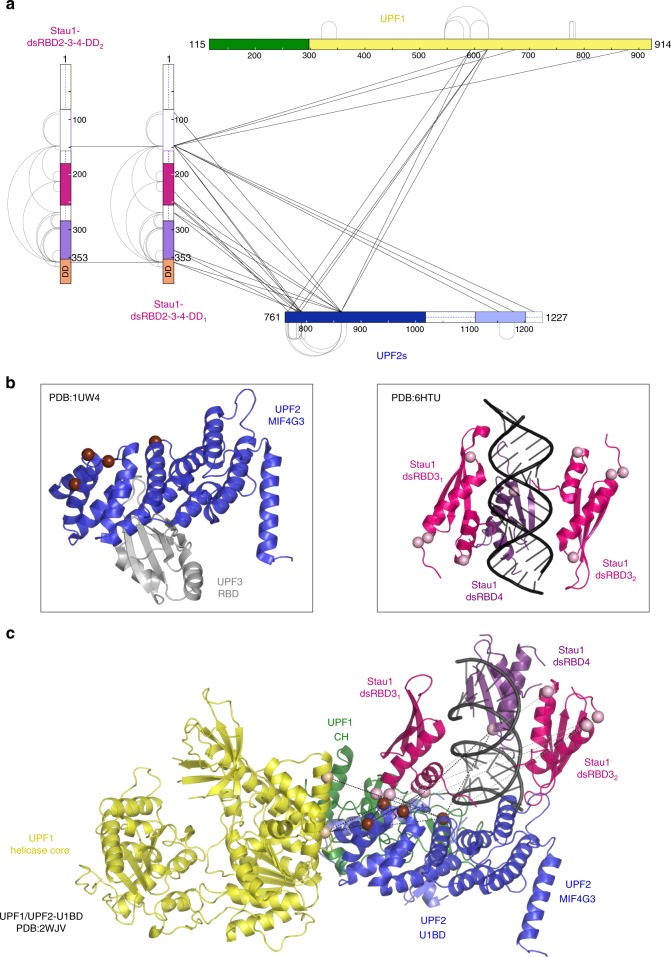
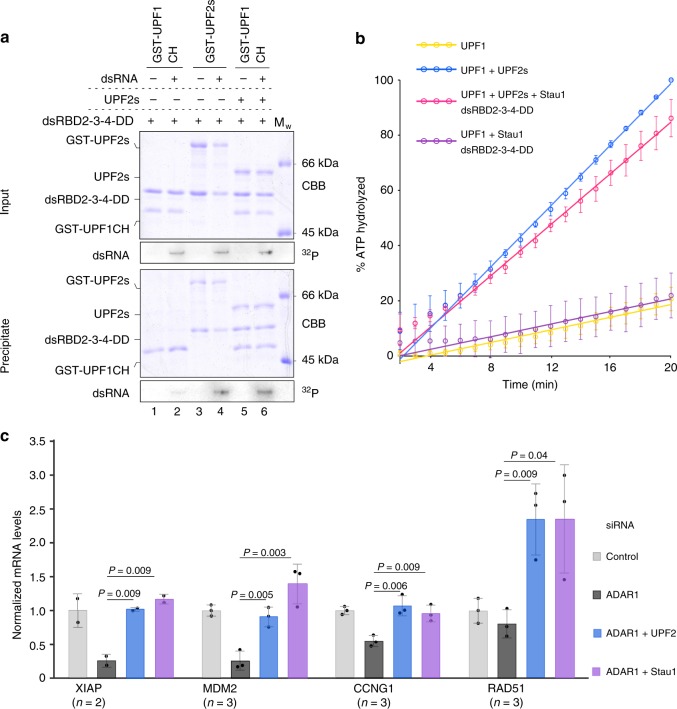
The mammalian Staufen proteins (Stau1 and Stau2) mediate degradation of mRNA containing complex secondary structures in their 3'-untranslated region (UTR) through a pathway known as Staufen-mediated mRNA decay (SMD). This pathway also involves the RNA helicase UPF1, which is best known for its role in the nonsense-mediated mRNA decay (NMD) pathway. Here we present a biochemical reconstitution of the recruitment and activation of UPF1 in context of the SMD pathway. We demonstrate the involvement of UPF2, a core NMD factor and a known activator of UPF1, in SMD. UPF2 acts as an adaptor between Stau1 and UPF1, stimulates the catalytic activity of UPF1 and plays a central role in the formation of an SMD-competent mRNP. Our study elucidates the molecular mechanisms of SMD and points towards extensive cross-talk between UPF1-mediated mRNA decay pathways in cells.
哺乳动物的 Staufen 蛋白(Stau1 和 Stau2)通过一种称为 Staufen 介导的 mRNA 降解(SMD)的途径,介导含有复杂二级结构的 mRNA 在其 3'非翻译区(UTR)中的降解。该途径还涉及 RNA 解旋酶 UPF1,它最著名的作用是在无意义介导的 mRNA 降解(NMD)途径中。在这里,我们提出了一个生化重构图来描绘 SMD 途径中 UPF1 的募集和激活。我们证明了核心 NMD 因子 UPF2 参与了 SMD。UPF2 作为 Stau1 和 UPF1 之间的衔接物,刺激 UPF1 的催化活性,并在形成 SMD 有效 mRNP 中发挥核心作用。我们的研究阐明了 SMD 的分子机制,并指出了细胞中 UPF1 介导的 mRNA 降解途径之间广泛的串扰。