Neu-Yilik Gabriele, Raimondeau Etienne, Eliseev Boris, Yeramala Lahari, Amthor Beate, Deniaud Aurélien, Huard Karine, Kerschgens Kathrin, Hentze Matthias W, Schaffitzel Christiane, Kulozik Andreas E
Department of Pediatric Oncology, Hematology and Immunology, University of Heidelberg, Heidelberg, Germany.
Molecular Medicine Partnership Unit, University of Heidelberg and European Molecular Biology Laboratory, Heidelberg, Germany.
EMBO J. 2017 Oct 16;36(20):2968-2986. doi: 10.15252/embj.201797079. Epub 2017 Sep 12.
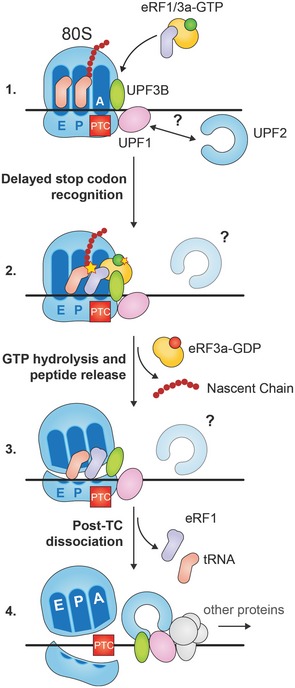
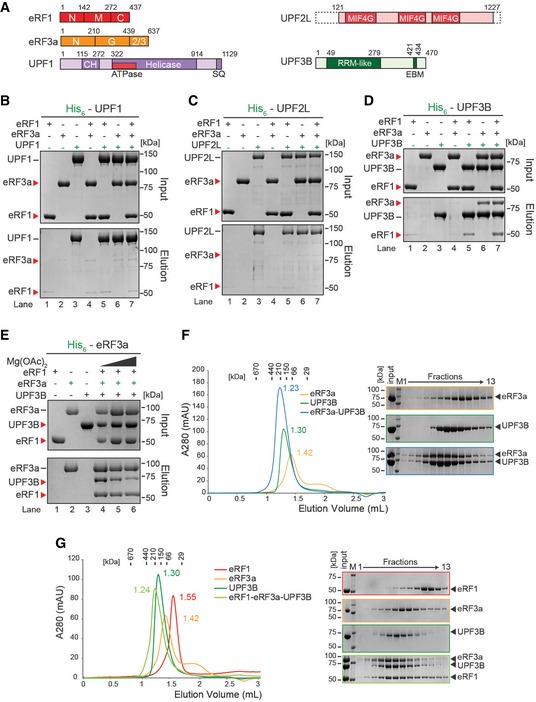
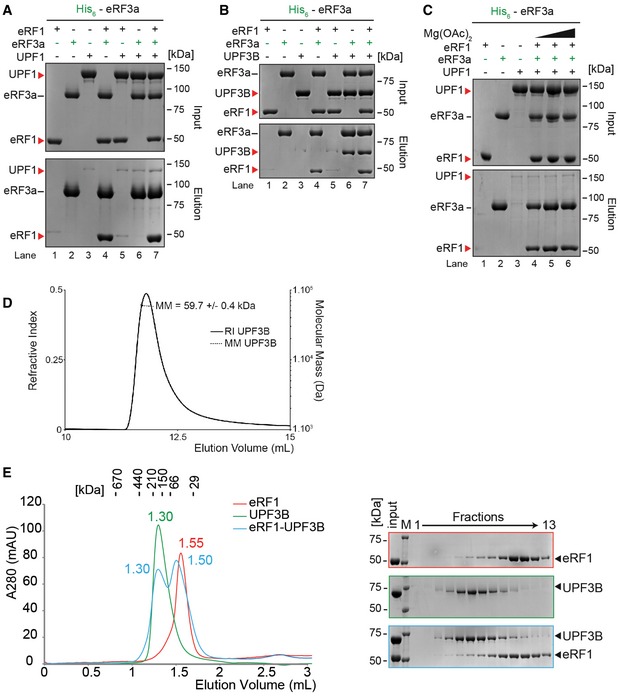
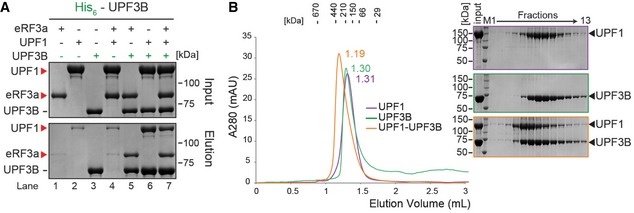
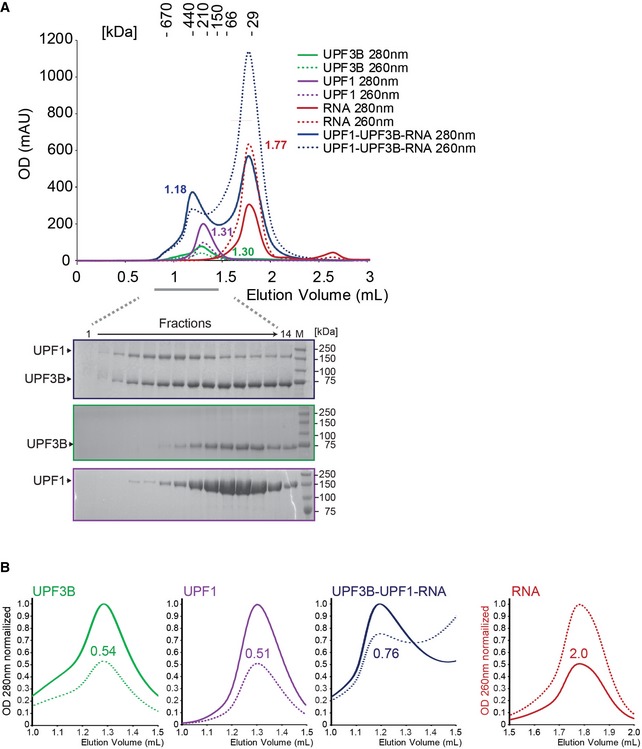
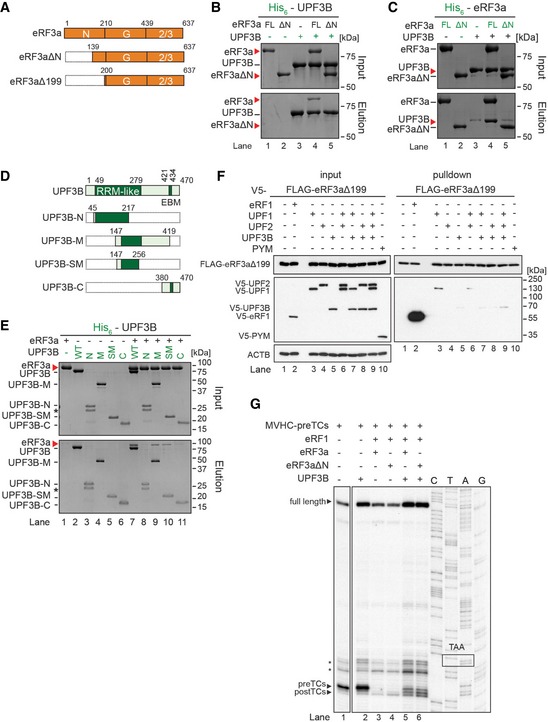
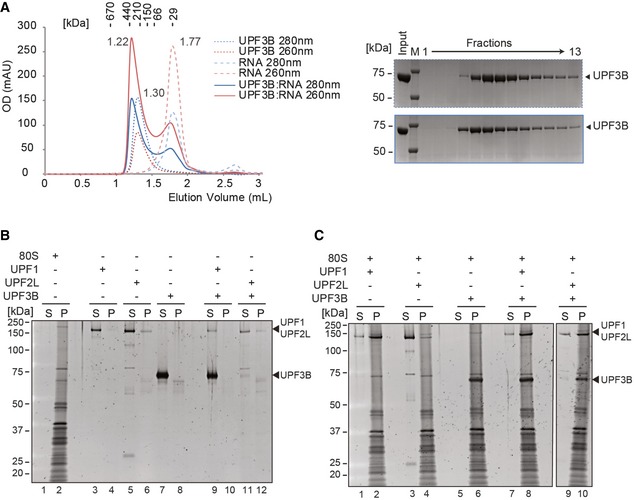
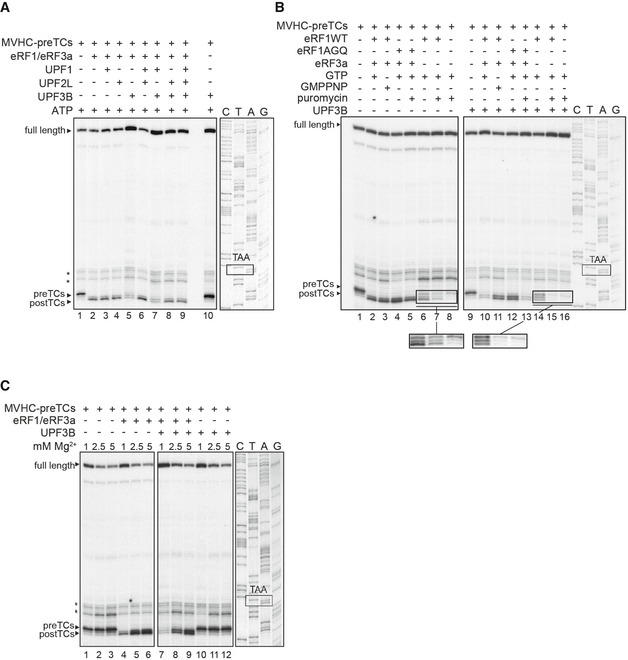
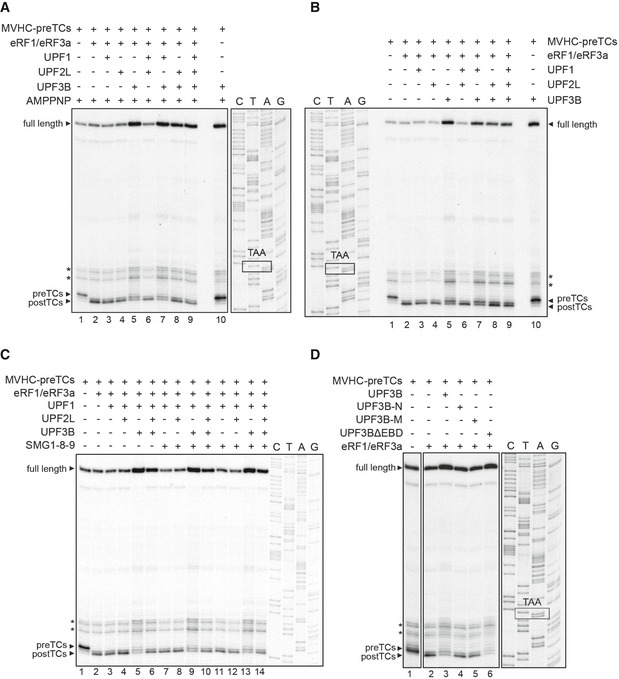
Nonsense-mediated mRNA decay (NMD) is a cellular surveillance pathway that recognizes and degrades mRNAs with premature termination codons (PTCs). The mechanisms underlying translation termination are key to the understanding of RNA surveillance mechanisms such as NMD and crucial for the development of therapeutic strategies for NMD-related diseases. Here, we have used a fully reconstituted translation system to probe the NMD proteins for interaction with the termination apparatus. We discovered that UPF3B (i) interacts with the release factors, (ii) delays translation termination and (iii) dissociates post-termination ribosomal complexes that are devoid of the nascent peptide. Furthermore, we identified UPF1 and ribosomes as new interaction partners of UPF3B. These previously unknown functions of UPF3B during the early and late phases of translation termination suggest that UPF3B is involved in the crosstalk between the NMD machinery and the PTC-bound ribosome, a central mechanistic step of RNA surveillance.
无义介导的mRNA衰变(NMD)是一种细胞监测途径,可识别并降解带有提前终止密码子(PTC)的mRNA。翻译终止的潜在机制是理解诸如NMD等RNA监测机制的关键,对于开发NMD相关疾病的治疗策略至关重要。在这里,我们使用了完全重组的翻译系统来探究NMD蛋白与终止装置的相互作用。我们发现UPF3B(i)与释放因子相互作用,(ii)延迟翻译终止,以及(iii)解离缺乏新生肽的终止后核糖体复合物。此外,我们鉴定出UPF1和核糖体是UPF3B的新相互作用伙伴。UPF3B在翻译终止早期和晚期的这些先前未知的功能表明,UPF3B参与了NMD机制与结合PTC的核糖体之间的串扰,这是RNA监测的核心机制步骤。