Department of Resources and Environment, Ningxia University, Yinchuan, 750021, China.
Ningxia (China-Arab) Key Laboratory of Resource Assessment and Environmental Regulation in Arid Region, Ningxia University, Yinchuan, 750021, China.
BMC Public Health. 2019 Nov 8;19(1):1482. doi: 10.1186/s12889-019-7758-1.
The incidence of hand, foot and mouth disease (HFMD) varies over space and time and this variability is related to climate and social-economic factors. Majority of studies on HFMD were carried out in humid regions while few have focused on the disease in arid/semi-arid regions, more research in such climates would potentially make the mechanism of HFMD transmission clearer under different climate conditions.
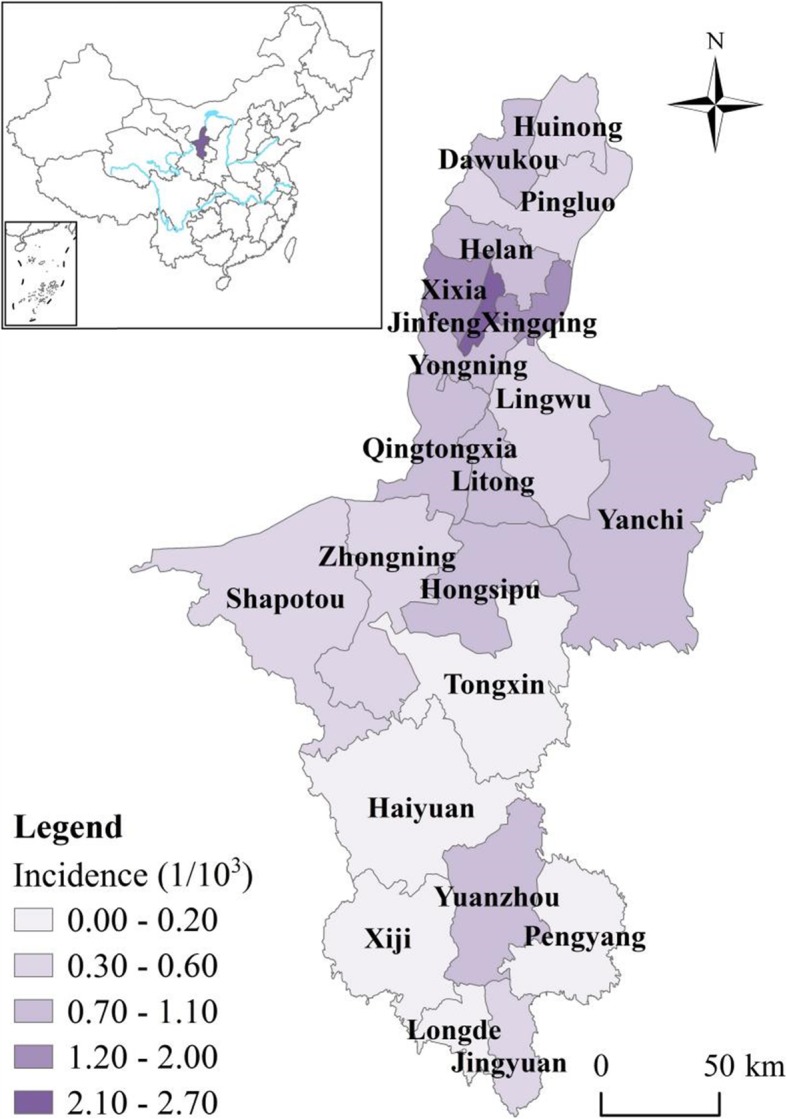
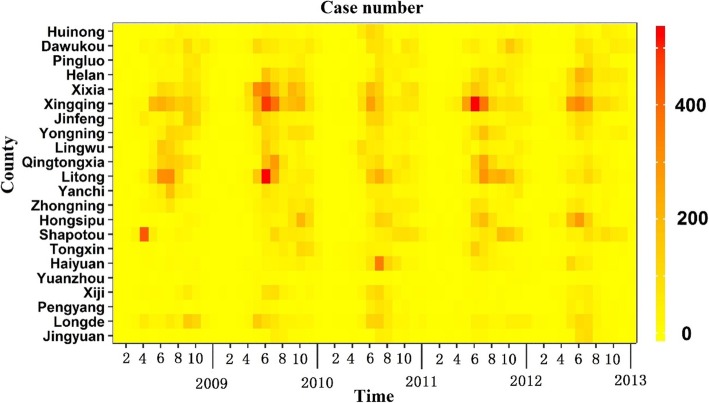
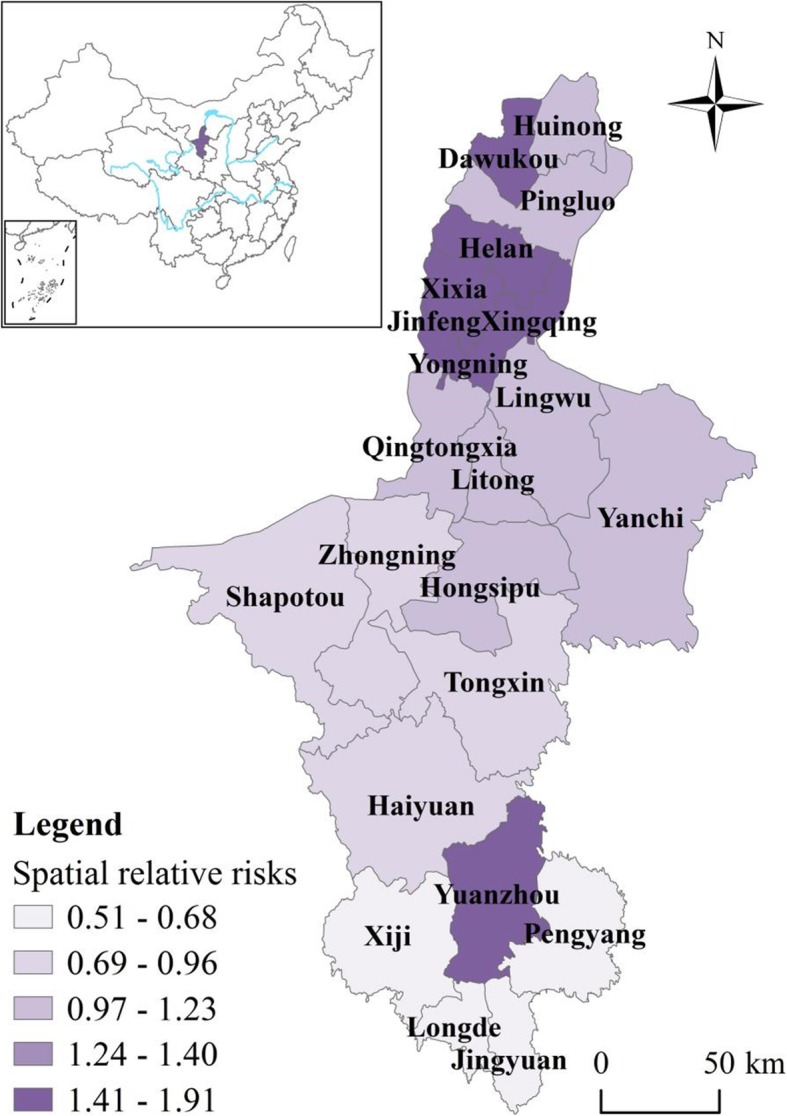
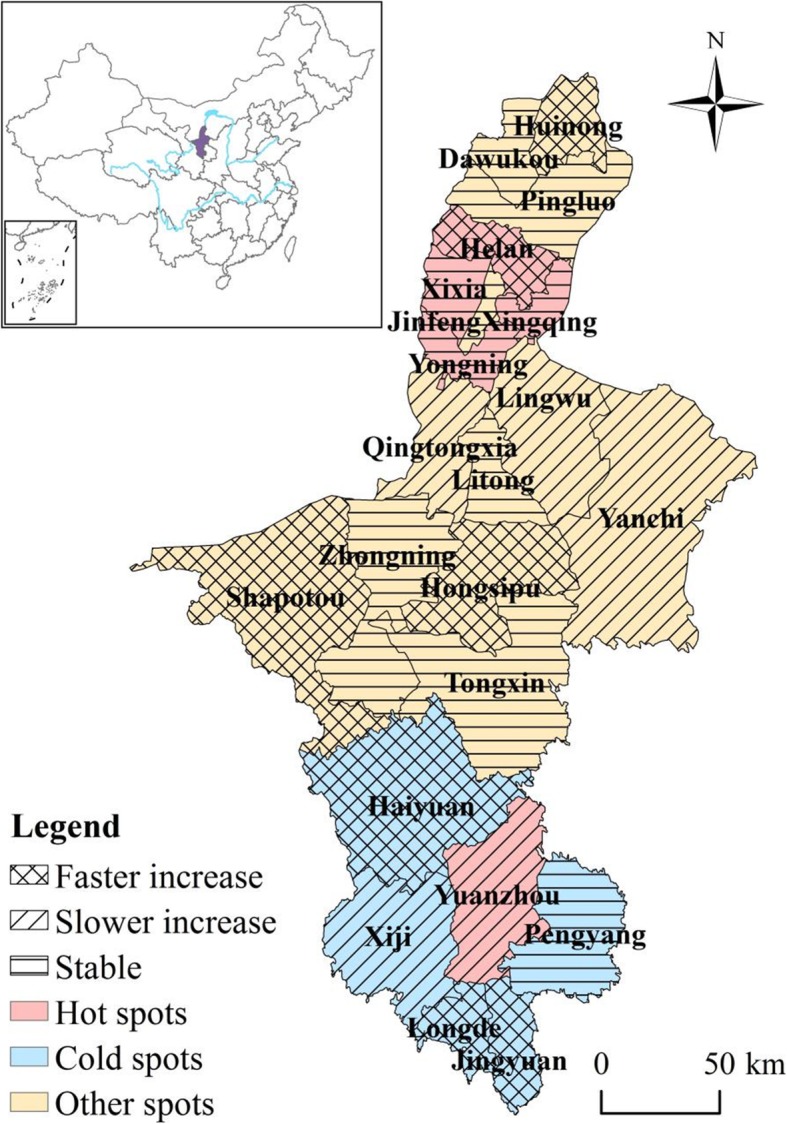
In this paper, we explore spatial-temporal distribution of HFMD in Ningxia province, which has an arid/semi-arid climate in northwest China. We first employed a Bayesian space-time hierarchy model (BSTHM) to assess the spatial-temporal heterogeneity of the HFMD cases and its relationship with meteorological factors in Ningxia from 2009 to 2013, then used a novel spatial statistical software package GeoDetector to test the spatial-temporal heterogeneity of HFMD risk.
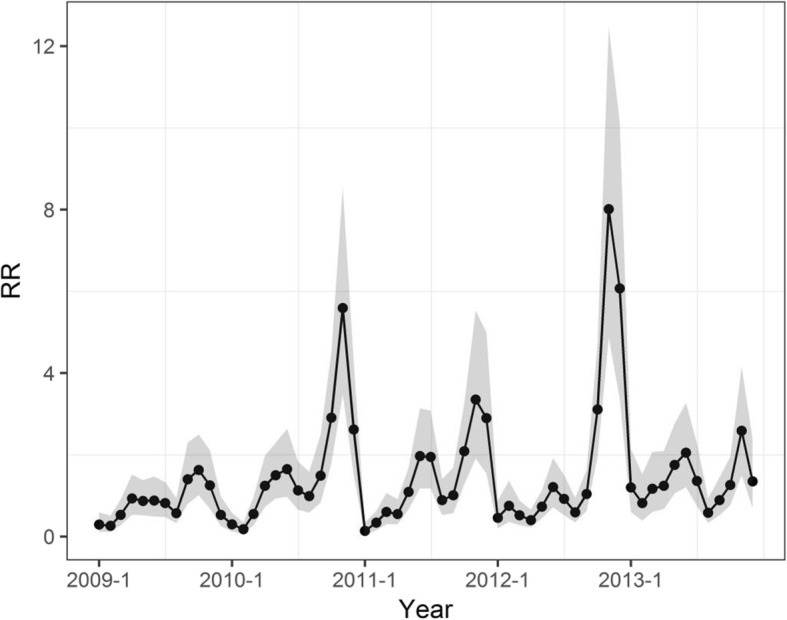
The results showed that the spatial relative risks in northern part of Ningxia were higher than those in the south. The highest temporal risk of HFMD incidence was in fall season, with a secondary peak in spring. Meteorological factors, such as average temperature, relative humidity, and wind speed played significant roles in the spatial-temporal distribution of HFMD risk.
The study provide valuable information on HFMD distribution in arid/semi-arid areas in northwest China and facilitate understanding of the concentration of HFMD.
手足口病(HFMD)的发病率在空间和时间上存在差异,这种变异性与气候和社会经济因素有关。大多数 HFMD 研究都是在潮湿地区进行的,而很少有研究关注干旱/半干旱地区的疾病,在这些气候条件下进行更多的研究可能会使 HFMD 在不同气候条件下的传播机制更加清晰。
在本文中,我们探讨了中国西北部干旱/半干旱气候的宁夏自治区手足口病的时空分布。我们首先采用贝叶斯时空分层模型(BSTHM)评估了 2009 年至 2013 年宁夏手足口病病例的时空异质性及其与气象因素的关系,然后使用新颖的空间统计软件包 GeoDetector 测试了 HFMD 风险的时空异质性。
结果表明,宁夏北部的空间相对风险高于南部。HFMD 发病率的最高时间风险出现在秋季,其次是春季。平均温度、相对湿度和风速等气象因素对手足口病风险的时空分布起着重要作用。
本研究提供了有关中国西北部干旱/半干旱地区手足口病分布的有价值信息,有助于了解手足口病的集中程度。